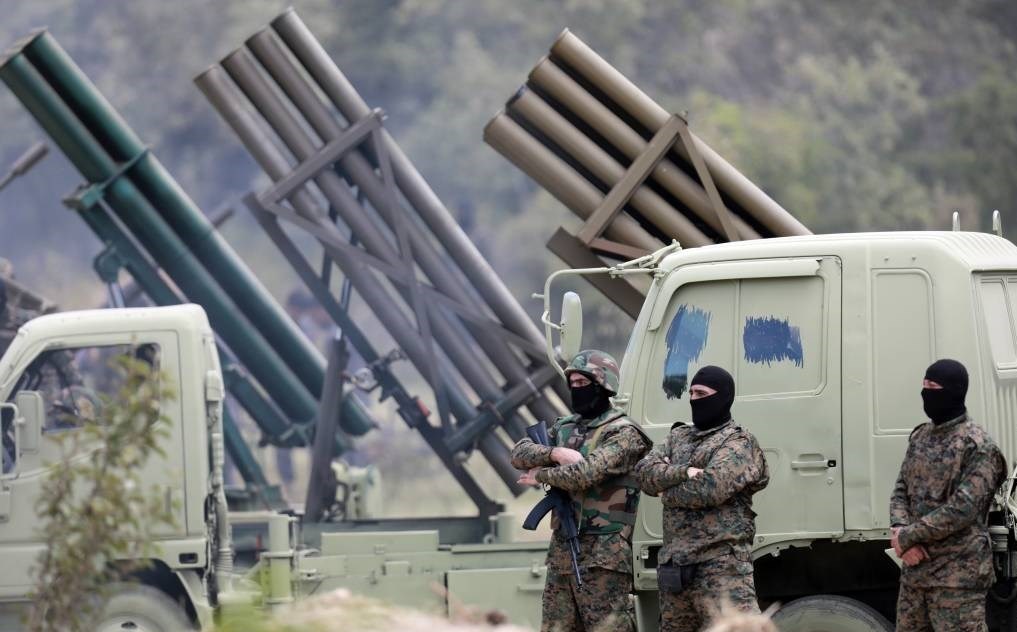
Hezbollah Intensifies Strikes on Israel With Rockets and FPV Drones
On 15 May 2026, Hezbollah published footage of multiple attacks against Israeli forces, including a four-rocket salvo near Nahariyya and several FPV drone strikes on vehicles and a Merkava tank along the Israel-Lebanon border. The activity, reported around 04:02–05:02 UTC, highlights sustained conflict on Israel’s northern front.
Key Takeaways
- Hezbollah launched four rockets, including two "Nasr-2" guided munitions, toward an Israeli base near Nahariyya.
- Around 04:02–05:02 UTC on 15 May 2026, Hezbollah also conducted FPV drone strikes on Israeli vehicles and a Merkava tank along the border.
- Israel’s Iron Dome attempted interceptions near Tiberias and Eilabun as explosions were heard in northern Israel.
- The exchange underscores a persistent, low‑to‑medium intensity conflict between Hezbollah and Israel with growing use of guided and loitering munitions.
By the early hours of 15 May 2026, Hezbollah released multiple videos documenting a fresh wave of attacks on Israeli military targets along the Israel‑Lebanon border and in northern Israel. Around 05:02 UTC, the group showcased the launch of four rockets toward an Israeli military base near Nahariyya, a coastal city in northern Israel. Significantly, two of the rockets were identified as "Nasr‑2" guided projectiles, indicating an ongoing effort to improve precision strike capabilities.
According to Israeli statements, only one of the four rockets was intercepted, with the remaining three assessed as falling in open areas. However, the presence of guided munitions raises the possibility that one or more rockets may have been aimed at specific military assets near the base. Around the same time, explosions and at least one Iron Dome interception attempt were reported near Tiberias and Eilabun in northern Israel, signaling broader rocket or missile activity across the region.
In parallel, Hezbollah publicized several first‑person‑view (FPV) drone strikes targeting Israeli forces along the border area. These included:
- An attack on an Israeli Merkava tank in the town of Aainata in southern Lebanon.
- A strike on a van reportedly transporting Israeli soldiers to a front‑line position.
- Additional attacks on military vehicles near the frontier.
The use of FPV drones with onboard cameras demonstrates Hezbollah’s growing proficiency with relatively low‑cost, high‑precision systems that can penetrate armor or soft‑skinned vehicles by exploiting weak points.
Key actors in this confrontation are Hezbollah’s military wing, which continues to refine its use of rockets, guided munitions, and drones, and the Israel Defense Forces (IDF), responsible for air defense, counter‑battery fire, and ground force protection along the northern frontier. The attacks came as the IDF reported the death of Staff Sergeant Negev Dagan, a 20‑year‑old soldier killed in Lebanon, underlining the human cost of the cross‑border conflict.
The events matter because they show the northern front between Israel and Hezbollah remaining active and technologically dynamic, even as much global attention is focused on operations in Gaza. Hezbollah’s integration of guided rockets and FPV drones increases the complexity of the threat facing Israel, requiring adaptations in both hard‑kill and soft‑kill defenses. For Israel, repeated engagements drive sustained operational tempo, resource expenditure, and public concern about the possibility of a broader war.
Regionally, the continued exchange of fire maintains a chronic risk of escalation. A successful Hezbollah strike causing mass Israeli casualties or a high‑profile hit on strategic infrastructure could trigger a major Israeli response, potentially expanding conflict into Lebanon’s interior. Conversely, an Israeli operation that significantly degrades Hezbollah’s command or key capabilities might prompt the group to escalate rocket salvos into central Israel.
Internationally, major external actors with influence in Lebanon and Israel—such as Iran, the United States, and European states—remain concerned about containment. An expanded conflict could destabilize Lebanon further, exacerbate refugee flows, and draw in additional regional participants.
Outlook & Way Forward
In the short term, both sides are likely to sustain the current pattern of calibrated exchanges: Hezbollah employing limited rocket and drone attacks to signal deterrence and solidarity with other fronts, and Israel responding with precision strikes on Hezbollah positions and infrastructure in southern Lebanon. The IDF will continue refining counter‑UAV tactics, potentially increasing the use of electronic warfare, directed‑energy experiments, and layered air defenses to protect armored and logistical convoys.
The trajectory of the conflict will depend on whether either side miscalculates or decides to alter the rules of engagement. Key triggers to watch include high‑casualty incidents on either side, attacks on critical national infrastructure (ports, power plants, or dense urban areas), or strikes against senior military or political figures. Diplomatic channels, both direct and via intermediaries, will be essential in communicating red lines and preventing spirals of retaliation.
Analysts should monitor the sophistication of Hezbollah’s munitions—such as broader use of guided rockets beyond "Nasr‑2" and improved FPV drone payloads—and any visible changes in IDF defensive deployments near the border. The balance between deterrence and escalation will hinge on whether each side believes it can manage the risks of ongoing low‑intensity conflict without sliding into an all‑out war, a calculation that may shift rapidly if battlefield dynamics or domestic political pressures change.
Sources
- OSINT