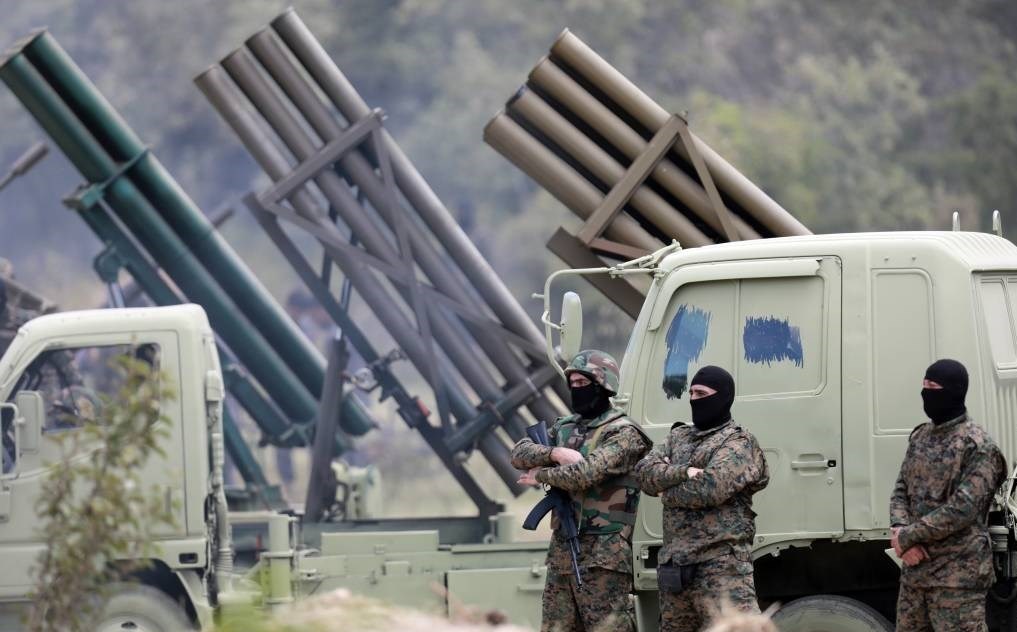
Hezbollah Uses Guided Rockets and FPV Drones in Northern Israel
On 15 May, Hezbollah released footage of multiple attacks on Israeli targets near the Lebanon border, including four rockets—two guided ‘Nasr-2’—launched toward a base near Nahariyya and several FPV drone strikes on vehicles and a Merkava tank. The attacks occurred in the hours before 05:02 UTC and were followed by Israeli interception attempts over northern Israel.
Key Takeaways
- Hezbollah on 15 May 2026 published footage of four rockets, including two guided Nasr-2 types, fired toward an Israeli military base near Nahariyya.
- Additional footage showed FPV drone strikes on a van transporting Israeli soldiers, several vehicles, and a Merkava tank in and near the Israel-Lebanon border area and the town of Aainata in southern Lebanon.
- Israeli defenses attempted at least one interception near Tiberias and reported explosions near Eilabun, underscoring continued cross-border escalation.
In the early hours of 15 May 2026, the conflict along the Israel-Lebanon border saw a renewed uptick in sophistication and intensity with a series of Hezbollah attacks targeting Israeli military assets. Around 05:02 UTC, Hezbollah released video evidence documenting the launch of four rockets toward what it described as an Israeli military base near Nahariyya in northern Israel. Two of the rockets were identified by the group as Nasr-2 guided munitions, indicating enhanced precision capabilities compared with standard unguided systems.
According to Israeli accounts, only one incoming rocket was intercepted, with the remaining three reportedly falling in what authorities described as open areas. However, given that at least two of the munitions were guided, analysts have raised the possibility that one or more rockets may have impacted near or within the targeted military installation, even if official reporting has so far downplayed damage.
Hezbollah also publicized a series of FPV (first-person-view) drone strikes conducted along the border region. Footage shows drones hitting a van reportedly transporting Israeli soldiers to a forward position, as well as several other vehicles, including what appears to be a Merkava main battle tank in or near the town of Aainata in southern Lebanon. Additional imagery captured burned-out vehicles and secondary explosions, suggesting at least some successful penetrations of Israeli armor and soft-skinned vehicles.
Concurrently, the Israeli air defense network was reported to have engaged targets further inside northern Israel. Around 04:02–04:04 UTC, at least one Iron Dome interception attempt took place near Tiberias, with separate reports of explosions and a possible interception near Eilabun. The exact relationship between these engagements and Hezbollah’s rocket launches from Lebanon remains under assessment, but the timing and geography point to a common operational context.
Key players include Hezbollah’s rocket and drone units, the Israel Defense Forces’ (IDF) Northern Command and air defense elements, and political leadership on both sides managing the broader escalation dynamic. Nasr-2 guided rockets and FPV suicide drones form part of Hezbollah’s evolving precision-strike toolkit, designed to challenge Israeli defensive layers and inflict targeted military damage while keeping attacks below the threshold of full-scale war.
The significance of these attacks lies in their qualitative rather than purely quantitative features. The increasing use of guided rockets and precision drones against high-value military assets—armored vehicles, troop transports, and bases—raises the lethality of engagements and complicates Israeli force protection. Even isolated successful strikes can have outsized psychological and tactical impact, influencing troop movement patterns, deployment of armor, and risk calculations by commanders.
Regionally, the continued tit-for-tat between Hezbollah and Israel along the northern front risks further destabilizing the broader Levantine theater, where Gaza, the West Bank, Syria, and Lebanon are all interconnected. Each incremental improvement in Hezbollah’s stand-off precision capabilities intensifies Israeli concerns about the long-term military balance and could influence preemptive or retaliatory planning.
Outlook & Way Forward
In the near term, Israel is likely to respond with targeted air or artillery strikes against Hezbollah positions, storage sites, or suspected launch areas in southern Lebanon, potentially including Aainata and its environs. The IDF will also review force protection measures along the border, including dispersion and hardening of vehicles, enhanced electronic warfare against FPV drones, and adjustments to patrol and resupply patterns.
For Hezbollah, the publication of clear video evidence serves both operational and propaganda purposes. It demonstrates the group’s ability to penetrate Israeli defenses and hit high-value military targets, bolstering its deterrent narrative vis-à-vis Israel and its own domestic audience. Further demonstrations of guided rocket and FPV drone capabilities should be expected, particularly in response to Israeli strikes in Lebanon or developments in Gaza and the West Bank.
The trajectory of this confrontation will hinge on whether either side chooses to cross red lines around mass-casualty events or deep strikes into strategic rear areas. Indicators of potential escalation include larger or more coordinated rocket salvos, strikes on major Israeli urban centers from Lebanon, or Israeli attempts to systematically degrade Hezbollah’s precision-strike infrastructure. Absent a broader political settlement, the northern front is likely to remain a persistent flashpoint characterized by episodic spikes in violence and incremental technological escalation.
Sources
- OSINT