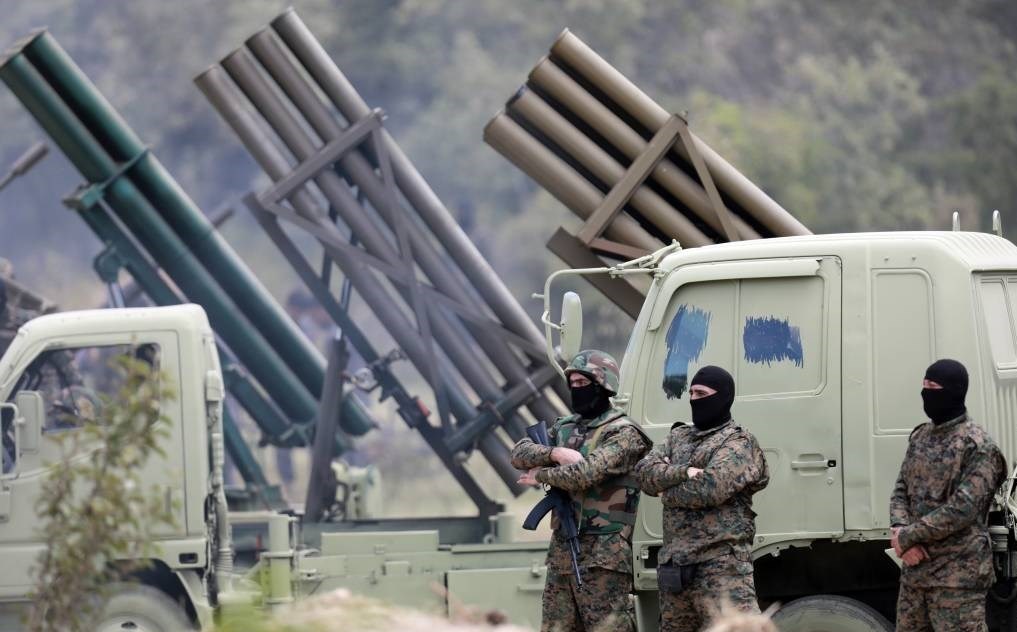
Hezbollah Uses Guided Rockets and FPV Drones Against IDF Targets
Hezbollah released footage on 15 May showing four rockets, including two Nasr-2 guided munitions, launched toward an Israeli base near Nahariya and multiple FPV drone strikes on vehicles and a Merkava tank along the Israel-Lebanon border. The attacks reportedly occurred in the hours before 05:02 UTC.
Key Takeaways
- Hezbollah fired four rockets, including two Nasr‑2 guided rockets, at an Israeli base near Nahariya in northern Israel.
- Simultaneous or related operations used FPV drones to strike Israeli vehicles and a Merkava tank along the Israel‑Lebanon border and near Aainata in southern Lebanon.
- Israeli defenses reportedly intercepted only one rocket, with others landing in open areas; the status of ground damage and casualties remains unclear.
- The incidents highlight the rapid integration of precision rockets and FPV drones into Hezbollah’s border campaign against Israel.
By around 05:02 UTC on 15 May 2026, Hezbollah had publicly released multiple video clips documenting recent attacks against Israeli military targets along the Israel‑Lebanon frontier. The footage shows the launch of four rockets toward an Israeli base near Nahariya in northern Israel, with at least two of the munitions identified as Nasr‑2 guided rockets. In separate but temporally proximate footage, Hezbollah displayed first‑person‑view (FPV) drone strikes on Israeli vehicles, including a van carrying soldiers, and on a Merkava tank near the town of Aainata in southern Lebanon.
Israeli sources indicated that during the rocket salvo near Nahariya, air defenses—likely Iron Dome or related systems—intercepted one projectile, while three others landed in what were described as "open areas." Given that two of these were guided rockets, the term "open areas" may obscure potential near‑misses or partial damage near the intended military target. The lack of immediate reporting on Israeli military casualties makes it difficult to assess the tactical outcome, but the publication of clear Hezbollah video evidence serves as a messaging tool regardless of damage levels.
The FPV drone footage is operationally significant. One clip shows a drone striking a van understood to be transporting Israeli soldiers to a frontline position along the border. Another depicts an FPV drone attack on a Merkava tank in or near Aainata, with visible damage and surrounding burned‑out vehicles. These attacks demonstrate Hezbollah’s growing sophistication in employing inexpensive, camera‑equipped drones for precision strikes, targeting not only static positions but moving and armored targets.
Key actors in these engagements are Hezbollah’s military wing, the Israel Defense Forces (IDF), and associated air defense and armored units. The IDF later confirmed the death of Staff Sergeant Negev Dagan, 20, in Lebanon, acknowledging ongoing combat in the border area, though it did not directly tie his death to a specific incident shown in the released footage.
These events matter for several reasons. First, they underscore that the Israel‑Lebanon border remains an active and technologically evolving conflict zone. Hezbollah’s use of guided rockets like Nasr‑2 expands its ability to hit point targets with greater accuracy than traditional unguided artillery rockets, potentially threatening critical military infrastructure and raising the risk of more damaging strikes if defenses fail.
Second, the proliferation of FPV drones capable of penetrating armor weak spots or striking lightly protected transport vehicles poses a growing challenge to conventional forces. Even well‑armored tanks such as the Merkava are vulnerable from top‑attack angles or when stationary, forcing the IDF to adapt tactics, enhance active protection systems, and improve counter‑drone measures.
Regionally, these actions feed into a broader pattern of low‑ to medium‑intensity conflict across Israel’s northern front. They heighten the risk of miscalculation, where a successful strike causing high Israeli casualties—or an Israeli response causing substantial civilian harm in Lebanon—could catalyze rapid escalation beyond the current tit‑for‑tat framework. This dynamic is being closely monitored by regional actors and global powers concerned about a wider regional war.
Outlook & Way Forward
In the near term, the IDF is likely to respond with targeted strikes on Hezbollah observation posts, launch sites, and suspected drone workshops or depots in southern Lebanon. Expect intensified Israeli surveillance along the border, including greater use of counter‑UAS systems and electronic warfare to disrupt FPV drone operations. The IDF may also revise movement protocols for troop transport and armor in exposed sectors, minimizing predictable routes and static deployments.
Hezbollah, for its part, appears intent on demonstrating that it can steadily erode Israeli military freedom of action along the frontier while avoiding actions that would trigger full‑scale war. The group will likely continue to refine its mixed‑mode tactics—combining guided rockets, FPV drones, and anti‑tank guided missiles—while leveraging propaganda value through curated video releases.
Strategically, observers should watch for changes in the scale and precision of Hezbollah’s rocket salvos and the frequency of successful drone strikes. Key indicators of potential escalation include large‑scale Israeli civilian casualties, concentrated Hezbollah attacks on critical infrastructure, or Israeli preemptive strikes deep into Lebanese territory. Diplomatic activity by external actors, particularly the United States and European states, will try to cap escalation by reinforcing existing informal red lines. However, the increasing lethality and accuracy of weapons on both sides narrows the margin for error, making robust de‑confliction and crisis communication mechanisms more vital than ever.
Sources
- OSINT