U.S. Strategic Oil Buffer Hits Lowest Level Since 1983, Tightening Washington’s Energy Margin for Error
The U.S. Strategic Petroleum Reserve has fallen by 5.1 million barrels to its lowest level in more than four decades, even as shipping through the Strait of Hormuz is disrupted by U.S.–Iran tensions. The drawdown narrows Washington’s ability to cushion future supply shocks and adds another layer of pressure to already anxious energy markets.
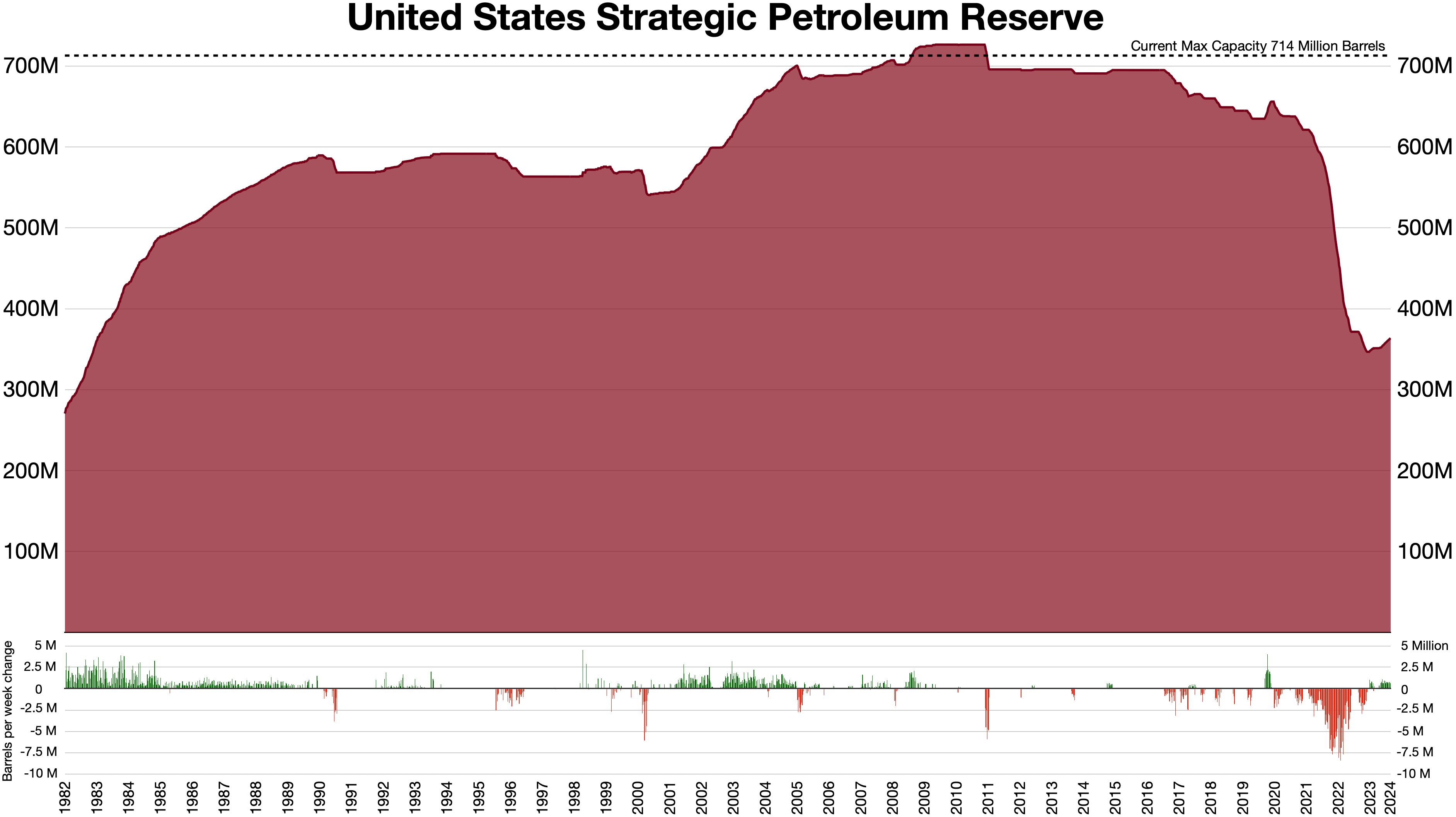
America’s emergency oil stockpile has slipped to its lowest level since 1983, narrowing the government’s capacity to blunt future supply shocks at a moment when tension with Iran is already constraining flows through the Strait of Hormuz. A reported 5.1‑million‑barrel decline in the U.S. Strategic Petroleum Reserve (SPR) has pushed holdings down to a 43‑year low, underscoring how the buffer built for wars and hurricanes has been steadily eroded.
The latest draw brings the reserve — stored in underground salt caverns along the U.S. Gulf Coast — well below the levels that underpinned America’s energy security posture during previous crises, from the first Gulf War to the early stages of Russia’s invasion of Ukraine. While the absolute volume remaining is still substantial in global terms, the trend line is what worries energy planners: each incremental reduction leaves Washington with less flexibility to respond quickly and decisively if a major supply disruption hits.
The timing is particularly sensitive. On 20 July, confirmed oil flows through the Strait of Hormuz sank to around 4 million barrels per day, the lowest since late May, as U.S. airstrikes targeted Iranian assets Washington says are used to attack commercial shipping. Hormuz is the transit route for a significant share of the world’s seaborne crude and condensate, and any additional shock — whether from direct attacks on tankers, infrastructure damage, or precautionary shipping delays — would land in a world where the U.S. has less spare emergency capacity to stabilize markets.
For U.S. consumers, the SPR’s decline does not automatically translate into higher pump prices tomorrow, but it does alter the politics of any future crisis. A White House confronted with a sudden spike in global prices after a refinery accident, a Gulf escalation, or a hurricane would have less room to deploy large, confidence‑boosting releases without further depleting the reserve to levels that could be hard to justify. That knowledge may make policymakers more cautious or more selective in using the SPR, leaving more of the adjustment burden on private inventories and market pricing.
Internationally, the thinning SPR weakens one leg of the coordinated response system that the International Energy Agency and its members have relied on since the 1970s. When major disruptions hit, Washington has typically led or joined collective stock releases designed to calm markets and signal resolve. A U.S. reserve at its lowest point since 1983 reduces the scale at which it can participate in such efforts, potentially forcing allies in Europe and Asia to shoulder a bigger share of the emergency response.
The drawdown also interacts with longer‑term shifts in U.S. energy strategy. Growth in domestic shale production and expanded pipeline and export capacity have made the United States a major net exporter of crude and refined products, leading some officials to argue that the country is less vulnerable to foreign shocks than it once was. But as the recent Hormuz disruptions show, global benchmarks and shipping chokepoints still heavily influence domestic prices, and U.S. refiners remain integrated into a worldwide system that can be rattled by events thousands of miles away.
For oil producers, traders, and shipping companies, the signal is clear: in the next serious disruption, they should expect less cushioning from government stock draws and more volatility in futures and spot markets. That, in turn, may encourage some actors to hold higher private inventories, push for longer‑term supply contracts, or demand higher risk premiums for cargoes that transit vulnerable routes.
A strategic reserve is, at root, an exercise in buying time — the time needed to reroute cargoes, ramp up production, or cool political tempers. As the U.S. SPR shrinks to levels not seen since the early Reagan era, the time it can buy in a severe crisis is shortening. The key signals to watch now are whether Washington announces plans to rebuild the reserve despite budget pressures, how quickly Hormuz flows rebound or deteriorate amid U.S.–Iran tensions, and whether other major consuming nations quietly adjust their own stockpiles to compensate for a leaner American cushion.
Sources
- OSINT