U.S. Oil Buffer Exposed as Strategic Reserve Drops to Lowest Level Since 1983
America’s Strategic Petroleum Reserve has fallen to its lowest level in more than four decades, thinning Washington’s main buffer against global oil shocks at a time of rising Gulf risk and war‑driven disruptions. The drawdown raises new questions about how much energy leverage the U.S. still has in a serious supply crisis.
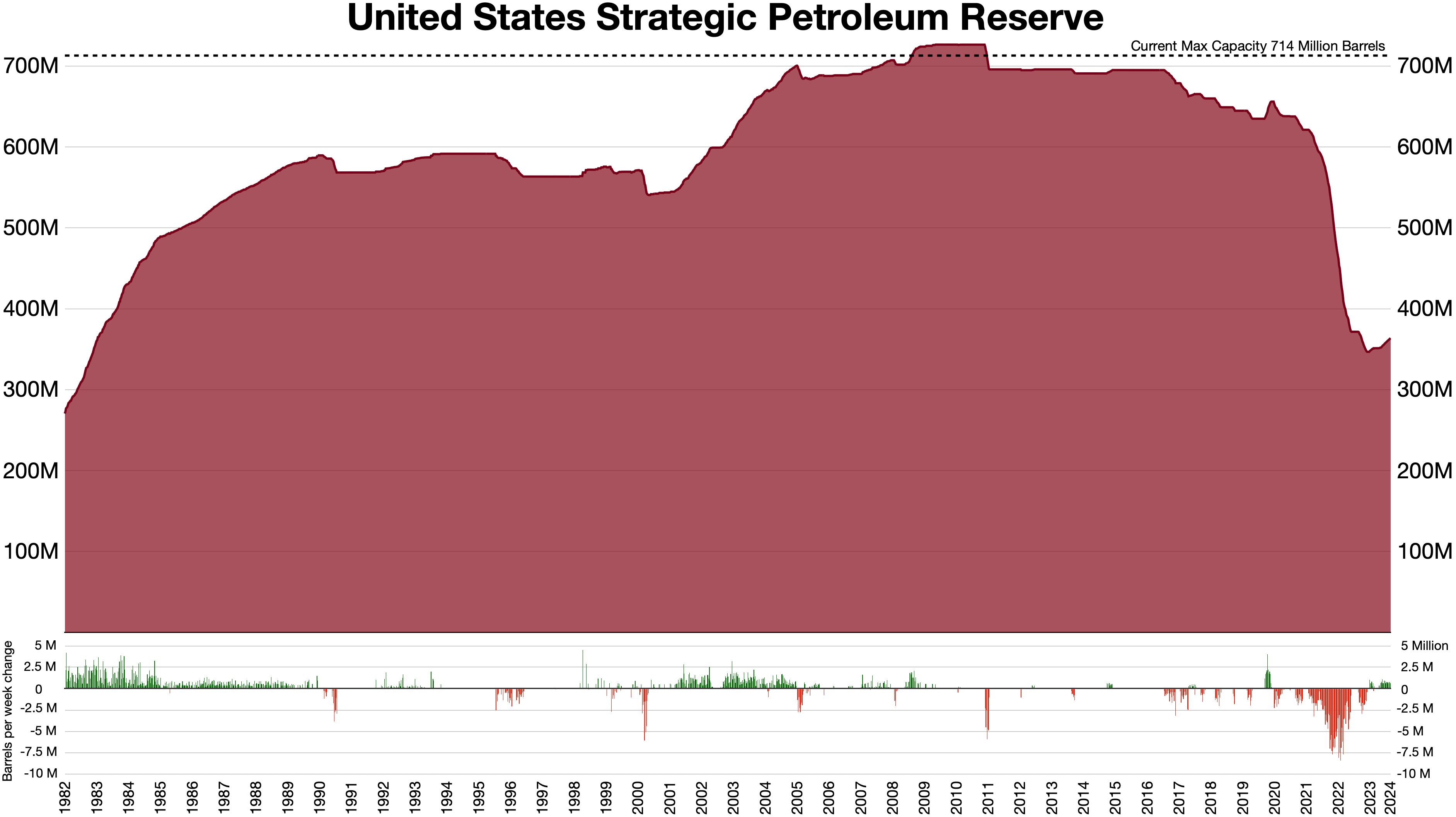
The U.S. Strategic Petroleum Reserve (SPR), the emergency stockpile intended to shield the world’s largest economy from severe oil shocks, has fallen to its lowest level since 1983, according to new data released on 21 July. The decline leaves Washington with less spare crude to deploy in a global crisis, just as tensions around key supply routes from the Middle East to the Black Sea are making disruptions more likely, not less.
The SPR, created in the wake of the 1970s oil embargo, has historically held up to 700 million barrels of crude in underground salt caverns along the Gulf Coast. Successive drawdowns — including large releases in response to the pandemic shock and Russia’s full‑scale invasion of Ukraine — have reduced inventories to their thinnest point in over 40 years. The exact barrel count was not detailed in the initial headline figure, but the benchmark comparison to 1983 underscores the scale of the depletion.
For U.S. consumers and businesses, the reserve’s level is not an abstract number. The SPR is the government’s most direct tool for cushioning sudden supply cuts that could otherwise drive fuel prices sharply higher, disrupt trucking and aviation, and filter through to food and goods costs. With less oil in storage, any future decision to tap the reserve in a conflict or natural disaster would carry more trade‑offs: support prices today at the cost of eroding tomorrow’s safety margin.
From a markets perspective, the thinner buffer changes the psychology of risk. Traders and producers have grown accustomed to the idea that Washington can flood the market with millions of barrels per day for months if needed, smoothing out spikes caused by wars, sanctions or shipping incidents. A historically low reserve does not eliminate that option, but it narrows its duration and scale, which in turn could make price surges during a severe outage sharper or more prolonged.
The timing is sensitive. Attacks and threats around the Strait of Hormuz have raised questions about the security of Gulf exports, while Russia’s war against Ukraine continues to affect Black Sea logistics and global crude flows. At the same time, infrastructure and climate risks — from hurricanes in the Gulf of Mexico to heat‑related power strains — can intersect with geopolitical shocks in ways that test both commercial inventories and government stockpiles.
Strategically, a diminished SPR also alters the energy component of U.S. foreign policy. The ability to reassure allies, deter adversaries contemplating supply coercion, or blunt the impact of sanctions on global markets all depend partly on how much oil Washington can quickly mobilize. A lower reserve may make the U.S. more cautious about using the SPR as a tool of diplomacy or domestic price management, especially in an election cycle, and could strengthen the hand of major producers such as Saudi Arabia or Russia in supply negotiations.
The deeper pattern is that emergency reserves, once built up over decades, can be drawn down in a few turbulent years but are much slower and more expensive to rebuild. Replenishing the SPR at scale requires sustained political will, budget allocations, and a price environment where buying large volumes of crude does not itself overheat the market — a balance that has been hard to strike.
The key signals to watch now include any formal plan from the U.S. administration and Congress to rebuild the reserve, including target levels and timelines; the pace of future sales or purchases announced by the Department of Energy; and how oil markets respond to additional geopolitical shocks knowing that America’s emergency cushion is thinner than at any point since the early 1980s. A major disruption affecting Gulf exports or another large producer while the SPR is near current levels would be the real‑world test of how much vulnerability this number represents.
Sources
- OSINT