US Oil Buffer Exposed: Strategic Reserve Falls to Lowest Level Since 1983 as Gulf Risks Rise
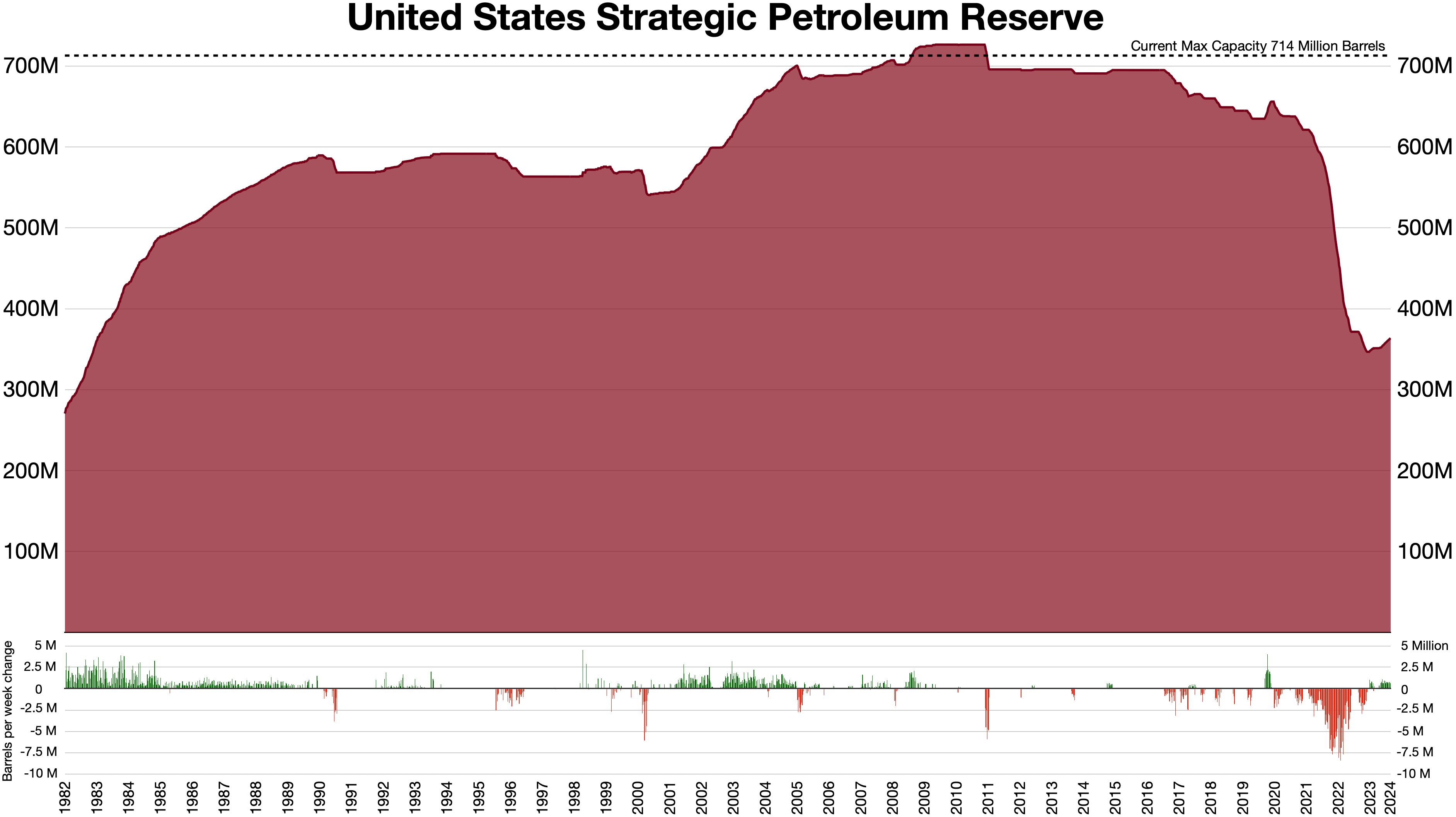
The US Strategic Petroleum Reserve has dropped to its lowest level since 1983, thinning Washington’s main emergency energy buffer just as confrontation with Iran raises fresh questions about Gulf oil flows. Energy traders, allies, and adversaries alike will be recalculating what it means when the world’s largest economy has less room to absorb a supply shock.
The United States has entered a new phase of energy exposure. With the Strategic Petroleum Reserve now at its lowest level since 1983, Washington’s main emergency oil cushion is thinner than it has been in more than four decades—at the same time as tensions with Iran and attacks around the Strait of Hormuz challenge the stability of global crude flows.
Fresh data as of 21 July UTC show the reserve’s volume has slipped to a level last seen in the early years of its operation, when US consumption and global demand were far lower. The decline follows a series of drawdowns in recent years aimed at cooling domestic fuel prices and cushioning supply disruptions. While exact barrel figures were not cited in the latest snapshot, the direction is clear: the “strategic” in the reserve now has to stretch further to cover a larger, more interconnected market.
For US consumers, the barrels in underground caverns along the Gulf Coast can feel distant, but their absence shows up quickly when crises hit. A thinner reserve reduces Washington’s ability to dampen price spikes at the pump after hurricanes, wars, or sanctions shocks. For refineries, it means less certainty that emergency crude will be available in volume and on short notice if imports are disrupted, complicating maintenance planning and feedstock buying strategies.
The strategic dimension goes beyond domestic politics. Allies in Europe and Asia have long counted on US capacity to coordinate large, rapid releases of emergency stocks through mechanisms like the International Energy Agency. When the US reserve is low, Washington has less leverage to lead coordinated responses to supply cuts, and less ability to quietly reassure partners that it can backstop flows from volatile regions such as the Gulf. Adversaries, in turn, can read a thinner reserve as a sign that certain levels of disruption may have more bite.
The timing matters. Reports of sustained US–Iran exchanges over ten nights and fires on oil tankers attempting to transit the Strait of Hormuz mean that one of the world’s most important maritime chokepoints is under growing pressure. Even the perception that flows through Hormuz might be at risk can move futures markets. A diminished US buffer magnifies that sensitivity, because traders know there is less spare capacity in government hands to lean against a sudden supply shock.
This shift also raises hard questions about how the reserve is used. In recent years, large drawdowns were deployed to relieve price pressure on motorists and to offset supply disruptions elsewhere, blurring the line between strategic crisis management and domestic economic policy. With stocks now at four‑decade lows, policymakers face a trade‑off: keep using the reserve as a tool against inflation and geopolitical shocks, or slow releases and rebuild volumes, accepting higher near‑term price volatility in exchange for future resilience.
The core insight is stark: in a world of weaponized energy and contested sea lanes, a strategic reserve is less about cheap gasoline and more about national bargaining power. When that reserve is low as conflicts flare around key chokepoints, every new tanker incident or production outage hits a system with less shock absorption.
Key signals to watch next include any announced plans by the US administration to accelerate replenishment purchases, potential adjustments to export policies for crude and refined products, and whether allies signal concern about the reduced buffer in quiet or public channels. Market reactions—in the form of a widening risk premium on Brent and WTI, or sharper moves after Gulf‑related incidents—will show how quickly traders are pricing in Washington’s thinner margin for error.
Sources
- OSINT