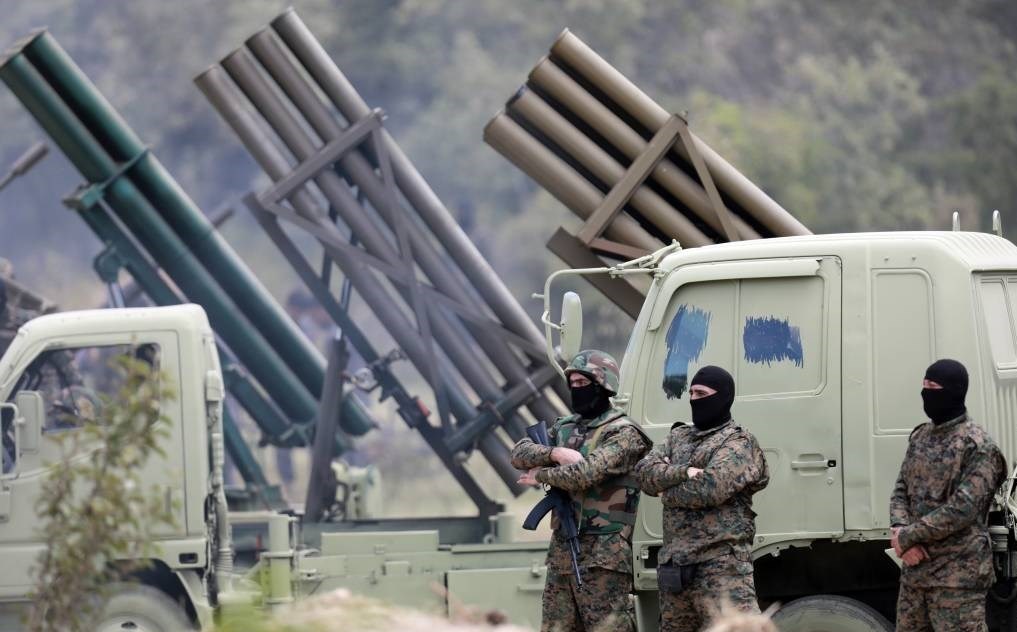
Hezbollah FPV Drones Hit Israeli Iron Dome Launcher, Crew
Severity: WARNING
Detected: 2026-05-10T13:38:50.439Z
Summary
Around 13:30–13:32 UTC on 10 May 2026, Hezbollah used fiber‑optic FPV kamikaze drones to strike an Israeli Iron Dome launcher and its operators at the Jal al-Allam site on the Lebanon–Israel border. The attack targets a critical Israeli air-defense asset and showcases Hezbollah’s growing precision drone capability, raising escalation risks in the wider Iran–Israel theater.
Details
- What happened and confirmed details
Between 13:29 and 13:32 UTC on 10 May 2026, multiple social media and OSINT posts (Reports 4, 11, 18) reported that Hezbollah conducted FPV (first-person view) kamikaze drone strikes against an Israeli Iron Dome air-defense launcher and its crew at the Jal al-Allam site along the Israel–Lebanon border. The posts specify the use of fiber‑optic guided FPV drones, likely armed with PG‑7(L) type warheads or improvised explosive devices. One strike reportedly hit the launcher, and a follow‑up strike targeted personnel working to remove or handle one of the non-damaged launchers.
Visual confirmation is referenced via a circulating video link, though we do not yet have independent verification beyond OSINT. No official casualty figures or damage assessments have been released by the Israel Defense Forces (IDF) as of 13:35 UTC.
- Who is involved and chain of command
The attackers are identified as Hezbollah, a Lebanese Shi’a militant and political organization with close operational, financial, and doctrinal ties to Iran’s Islamic Revolutionary Guard Corps–Qods Force (IRGC-QF). FPV drone units are typically subordinate to Hezbollah’s specialized aerial and rocket forces, which coordinate with IRGC advisors.
The target, an Iron Dome battery at Jal al-Allam, is part of Israel’s multi-layered air-defense network under the Israeli Air Force’s Air Defense Command. Destruction or disruption of launchers directly impacts local short-range missile and rocket interception capacity.
- Immediate military/security implications
Targeting an Iron Dome launcher rather than routine border outposts or vehicles is a notable escalation in Hezbollah’s choice of targets. It seeks to degrade Israel’s air-defense umbrella and demonstrate that critical systems are vulnerable to low-cost FPV drones.
Operational implications include:
- Localized reduction in interceptor capacity along the affected sector of the border until the launcher is repaired or replaced.
- Likely immediate Israeli retaliatory strikes on Hezbollah positions, launch sites, or drone workshops in southern Lebanon and possibly deeper into the Bekaa Valley.
- Reinforced Israeli emphasis on hardening air-defense assets, dispersal, camouflage, and counter‑FPV measures (electronic warfare, physical shields).
Strategically, this fits into Iran’s broader effort to pressure Israel and the US via its regional proxies while Tehran negotiates with Washington over an arrangement to “end the war in the region” and secure maritime routes, as indicated by concurrent Iranian statements (Reports 10 and 12). Demonstrated Hezbollah capabilities increase Israel’s incentive to demand tougher constraints on Iranian proxies in any regional deal.
- Market and economic impact
The immediate market impact is modest but directionally supportive of:
- Oil: Slight upward pressure on Brent/WTI via expanded geopolitical risk premium in the Levant, especially when combined with the parallel Iran–US talks over Gulf and Hormuz security. Any perception of risk that proxy clashes could spill over into attacks on energy infrastructure or shipping heightens volatility.
- Gold: Mild safe-haven bid as investors reassess tail risks of a wider Israel–Hezbollah confrontation that could draw in Iran more openly.
- Defense equities: Positive sentiment for firms involved in Israeli missile defense, anti‑drone systems, and tactical ISR as demand for counter‑FPV solutions grows.
At this stage, no direct impact on shipping lanes, pipelines, or regional production is reported, so broader equities and FX reaction should remain contained unless the clash escalates dramatically.
- Likely next 24–48 hour developments
- IDF response: Expect air and artillery strikes on suspected Hezbollah launch and control nodes; Israeli public messaging will aim to reassure about Iron Dome resilience.
- Hezbollah posture: Additional limited drone or rocket attacks are possible to demonstrate resolve, but Hezbollah is likely to avoid an immediate full-scale war unless triggered by disproportionate Israeli responses.
- Diplomatic track: The episode will feed into Israeli messaging to the US and European partners that Iranian-backed proxies are expanding their capability to penetrate Israeli defenses, strengthening Israel’s case for tougher constraints in any emerging Iran–US regional arrangement.
- Market watchpoints: Monitor for follow-on attacks on higher-value strategic assets (airbases, radars, Mediterranean gas platforms) or any linkage to Iranian threats around the Strait of Hormuz; such connections would materially increase energy market sensitivity.
Overall, this is a tactically contained but strategically meaningful escalation in the Israel–Hezbollah front, with modest but non‑negligible implications for regional risk pricing.
MARKET IMPACT ASSESSMENT: Incremental upside pressure on oil and gold via heightened Middle East risk premium, particularly when combined with concurrent Iran–US negotiations over regional war and Strait of Hormuz security. Defense sector names tied to Israeli and counter-drone systems could see interest; broader equities impact limited unless followed by sustained exchanges or strikes expanding to strategic infrastructure.
Sources
- OSINT