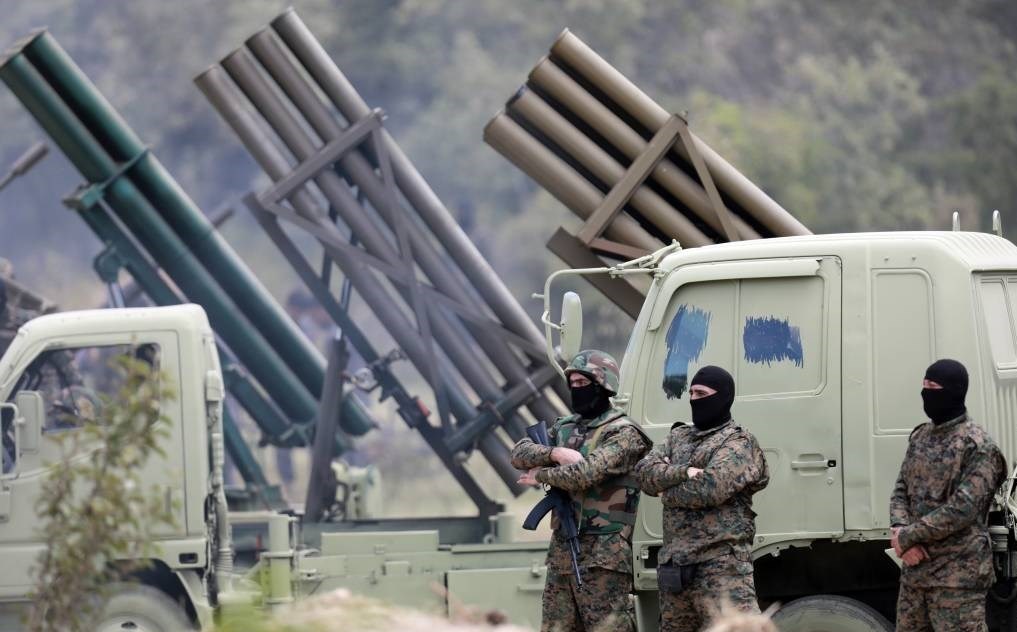
Hezbollah FPV Drones Hit Israeli Iron Dome, Crew on Border
Severity: WARNING
Detected: 2026-05-10T13:48:49.124Z
Summary
Around 13:30 UTC on 10 May 2026, Hezbollah FPV drones struck an Israeli Iron Dome launcher and air-defense crew at the Jal al-Allam site along the Lebanon–Israel border, using fiber‑optic guided kamikaze UAVs and follow‑up strikes on recovery teams. This is a significant tactical success against a key Israeli air-defense asset and signals improving Hezbollah strike capabilities, raising escalation and regional war-risk premiums.
Details
Between approximately 13:18 and 13:32 UTC on 10 May 2026, multiple OSINT reports (Reports 4, 11, 18) indicated that Hezbollah launched first‑person‑view (FPV) kamikaze drone strikes against an Israeli Iron Dome air-defense position at the Jal al-Allam site on the Lebanon–Israel border. The reports describe at least one strike directly impacting an Iron Dome launcher, followed by additional FPV attacks hitting air-defense operators and personnel attempting to remove or secure undamaged launchers. The drones are reported to be fiber‑optic guided FPV systems, likely carrying PG‑7(L) type warheads or improvised explosive devices.
Hezbollah’s use of fiber‑optic FPV drones suggests a deliberate effort to circumvent Israeli electronic warfare and GPS jamming around critical air-defense sites. Jal al-Allam is a known IDF position along the northern frontier; targeting Iron Dome launchers and their crews represents an attack on one of Israel’s core defensive systems, not just on frontline infantry or observation posts. While casualty figures and the extent of damage remain unconfirmed at this time, available video and text reports are consistent that both hardware and personnel were struck.
Militarily, this represents a qualitative escalation in Hezbollah’s campaign: (1) it demonstrates the group’s growing technical competence with precision FPV systems against defended, high‑value targets; (2) it threatens to degrade local Iron Dome capacity, potentially reducing Israel’s ability to intercept rockets, missiles, or UAVs in the northern theater; and (3) it may force the IDF to reposition or harden air-defense assets, altering its force posture along the Lebanon front. Repeated successful hits on Iron Dome batteries could embolden Hezbollah to increase rocket fire or attempt saturation attacks, raising the risk of a broader confrontation that might draw in Iran more directly and trigger US support operations.
From a market perspective, while there is no immediate disruption to energy infrastructure or shipping, the incident marginally increases perceived escalation risk in the eastern Mediterranean and broader Middle East. Energy traders will factor in a slightly higher probability of a wider Israel–Hezbollah confrontation that could, in extreme scenarios, involve Iranian assets and threaten Gulf production or transit routes. This supports a modest risk premium in crude oil and refined products, as well as a bid to traditional safe havens like gold and the US dollar. Defense sector equities, particularly drone, missile defense, and electronic warfare manufacturers, may see positive sentiment on expectations of increased procurement and R&D spending.
Over the next 24–48 hours, watch for: (1) IDF retaliation levels in Lebanon and any targeted strikes on Hezbollah drone infrastructure; (2) whether Hezbollah publicizes the attack with video, indicating confidence and shaping the information space; (3) Israeli political and military statements that could signal a shift toward larger‑scale operations in the north; and (4) any adjustments in US military posture in the region, including ISR and air assets, which would further influence market perceptions of regional stability.
MARKET IMPACT ASSESSMENT: Incrementally bullish for oil and gold via higher Middle East escalation risk premium; modest risk-off bias for regional equities and EM FX. No confirmed direct impact yet on energy infrastructure or shipping, but increased perception that Israel’s air-defense umbrella is more vulnerable raises tail risks around wider conflict scenarios that could affect Gulf production and the Strait of Hormuz.
Sources
- OSINT