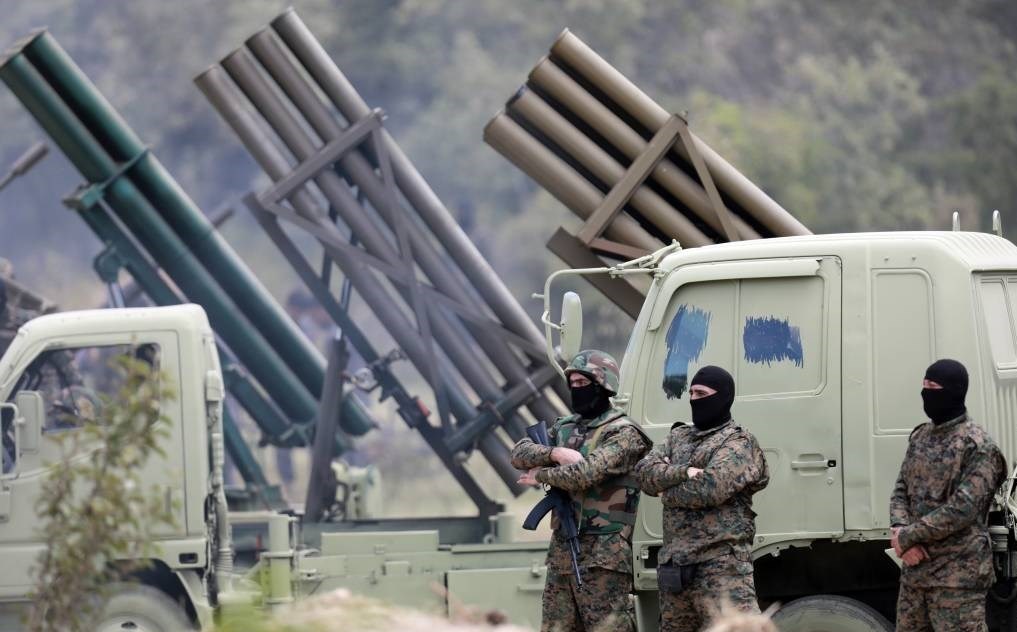
Hezbollah ‘Violation’ List Raises Escalation Risk as Israel Targets Tunnel in South Lebanon
Hezbollah has issued an unusually detailed catalogue of alleged Israeli attacks on homes across southern Lebanon, even as Israel says it destroyed a 200‑meter underground tunnel used by the group. For families evacuating towns like Nabatieh, this messaging war is measured not in rhetoric but in whether their houses stand tomorrow. Readers will see how documentation, tunnels, and evacuations are becoming tools in a fight that risks spilling beyond the border.
Hezbollah’s decision to publicly enumerate a day’s worth of alleged Israeli strikes on Lebanese homes, alongside Israel’s claim to have demolished a long attack tunnel in the south, marks a shift in how each side is preparing its argument for the next phase of confrontation. The border has seen steady exchanges for months, but the detailed accounting of “violations” and the destruction of underground infrastructure point to a conflict that is moving further into civilian spaces while also sinking deeper below ground.
Overnight into 29 June, Hezbollah distributed a leaflet that carefully listed what it described as Israeli Defense Forces attacks the previous day in southern Lebanon. The document, highlighted by Lebanese and regional outlets, cited airstrikes on residential buildings in the city of Nabatieh and the village of Mifdoun, a drone strike on open land in Faroun, and explosions that hit homes in the villages of Taybeh and Khiam, among other incidents. The group framed the list as evidence of Israeli aggression; Israel has not publicly responded to this specific leaflet but has repeatedly said it targets military sites and launch areas embedded in populated zones.
Lebanese channels reported late on 28 June that residents were evacuating from Nabatieh after recent Israeli strikes, underscoring the human dimension behind the legalistic language of “violations.” For families in these areas, the question is not the finer points of international humanitarian law but whether to abandon property and livelihoods in anticipation of a broader war that officials still insist they do not want.
For Hezbollah, publishing an exhaustive record of alleged attacks appears designed to create a pre‑emptive justification for its own response. The group has long relied on claims of defending Lebanese territory to legitimize rocket fire and cross‑border raids; a publicly documented pattern of strikes on homes makes it easier to argue that any escalation is retaliatory rather than initiatory. The phrase circulating among observers — “building legitimacy for an attack” — captures the way spreadsheets of damage can become political cover for firepower.
On the Israeli side, the army said on 29 June that it had destroyed a Hezbollah tunnel more than 200 meters long in southern Lebanon. While the military did not disclose the precise location, it portrayed the tunnel as part of a broader offensive network designed to infiltrate Israeli territory or move fighters and weapons close to the border out of sight. Subterranean routes have been a persistent feature of Hezbollah’s defense and attack planning, complicating Israeli attempts to neutralize the group’s capabilities without causing widespread destruction above ground.
Tunnels and leaflets might seem like separate arenas — one hidden, one public — but they serve converging purposes. The tunnel increases Hezbollah’s ability to move and strike without warning; the leaflet works to frame any future attack as an answer to Israeli actions already taken. Together, they form a narrative and operational scaffolding around potential escalation, making it easier for each side to claim necessity and restraint even as the risk of miscalculation grows.
For civilians in southern Lebanon, especially in districts like Nabatieh that now feature both bomb damage and formal documentation of it, the effect is to be pulled further into the logic of deterrence. Homes double as evidence files; evacuation decisions double as political signals. The border region becomes not just a defensive belt but a theatre in which every strike is pre‑positioned as a legal argument.
The key indicators to watch now are whether Hezbollah moves from documentation to a notable shift in the tempo or range of its fire, and how Israel reacts to any such change while continuing to search for and destroy cross‑border tunnels. A sustained pattern of tit‑for‑tat framed by ever more detailed claims and counterclaims would mean the battle for legitimacy is no longer peripheral to the conflict — it is one of the primary fronts.
Sources
- OSINT