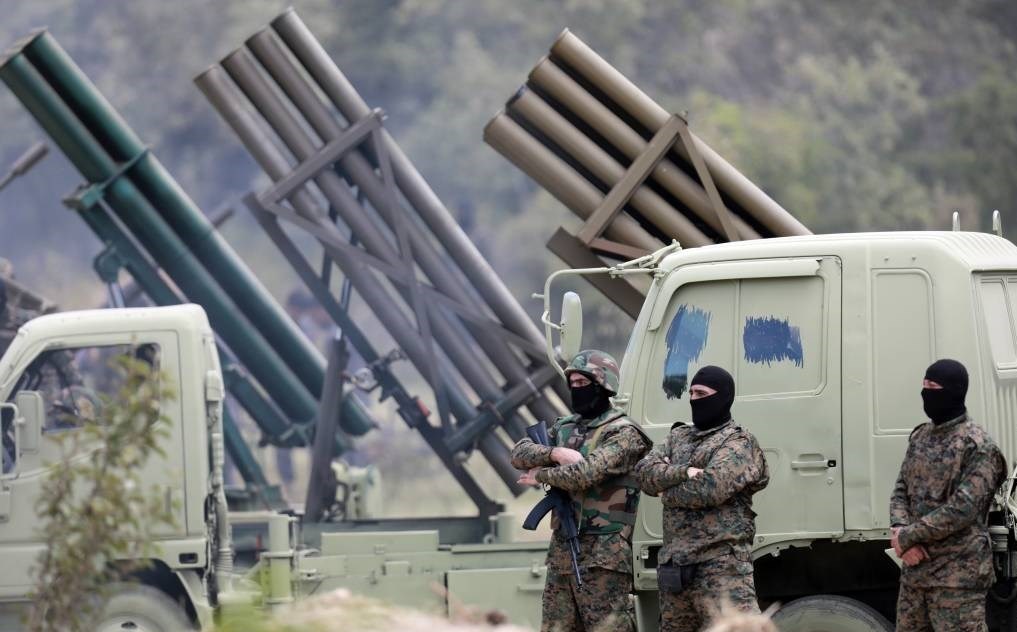
Lebanese Army Move South Under U.S. Eyes Tests Fragile Buffer Between Israel and Hezbollah
The Lebanese army is expected to deploy into southern Lebanon within hours under U.S. supervision, in what is described as part of a three‑way military collaboration with Israel. If realized, the move would insert state forces more directly into a border zone dominated by Hezbollah — and test whether diplomats can carve out even a limited buffer in a war‑threatened strip of land.
Moving the Lebanese army deeper into the country’s south has long been a talking point in UN resolutions and diplomatic communiqués. Doing it under U.S. supervision, in coordination with Israel, would be something else entirely — a real test of whether state institutions can reclaim ground in a border region where Hezbollah has become the dominant armed force.
On 29 June, regional reporting indicated that the Lebanese army was set to deploy into southern Lebanon within hours, described as occurring under U.S. supervision and as part of an Israel–Lebanon–U.S. military collaboration. Details on the size, exact locations and mandate of the deployment were not made public in the initial accounts, and there was no immediate comprehensive confirmation from all three capitals. That ambiguity matters: past initiatives around UN Security Council Resolution 1701, which calls for the area between the Litani River and the Israeli border to be free of unauthorized weapons, have repeatedly run up against political realities on the ground.
For civilians in southern Lebanon, the prospect of regular army units moving into areas where Hezbollah has long held sway carries mixed implications. On one hand, formal state forces can, in theory, provide more predictable rules of engagement and a clearer chain of command than a non‑state militia. Their presence might reduce the frequency of rocket launches and retaliatory strikes near populated areas, making daily life less precarious. On the other hand, any visible handover or friction between the army and Hezbollah risks turning villages into contested symbolic terrain, with residents caught between competing claims to represent “resistance” or “sovereignty.”
On the Israeli side of the border, the deployment will be watched as a test of whether Beirut is willing and able to constrain Hezbollah’s military footprint near Israeli communities. Israel has repeatedly demanded that Hezbollah forces pull back north of the Litani and that the Lebanese army and UN peacekeepers fill the vacuum. If Israeli officials judge the new deployment to be cosmetic, or if rockets and anti‑tank fire continue from close to army positions, domestic pressure for stronger unilateral action is likely to grow.
For Washington, playing a supervisory role in any trilateral arrangement raises both opportunity and risk. The United States has long provided training and equipment to the Lebanese Armed Forces while maintaining its close security partnership with Israel. Facilitating an on‑the‑ground mechanism that reduces the chance of a full‑scale Israel–Hezbollah war would be a significant diplomatic achievement. But if army units are seen as ineffective or as shields for Hezbollah activity, the optics of U.S. involvement could backfire in Congress and among regional partners.
The deployment talk is unfolding as Hezbollah publicizes detailed lists of alleged Israeli “violations” in southern Lebanon, including airstrikes on residential buildings and drone strikes on rural land. Such messaging appears aimed at building legal and political justification for its own operations, reinforcing the sense that both sides are preparing narratives as much as moves on the ground. In that environment, the arrival of army units — even if limited in scope — could be used by each camp to support very different stories about who is defending Lebanese civilians.
The larger truth is that a buffer zone is only as real as the guns that enforce it. Putting state uniforms closer to the border is an important signal, but the real measure will be whether rocket fire decreases, cross‑border incidents decline and residents in frontier towns feel any safer walking outside after dark.
In the near term, the critical indicators will be satellite and eyewitness reports on where Lebanese army units actually deploy; any adjustments in Hezbollah’s visible presence near the border; Israeli military statements on how they will treat positions held by the Lebanese army; and whether UN peacekeepers adjust their patrol patterns to integrate or monitor the new arrangement.
Sources
- OSINT