Hezbollah–Israel Strikes Deepen Lebanon Border Risk for Civilians and Soldiers
Israeli forces say they hit five Hezbollah fighters in southern Lebanon after detecting a threat, as Lebanese sources report late‑night airstrikes on the village of Beit Yahoun. The exchange keeps border communities and front‑line units under steady pressure, with each localized strike carrying the risk of a wider confrontation.
Southern Lebanon and northern Israel spent another night caught between reconnaissance flights, flare‑lit skies and sudden explosions, as the low‑intensity war between Israel and Hezbollah pushed on with new strikes and counter‑strikes. The tempo is far from a full‑scale conflict, but frequent enough that civilians and soldiers along the frontier are living in a permanent grey zone between routine and escalation.
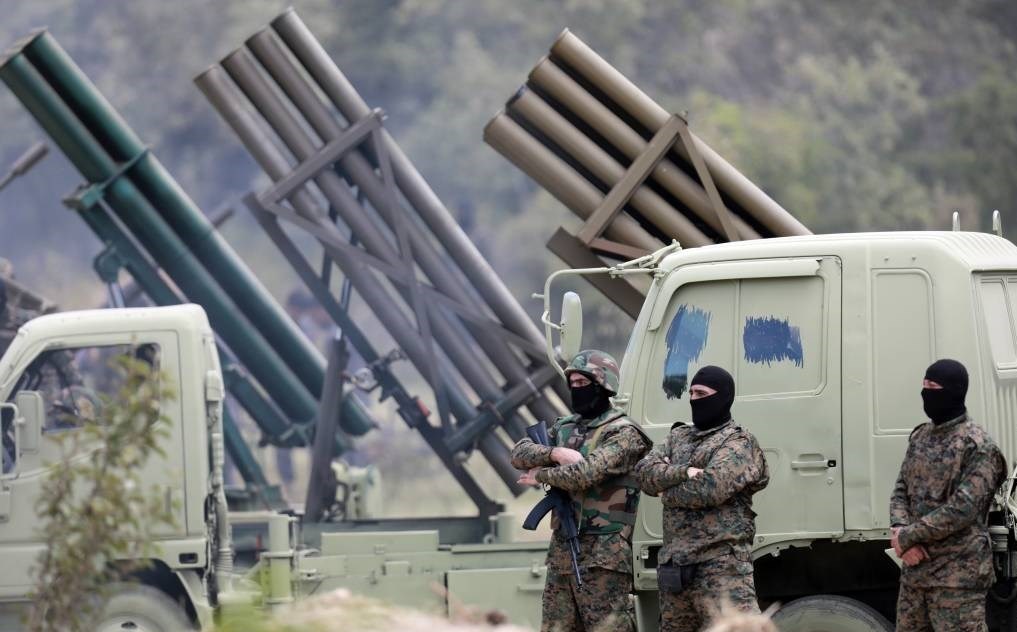
On Thursday, the Israel Defense Forces said its troops operating inside what it calls a security zone in southern Lebanon had identified five Hezbollah fighters who, according to the IDF, posed a threat to Israeli soldiers. The military said it then carried out strikes on those individuals. The statement did not specify the exact means of attack or confirm casualties, and Hezbollah did not immediately publish its own loss figures, though it acknowledged the incident in a leaflet accusing the Israeli army of carrying out a strike earlier in the day in the Mifdoun area.
Lebanese sources separately reported that the Israeli Air Force conducted strikes shortly before midnight on the village of Beit Yahoun in southern Lebanon. Details on damage and casualties were not immediately available. Earlier in the night, witnesses saw an Israeli fighter jet release flares over parts of southern Lebanon—a common tactic used to confuse heat‑seeking missiles and illuminate terrain, but also a visual reminder to local residents that combat aircraft are circling overhead.
For villagers in places like Beit Yahoun and Mifdoun, the practical consequences range from shattered windows and damaged homes to the ever‑present calculation of when to send children to school or flee to relatives in safer areas. For farmers and shopkeepers, each reported strike can mean fields left fallow and businesses shuttered, while the risk of being in the wrong place at the wrong time rises with every drone, rocket or bomb that crosses the border.
On the Israeli side, communities in the north have faced intermittent evacuations and restrictions for months. Soldiers operate in terrain laced with Hezbollah observation posts, underground infrastructure and anti‑tank missile positions. The IDF’s claim that it struck fighters who “posed a threat” reflects an environment in which command decisions to engage are often made under severe time pressure, with incomplete information and high political stakes if an attack is perceived as either too aggressive or too restrained.
Strategically, the pattern of Hezbollah attacks and Israeli responses risks normalizing a low‑level war that could tip into something larger through miscalculation or a mass‑casualty event. Hezbollah’s decision to broadcast leaflets describing Israeli strikes is part propaganda, part signaling: it seeks to show resolve to its own supporters and warn Israel that its actions will be documented and avenged, while staying just below the threshold that might provoke a major Israeli ground operation.
Israel, in turn, is calibrating between demonstrating freedom of action in Lebanese airspace and avoiding steps that would drag it into a full war while it is still stretched by other fronts and domestic political tensions. For both sides, southern Lebanon functions as a pressure valve and a bargaining chip in wider regional struggles involving Iran, Syria and the Palestinians.
The shareable insight here is that a conflict does not need a formal declaration to redraw how people live; a steady drip of measured strikes can slowly turn borderlands into zones where normal life is always provisional. Each localized attack creates its own precedent for what is “acceptable” brinkmanship.
In the days ahead, key signals will be whether Hezbollah escalates with deeper or more accurate rocket fire into Israel, whether Israeli strikes start moving beyond border villages to hit further north, and how international mediators respond. Any significant civilian casualty incident, on either side, could quickly test whether the current rules of this undeclared war still hold.
Sources
- OSINT