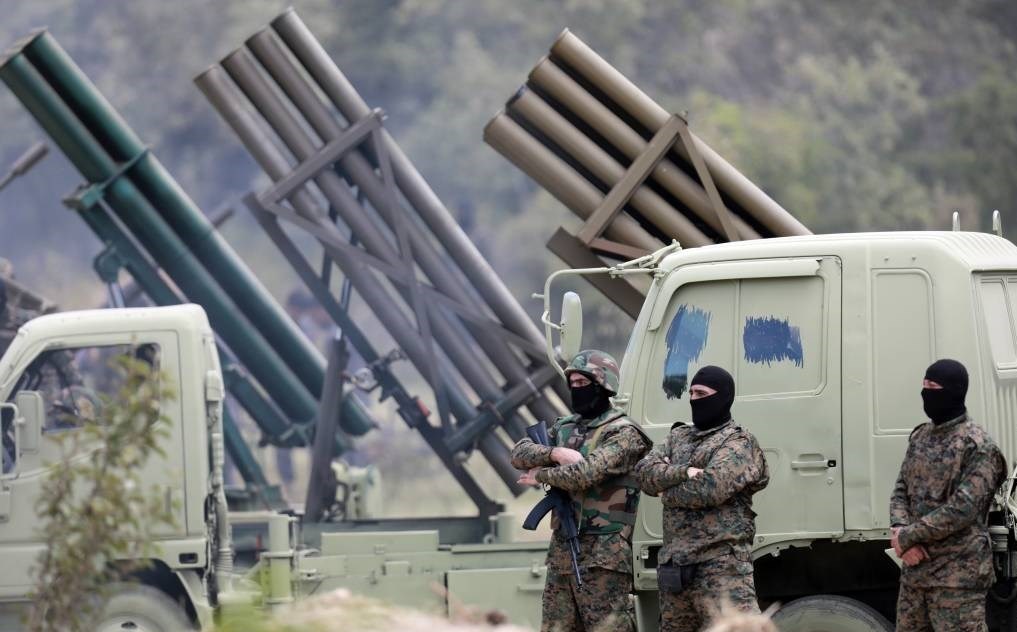
Hezbollah’s 358 Missile Downs Israeli ‘Heron’ Drone, Exposing New Air Defense Threat Over Lebanon
A Hezbollah‑launched 358 surface‑to‑air missile reportedly shot down an Israeli Heron reconnaissance drone over Lebanon’s Bekaa Valley, showcasing a growing non‑state air defense threat. For Israeli planners, Hezbollah fighters and civilians under these skies, unmanned surveillance is no longer a one‑sided advantage.
The reported downing of an Israeli Heron reconnaissance drone by a Hezbollah 358 surface‑to‑air missile over Lebanon’s Bekaa Valley is a reminder that airspace once dominated by state militaries is becoming more contested, even against well‑resourced forces. If confirmed, the strike would mark another step in the steady upgrade of Hezbollah’s ability to challenge Israel’s uncrewed surveillance fleet.
Accounts circulating on 16 June described an Israeli Heron UAV being hit over the Bekaa by a 358 anti‑air missile attributed to Hezbollah. The 358 is understood to use a thermal imaging guidance system that can track a designated target independently of its launch platform. The available reporting notes the system’s sophistication in following a locked target, but does not confirm whether it is paired with radar or relies purely on electro‑optical and infrared sensors. Israel has not publicly acknowledged the specific incident, and Hezbollah has not issued a detailed technical statement, leaving some tactical details unverified.
The immediate impact is on the crews and commanders who have long relied on drones like the Heron to watch Lebanese territory with relatively low risk. Each UAV that fails to return represents not just a financial loss—these are large, high‑endurance platforms—but a gap in surveillance coverage that troops on the ground have come to expect as routine. For civilians in the Bekaa Valley and surrounding regions, the proliferation of both drones and anti‑air missiles increases the chance that fragments or misfires will land in populated areas, turning previously unseen aerial duels into tangible local danger.
Operationally, a proven ability by Hezbollah to shoot down advanced Israeli drones would force adjustments in how Israel conducts reconnaissance and targeting along its northern frontier. Flight paths, altitudes and sensor packages may have to be re‑evaluated, and more expensive or scarce platforms could be held back to mitigate loss risk. At the same time, Hezbollah’s operators gain valuable experience in detecting, tracking and engaging moving aerial targets—skills that are transferable to other systems and scenarios.
Strategically, the use of 358 missiles speaks to the ongoing arms pipeline that has, over years, equipped Hezbollah with capabilities closer to those of a regular military. For Israel, this raises the cost of any sustained campaign over Lebanon, as air assets can no longer assume permissive conditions at medium altitude. For regional actors and external powers, the spread of such systems to a non‑state group complicates air operations in and around Lebanese airspace, including for countries that fly surveillance or support missions nearby.
This episode also fits into a broader technological race between uncrewed systems and the weapons designed to defeat them. As drones become a staple of intelligence and strike operations from Gaza to Ukraine and beyond, even relatively small actors are investing in layered air defenses that can threaten slow, high‑flying UAVs. A single shoot‑down does not overturn Israel’s aerial advantage, but it chips away at the assumption that drones can loiter overhead with impunity.
The key insight is that when non‑state groups acquire and learn to operate precision air‑defense weapons, the boundary between regular and irregular warfare blurs further, and civilians end up living under increasingly complex and unpredictable skies.
Signals to watch include corroborated imagery of the downed Heron or missile remnants, Israeli adjustments in drone activity over Lebanon, and any evidence that similar systems are being deployed more widely by Hezbollah or allied groups. A pattern of repeated successful engagements would mark a significant shift in the airpower balance along one of the region’s most volatile borders.
Sources
- OSINT