Hezbollah’s FPV Drone and Rocket Strikes on IDF Positions Deepen Pressure on Israel’s Northern Front
Hezbollah has released a stream of videos showing FPV drone strikes on Israeli tanks and soldiers and rocket launches at IDF positions near Beaufort Castle, Naqoura and other southern Lebanese towns. The footage signals a technically evolving, persistent low‑intensity conflict that keeps Israel’s northern communities and forces under constant threat, even as diplomats talk ceasefires.
Even as Iranian officials talk publicly about ceasefire clauses and de‑escalation packages, the ground reality along Israel’s northern border on 15 June looks very different: more footage of drones diving onto Israeli armor, more launches of rockets toward IDF outposts, and a slow grind of pressure that shows no sign of stopping.
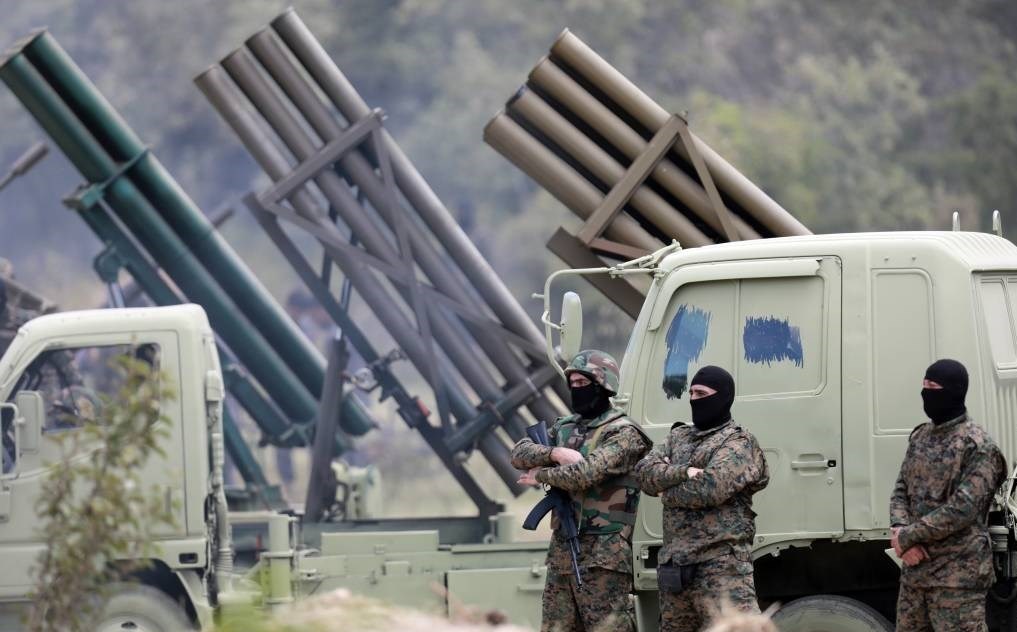
Hezbollah’s media channels on 15 June released multiple videos of recent operations against Israeli positions in southern Lebanon and across the border. The clips highlight two main tools: first‑person‑view (FPV) kamikaze drones guided into specific targets, and a mix of short‑ and longer‑range rockets aimed at IDF sites.
One series of videos shows the launch of a kamikaze drone toward Israeli positions near Naqoura on the Mediterranean coast, a town that has seen repeated exchanges of fire during the current confrontation. Separate footage documents an FPV drone strike on an IDF position in the town of Al‑Bayada, also in southern Lebanon. Another video shows Fadjr‑3 artillery rockets being launched toward IDF positions near the historic Beaufort Castle, north of the Litani River — a line that in past arrangements was supposed to mark a buffer zone largely free of Hezbollah military presence.
Additional footage posted the same morning shows an FPV drone dive‑bombing what is described as an IDF Merkava tank near Beaufort, as well as an FPV strike on a small group of four Israeli soldiers in the town of Zawtar El Charqiyeh, further inland. The video suggests that at least two of the soldiers were seriously injured, though casualty counts from combat footage are difficult to verify independently. Another clip depicts the launch of a long‑range rocket toward IDF positions in the town of Dibbine, underlining that Hezbollah is willing to reach deeper into the border zone.
For Israeli troops and northern communities, the consequences are immediate: routine movements now carry the risk of overhead drones with cameras and warheads, armored vehicles are no longer safe simply because they are behind the line, and bases well away from the fence can still draw rocket fire. FPV drones, in particular, compress the window between detection and impact to seconds, complicating traditional force protection.
Operationally, Hezbollah’s growing library of footage serves several purposes. It signals to its domestic audience and to Tehran that the group is actively engaging the IDF, raises the psychological cost for Israeli soldiers who know their positions may be recorded and broadcast, and advertises real‑world testing of drone tactics that other Iran‑aligned groups can emulate. Each successful hit on a tank or infantry team may be limited in pure military terms, but together they erode the sense of security on the Israeli side of the frontier and tie up resources in static defense.
Strategically, these engagements keep the northern front at a slow boil just as diplomatic efforts center on getting Iran to accept ceasefire and de‑escalation commitments. Hezbollah can calibrate its tempo of attacks to maintain pressure without tipping into the kind of all‑out confrontation that would draw wider intervention. From Israel’s perspective, however, a growing tally of drone strikes and wounded soldiers makes any future political agreement that leaves Hezbollah armed and deployed near the border far harder to sell domestically.
The pattern over recent months is clear: low‑unit‑cost, operator‑guided drones are turning traditional border skirmishing into a far more lethal, precise contest, particularly in the hilly terrain of southern Lebanon where line‑of‑sight drone operations are feasible. For commanders on both sides, the risk is no longer theoretical — every exposed vehicle, antenna or squad can be a target for a camera‑equipped munition steered from a laptop.
In the coming days, the key questions will be whether Hezbollah reduces, maintains or escalates its rate of drone and rocket attacks if an Iran–US understanding moves forward, how Israel adjusts its posture and air defenses along the northern front, and whether any of these border clashes are formally folded into, or pointedly excluded from, emerging regional ceasefire language.
Sources
- OSINT