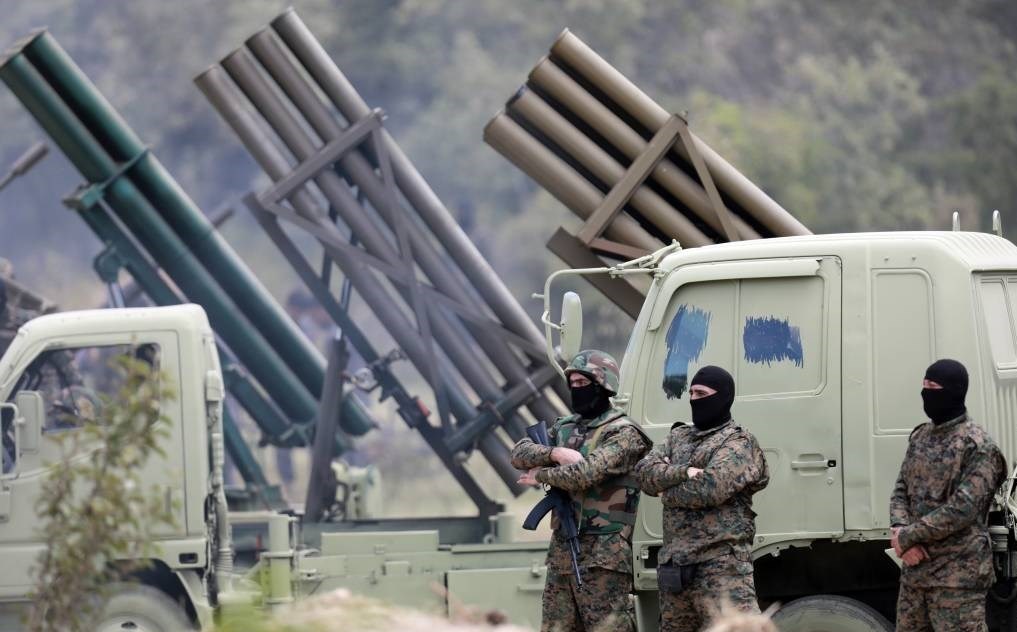
IDF Push Into Southern Lebanon Villages Deepens Ground War and Civilian Risk
Hezbollah has acknowledged Israeli forces operating beyond the ‘yellow line’ near Majdal Zoun, as Lebanese media describe buildings being rigged with explosives and heavy shelling on the Ali al‑Taher ridge. With more than 3,700 people already reported killed in Lebanon since March, the advance turns border villages into a live front line and raises the cost of any misstep for Beirut, Jerusalem, and Washington.
Southern Lebanon is shifting from a cross‑border fire exchange into a ground battle that is pulling entire villages into the line of fire. Israeli forces are now operating on the outskirts of Majdal Zoun and advancing along the Ali al‑Taher ridge, moves that Hezbollah itself has acknowledged — a sign the confrontation has entered a more dangerous phase for both civilians and regional stability.
According to Hezbollah’s public statements and Lebanese media, Israel Defense Forces units have moved beyond the so‑called yellow line — the de facto boundary in the western sector of southern Lebanon — to the outskirts of Majdal Zoun. The Lebanese state news agency reports that IDF troops have begun rigging buildings with explosives and detonating them inside the village. Separately, local outlets cite heavy Israeli artillery fire on the Ali al‑Taher ridge in the central sector, a key high‑ground area long associated with Hezbollah positions. Lebanon’s Ministry of Public Health says the cumulative death toll from Israeli operations in Lebanon since 2 March has risen to 3,756, with 11,632 wounded, suggesting a grinding campaign that is now edging deeper into populated terrain.
For residents of Majdal Zoun and surrounding villages, these maneuvers are not abstractions of strategy but questions of physical survival. Houses turned into military objectives by booby‑trapping and demolition leave families wondering if they will have anything to return to, even if they escape the immediate fighting. Across southern Lebanon, families have been uprooted multiple times over the past two decades; current operations again force parents to decide whether to flee, where to go, and how to keep children safe as roads come under shellfire. Hospitals and clinics already strained by weeks of casualties now face the prospect of treating people injured in urban demolitions and close‑quarters combat, where blast and shrapnel injuries can be severe.
Militarily, the reported IDF push beyond the border fence raises the cost and complexity of the conflict for both Israel and Hezbollah. For Israel, moving forces into Lebanese villages is a deliberate attempt to degrade Hezbollah’s local infrastructure and push its fighters away from the border — but it also risks exposing troops to ambushes and IEDs in dense environments Hezbollah knows well. For Hezbollah, publicly admitting the presence of IDF forces on Lebanese soil acknowledges a challenge to its central narrative as defender of the country’s territory. It must now decide how far to escalate to contest that presence without triggering the all‑out war that Lebanese state institutions, and much of its public, fear.
Diplomatically, the ground advance is colliding with outside pressure for de‑escalation. Regional outlets report that the United States is pressing Israel to achieve “tangible breakthroughs” in negotiations with Lebanon, presumably to create a political framework to halt or roll back hostilities. Yet as long as IDF units move further into Lebanese territory and Hezbollah continues cross‑border fire, any political track will be competing with battlefield realities that can shift in minutes. Syrian President Ahmad al‑Sharaa has publicly rejected claims of Syrian interference in Lebanon and called for bolstering Lebanese state institutions, signaling Damascus’s desire to stay formally clear of the conflict while still watching closely from next door.
If the current pattern holds — slow, methodical Israeli ground probes combined with heavy fire on ridges and village perimeters, and continued Hezbollah resistance — the humanitarian and political pressure on Beirut will climb sharply. Each demolished building in Majdal Zoun or shelled home near Ali al‑Taher adds to a reconstruction bill that Lebanon’s battered economy can barely imagine paying. Each additional civilian casualty feeds anger that can be channeled against Israel, against Hezbollah for inviting the confrontation, or against the Lebanese state for lacking alternatives.
Key Takeaways
- Hezbollah has acknowledged that Israeli forces are operating on the outskirts of Majdal Zoun, beyond the yellow line in southern Lebanon.
- Lebanese official media report IDF units rigging and detonating buildings in the village, while heavy artillery pounds the Ali al‑Taher ridge.
- Lebanon’s Health Ministry reports 3,756 dead and 11,632 wounded since the Israeli campaign began on 2 March.
- The shift toward ground operations in villages increases risks for civilians and complicates both Israeli military planning and Hezbollah’s response.
- U.S. diplomatic pressure on Israel to make progress in talks with Lebanon is colliding with facts being created on the ground.
Outlook & Way Forward
In the coming days, the central question will be whether Israel treats the Majdal Zoun and Ali al‑Taher operations as limited, shaping actions or as the opening phase of a broader ground push. Narrow, raid‑style incursions could theoretically be scaled back under a political deal; deeper, sustained advances would make any eventual withdrawal more costly and politically fraught in Jerusalem. Hezbollah’s calculus will hinge on casualty levels, perceived damage to its capabilities, and pressure from its own base not to allow a new occupation line to solidify.
For Lebanon’s state institutions and foreign mediators, the space for diplomacy shrinks with each building demolished and each new displacement wave. A credible off‑ramp would likely require mechanisms to monitor and limit military presence near the border, combined with international backing for reconstruction and support to Lebanese security forces. Without that, southern Lebanon risks settling into a grinding pattern of raids and counter‑raids in and around populated areas — a scenario that leaves civilians paying most of the price while regional actors gamble with escalation just short of a wider war.
Sources
- OSINT