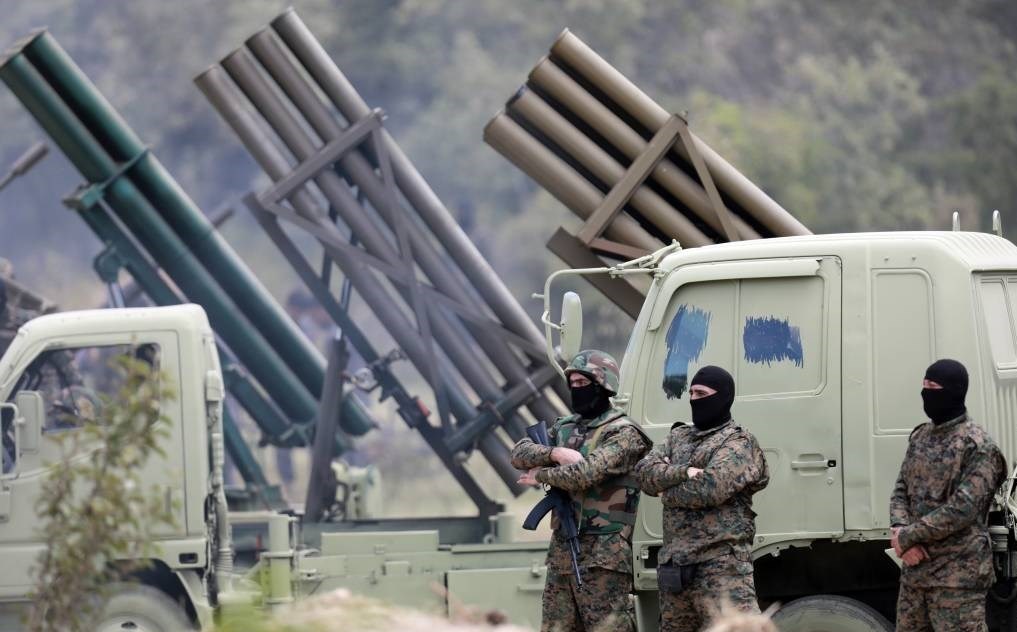
Hezbollah’s Drone and Rocket Barrage Tests Israel’s Northern Defenses and Civilians’ Patience
Hezbollah has intensified rocket and drone attacks on northern Israel for a second day, hitting multiple towns while releasing footage of strikes on an Iron Dome launcher and IDF vehicles. Israeli forces are taking casualties in parallel ground clashes in southern Lebanon, leaving border communities and air defense crews under mounting pressure.
Northern Israel and southern Lebanon are again being treated as a single, contested battlespace, as Hezbollah combines sustained rocket fire with precision drone strikes that target both civilians’ sense of safety and the systems meant to protect them.
Over the past 48 hours up to 1 June 2026, Hezbollah has continued what Israeli and regional observers describe as an intensified campaign of rocket and drone attacks across northern Israel. Reports from the area say towns and cities including Tiberias, Kiryat Shmona, Karmiel, Safed, Shlomi, Ma'alot‑Tarshiha, Kisra‑Sumei and several border communities have come under fire. Israeli authorities report intercepting at least 10 rockets, while acknowledging that other rockets impacted, with some falling in open areas. In tandem, Hezbollah has released multiple videos purporting to show first‑person‑view (FPV) drone strikes on an Iron Dome launcher near Biranit, an IDF vehicle inside the Galilee Forest Camp near Shtula, and mortar and rocket launches at IDF positions near Deir Seryan in southern Lebanon. On the ground, the Israel Defense Forces (IDF) confirmed that Staff Sergeant Adam Tzarfati, 20, from the elite Maglan reconnaissance unit of the 89th Commando Brigade, was killed in combat in southern Lebanon after a thermal‑imaging explosive drone struck Israeli troops at night. One soldier was reported severely wounded and two lightly injured in the same incident.
For residents of northern Israel, this is a grinding war of attrition in which alarms, not front lines, define daily life. Sirens in towns such as Kiryat Shmona and Tiberias mean families have seconds to move to shelters, schools must decide whether to keep children at home, and businesses juggle closures and contingency plans. Each video Hezbollah publishes of a drone striking an Iron Dome launcher or a military vehicle is also aimed at those civilians, inviting them to question whether the shield they rely on can be saturated or outflanked. On the Lebanese side, communities near launch sites and along IDF approach routes live with the risk that any field or building used by Hezbollah can become an instant target for Israeli airstrikes in response.
Strategically, Hezbollah’s use of FPV and thermal‑imaging drones against high‑value military assets — including an Iron Dome launcher — is designed to complicate Israel’s northern defense architecture. Every launcher knocked out or forced into hiding reduces the system’s ability to handle mass rocket volleys, especially if attacks expand deeper into Israel. The fatal drone strike on an elite IDF commando unit in southern Lebanon shows that Israel’s incursion north of the Litani River, near landmarks such as Beaufort Castle, is meeting an adversary that has adapted quickly to anti‑armor and anti‑personnel drone warfare. For Hezbollah, these strikes are a way to demonstrate that any deeper Israeli ground push would be costly.
If the pattern continues, several pressure points will harden. One is political: Israeli leaders will face growing demands from northern communities for a decisive move that either removes Hezbollah’s immediate threat or forces a durable security arrangement along the border. Another is military: the IDF will have to decide how far to expand its operations in southern Lebanon to suppress launch and drone teams, knowing that each kilometer deeper risks wider regional escalation. Hezbollah, for its part, must judge how much rocket and drone fire it can sustain without provoking a much larger Israeli campaign.
There is also a technological arms race playing out in plain sight. Israeli forces are investing in better drone detection, jamming, and hard‑kill systems to defend not only civilians but also Iron Dome batteries and forward units. Hezbollah’s footage of successful strikes is a message to its own fighters and supporters that it can keep pace. The question is no longer whether drones are a central feature of this conflict, but how quickly tactics and counter‑tactics will evolve, and at what human cost.
Key Takeaways
- Hezbollah has carried out intensified rocket attacks on multiple northern Israeli towns and cities for at least two consecutive days, alongside drone attacks.
- The group released footage claiming FPV drone strikes on an Iron Dome launcher near Biranit and an IDF vehicle near Shtula, as well as mortar and rocket fire on IDF positions in southern Lebanon.
- The IDF confirmed that Staff Sergeant Adam Tzarfati of the Maglan unit was killed and several soldiers wounded by a night‑time explosive drone strike in southern Lebanon.
- Civilians on both sides of the border are living under frequent sirens, retaliatory strikes, and growing uncertainty about how far the confrontation will go.
Outlook & Way Forward
Absent a political arrangement that reins in cross‑border fire, the northern front is likely to see further fusion of rockets, drones, and ground skirmishes. Each successful Hezbollah strike on Israeli air defense assets strengthens arguments within Israel’s security establishment for a more expansive campaign in southern Lebanon, even as officials weigh the risk of triggering a much wider war.
International diplomacy can slow, but not by itself stop, this dynamic. What will matter most is whether both Hezbollah and Israel perceive that the costs of continued escalation are starting to outweigh the tactical gains: for Hezbollah, in terms of destruction inside Lebanon and the possibility of a full‑scale Israeli offensive; for Israel, in prolonged disruption to civilian life in the north and the diversion of military bandwidth from other fronts. Until then, northern communities will remain on the front line of a conflict increasingly shaped by cheap drones and expensive decisions.
Sources
- OSINT