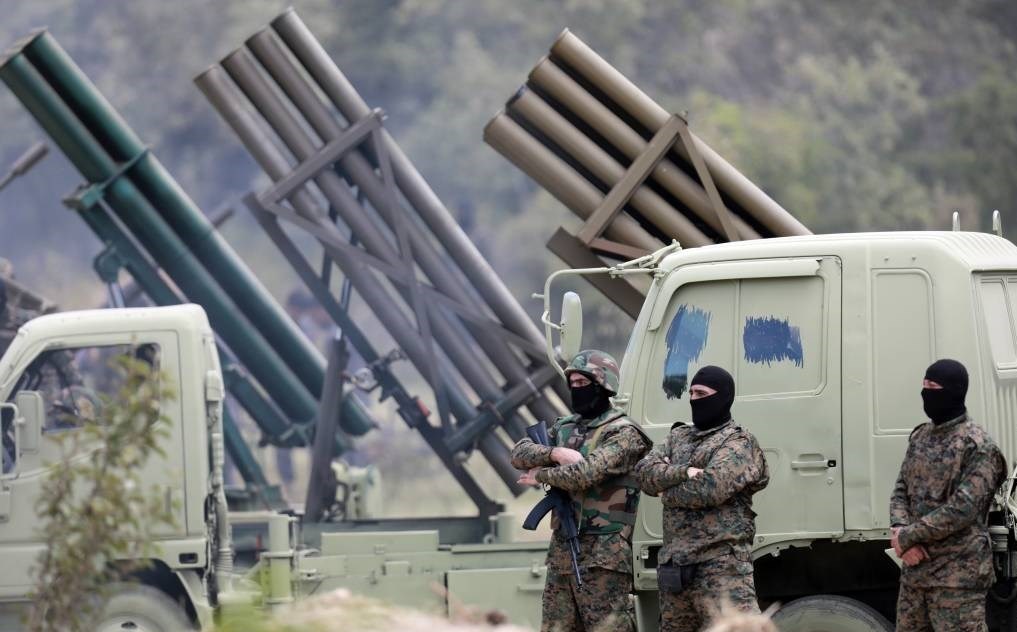
Hezbollah’s Intensified Rocket and Drone Barrage Puts Northern Israel Under Daily Fire
Hezbollah has stepped up rocket and drone attacks for a second straight day, hitting or targeting multiple cities across northern Israel and releasing footage of strikes on an Iron Dome launcher and IDF assets. The shift turns much of Israel’s north into a pressure zone for civilians, air defenses, and policymakers deciding how far to push back.
For residents of northern Israel, the border with Lebanon is no longer just a line on the map—it is a daily launchpad. Hezbollah has intensified its rocket and drone attacks for the second day in a row, pushing more towns into range and testing how much pressure Israeli civilians and air defenses can absorb before the response changes.
Reports from the early hours of 1 June indicate Hezbollah fired salvos at multiple locations, including Kiryat Shmona and other northern communities, with sirens sounding widely. Over the previous day, the group targeted a string of towns and cities—Tiberias, Karmiel, Safed, Shlomi, Ma'alot Tarshiha, Kisra‑Sumei and various border settlements—alongside IDF positions in and around southern Lebanon. The IDF says it intercepted at least ten rockets, and that roughly ten more impacted, nine of them in open areas. Hezbollah has also released video purporting to show an FPV drone strike on an Iron Dome launcher near Biranit—raising the count of visually confirmed Hezbollah strikes on Iron Dome units to seven—as well as a separate FPV strike on an IDF vehicle at the Galilee Forest Camp near Shtula.
For civilians in the north, this is not an abstract exchange of munitions. Parents are juggling work with repeated dashes to shelters; older residents and people with disabilities may struggle to move quickly enough when sirens sound. Businesses, schools and farms across the Galilee face rolling disruption as air‑raid alerts and impact reports spread from border towns further inland. Each new publicized hit on an Iron Dome launcher or nearby military site increases anxiety that the protective shield might be thinned, even if interception rates remain high.
Strategically, Hezbollah is waging more than a harassment campaign. By combining rockets, mortars and cheap FPV drones against both populated areas and military infrastructure, it is probing the limits of Israel’s layered air defense and consuming interceptor stockpiles. A visually documented strike on an Iron Dome launcher is significant: even if damage is repairable, it demonstrates that launchers themselves are targetable and forces the IDF to divert resources to protect the very systems meant to protect civilians. In parallel, Israeli airstrikes on what the IDF describes as a launcher used to attack Tiberias show Israel is willing to chase the threat deeper into Lebanese territory, increasing risk for Lebanese communities and complicating the calculus in Beirut.
If the current tempo holds, several decision points are approaching. For Israel’s government and military, the question is no longer whether the northern front is active, but whether to treat it as a permanent low‑intensity front or move toward a larger push to degrade Hezbollah’s firepower north of the border. For Hezbollah and its backers, the balance is between demonstrating solidarity and deterrence—especially while fighting continues in Gaza—and avoiding a broader war that would expose Lebanese infrastructure and cities to massive retaliation.
Markets and regional actors are watching closely. A sustained Hezbollah‑Israel exchange on this scale raises risk for cross‑border trade, tourism and energy projects in the Eastern Mediterranean, including offshore gas platforms that sit within plausible strike radius. It also complicates U.S. and European diplomacy, which is already stretched between Gaza, the Red Sea and tensions with Iran.
Key Takeaways
- Hezbollah has intensified rocket and drone attacks on northern Israel for at least a second consecutive day, targeting multiple towns and cities.
- The IDF reports intercepting at least ten rockets while acknowledging around ten impacts, mostly in open areas, and has released footage of airstrikes on Hezbollah launchers.
- Hezbollah has published video claiming FPV drone strikes on an Iron Dome launcher near Biranit and on an IDF vehicle near Shtula, taking the number of visually confirmed strikes on Iron Dome units to seven.
- The escalation increases pressure on Israeli civilians, air defenses and decision‑makers over whether to accept a grinding northern front or risk a larger confrontation.
Outlook & Way Forward
Absent a political deal, the likeliest near‑term scenario is continued tit‑for‑tat: Hezbollah using rockets and drones to sustain pressure, and Israel using airpower and precision strikes to suppress launchers and command nodes. The human cost will fall heavily on civilians on both sides of the border, who bear the consequences of each decision to widen or narrow the target set.
The more consequential shifts would come if either side miscalculates—through a mass‑casualty hit in an Israeli city or a large‑scale Israeli strike deeper into Lebanon. Either outcome could force outside powers, particularly the United States and France, to redouble efforts to contain the front or face a larger regional war. For now, the daily air‑raid sirens from Kiryat Shmona to Tiberias are a reminder that the northern arena is no longer a sideshow, but an active front with its own escalatory logic.
Sources
- OSINT