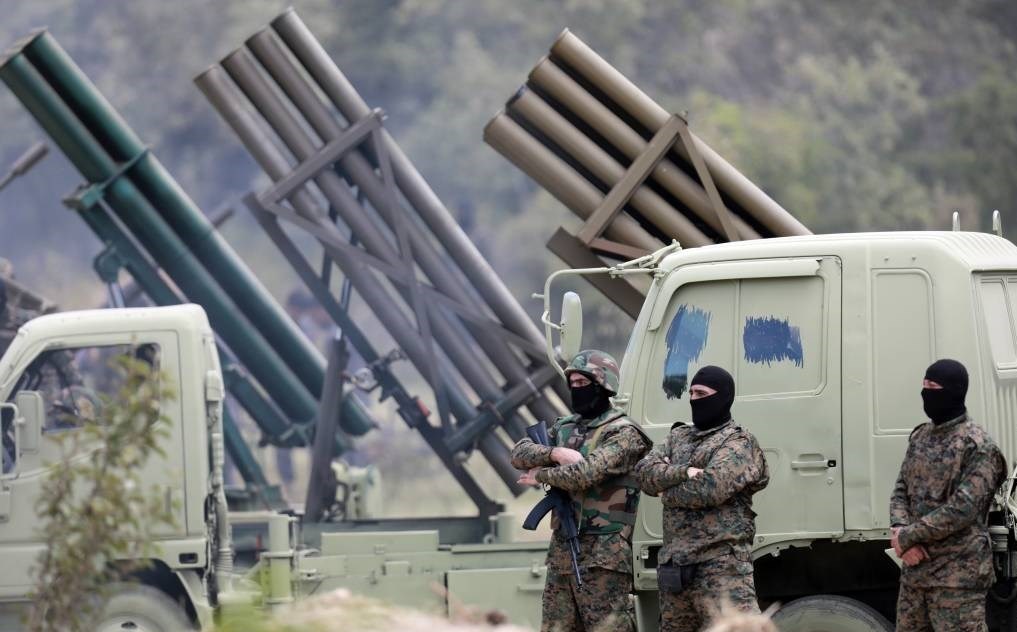
Hezbollah’s FPV Drones and Missiles Target Israeli Armor, Exposing Gaps in Border Defenses
Hezbollah released footage of FPV drones hitting Israeli tanks, an APC and a Humvee in southern Lebanon and near the Israel–Lebanon border, while boasting of long-range missile launches and fresh rocket salvos on northern Israel. For residents of Kiryat Shmona and soldiers along the frontier, the northern front is no longer a sideshow but a live theater where cheap drones are testing Israel’s armored supremacy.
Northern Israel and southern Lebanon are now the testing ground for a new kind of border war, where relatively cheap first-person-view (FPV) drones are hunting expensive armored vehicles and anti-drone defenses are visibly lagging. Hezbollah’s latest barrage of strikes and accompanying propaganda footage is not just about bragging rights; it is about proving that Israel’s shield on its northern flank has seams that can be exploited.
Hezbollah on May 30 released several videos showing FPV drone strikes on Israeli military assets in and around southern Lebanon. The group published footage of attacks on two Israeli Merkava tanks in the town of Rchaf, noting that the second drone’s impact was unclear, as well as on an Israeli Namer armored personnel carrier in the town of Taybeh. Another clip showed an FPV drone strike on an Israeli Humvee vehicle near the Israeli town of Manara, close to the Lebanese border. In parallel, Hezbollah said it launched "Paveh" long-range cruise missiles at Israel Defense Forces positions in southern Lebanon and fired rockets at the Israeli city of Kiryat Shmona and areas west of Safed in northern Israel. The IDF said it intercepted both rockets in at least one of the reported salvos and did not specify whether it managed to down any of the attacking drones.
For civilians in Kiryat Shmona and the surrounding Galilee communities, each new rocket alert brings a familiar fear back to the surface: that homes, schools and businesses could be caught in cross-border fire with little warning. On the Lebanese side, residents of towns like Rchaf and Taybeh now live alongside military targets that feature prominently in Hezbollah’s messaging, raising the risk that Israeli counterstrikes will land uncomfortably close. Soldiers in Israeli armor and infantry units deployed along the border are facing a battlefield where the psychological comfort once associated with heavy armor is eroding; a low-cost drone piloted from a few kilometers away can now slip between incomplete anti-drone nets, as visible in Hezbollah’s own footage, and detonate directly on a turret or engine deck.
Strategically, these attacks are significant for both sides. For Hezbollah, demonstrating repeated FPV hits on Merkava tanks, Namer APCs and frontline vehicles reinforces its narrative that it can chip away at Israel’s technological edge with ingenuity and Iranian-supported capabilities. The visible ability of drones to maneuver through or around partial anti-drone netting in Rchaf exposes the limitations of Israel’s current field-expedient defenses. The launch of "Paveh"-brand long-range cruise missiles, if confirmed, would represent another step in Hezbollah’s efforts to normalize the use of more sophisticated stand-off weapons along the border.
For Israel, the risk is twofold: tactical and strategic. Tactically, every vehicle forced to operate under drone-threat conditions requires new procedures, from movement patterns to additional armor and electronic warfare support, slowing operations and increasing costs. Strategically, the accumulation of even small numbers of successful hits on high-end platforms can feed public doubts about the safety of the northern communities and the effectiveness of deterrence against Hezbollah, especially at a time when the IDF is heavily committed elsewhere.
If the current tempo of FPV attacks, rocket fire and missile launches continues, both sides will face hard decisions. Israel must choose whether to tolerate a low-intensity attritional campaign on its northern border or escalate to larger-scale strikes inside Lebanon that risk a wider war. Hezbollah, for its part, has to balance the value of showcasing new weapons and tactics against the danger that a miscalculated strike—especially one causing mass civilian casualties—could trigger the full-blown confrontation it has so far avoided.
In the background, civilians on both sides of the border are trapped in a strategic chess game they did not choose. Displacement, intermittent school closures and the constant hum of drones overhead are now part of daily life in parts of northern Israel and southern Lebanon. International actors, including the United States and France, may find renewed urgency in efforts to negotiate understandings along the Blue Line if the technological escalation continues.
Key Takeaways
- Hezbollah has released footage of FPV drone strikes on two Israeli Merkava tanks in Rchaf, a Namer APC in Taybeh, and a Humvee near Manara.
- The videos show incomplete Israeli anti-drone nets that the attacking drones were able to navigate, suggesting gaps in current defenses.
- Hezbollah also reported launching "Paveh" long-range cruise missiles at IDF positions and firing rockets at Kiryat Shmona and areas west of Safed.
- Northern Israeli communities and southern Lebanese towns are experiencing growing physical and psychological strain as the northern front heats up.
- Israel now faces a strategic dilemma: absorb ongoing drone and rocket harassment or escalate against Hezbollah at the risk of a larger war.
Outlook & Way Forward
In the short term, Israel is likely to invest heavily in quick fixes: denser anti-drone netting, more electronic warfare assets near the front, and revised tactics for its armor and mechanized units. These adaptations, however, carry costs in mobility and complexity, and they cannot fully eliminate the risk posed by small, agile FPV drones.
Over the longer term, the northern front could become the proving ground for a broader revolution in small-drone warfare, with each side learning from the other’s innovations. If diplomatic efforts fail to put brakes on this escalation, the accumulation of damage—to equipment, morale and civilian life—may eventually force one or both sides into a larger confrontation they have so far calibrated to avoid. That makes the emerging drone duel along the Israel–Lebanon border not just a local skirmish, but a warning about how quickly modern frontiers can become laboratories for the next war.
Sources
- OSINT