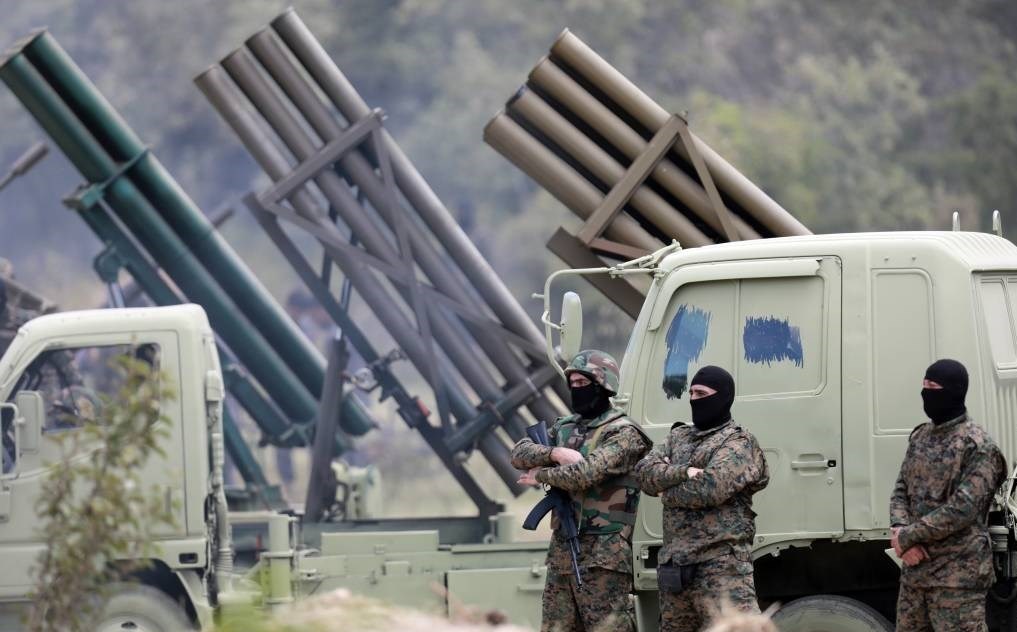
Hezbollah’s Drone and Rocket Barrage Tests Israel’s Northern Defenses and Anti‑Armor Edge
Hezbollah fired rockets and drones into northern Israel while releasing footage of FPV strikes on Israeli Merkava tanks, a Namer APC and a Humvee near the Lebanon border. The attacks put civilians in Kiryat Shmona back under fire and expose how easily low‑cost drones can slip through partial defenses to threaten some of Israel’s most prized armor.
Hezbollah’s latest wave of cross‑border attacks has turned northern Israel and southern Lebanon into a live test of how much damage cheap drones and rockets can inflict on advanced armor and hardened border communities.
On 30 May, Hezbollah launched rockets at the Israeli city of Kiryat Shmona and areas west of Safed, while also hitting border areas of northern and northeastern Israel with drones and additional rocket fire. The Israel Defense Forces said it intercepted two rockets but offered no immediate detail on whether any of the attacking drones were downed. In parallel, Hezbollah released video purporting to show first‑person‑view (FPV) drone strikes on two Israeli Merkava tanks in the southern Lebanese town of Rchaf, an Israeli Namer armored personnel carrier in Taybeh, and a Humvee near Manara on the Israeli side of the border. The footage has not been independently verified but aligns with the group’s recent pattern of documenting attacks.
For residents of Kiryat Shmona, Safed and nearby border communities, this is another day where air‑raid sirens interrupt daily life and where agricultural land, homes and roads sit within reach of rocket and drone fire. Families face the recurring dilemma of whether to stay in vulnerable northern towns or relocate south with no clear horizon for calm. On the Lebanese side, civilians in villages like Rchaf and Taybeh are caught between Hezbollah units using their surroundings to engage Israeli armor and the risk of Israeli retaliatory strikes, turning local farmland and streets into contested ground.
Militarily, the FPV drone footage, if authentic, carries a sharp message: Israel’s heavily protected Merkava tanks and Namer carriers are not immune to precision hits from low‑cost drones flown at close range. Observers noted that some of the anti‑drone nets visible above the Israeli vehicles in Rchaf were incomplete, allowing the drones to maneuver through and strike. That exposes a gap between Israel’s rapidly improvised defenses and Hezbollah’s ability to adapt, using small, explosive‑laden drones guided by live video feeds to hit weak points in armor protection.
The rocket and drone barrage also forces Israel to spread its air‑defense resources between the north and ongoing threats from other fronts. Systems like Iron Dome and David’s Sling are optimized for rockets and some types of missiles; small FPV drones flown at low altitude, often from close range over the border, present a different challenge that relies heavily on local jammers, small‑arms fire and physical barriers. The IDF’s need to protect both civilian population centers and combat vehicles increases operational strain.
Strategically, Hezbollah is signaling that it can sustain a calibrated pressure campaign on Israel’s northern front while showcasing capabilities that could prove decisive in any broader conflict. By tying civilian areas like Kiryat Shmona to battles over armored vehicles in southern Lebanon, the group is blurring the line between front and rear, and complicating Israeli decision‑making about escalation. Each successful anti‑armor strike also chips away at the perception of Israeli ground dominance, a perception that underpins deterrence along the Blue Line.
If these trends continue, Israel may be forced into several hard choices: drawing additional active and reserve forces north, investing more heavily and visibly in anti‑drone hardening for every deployed armored unit, or considering deeper strikes into Lebanon to push launch teams back from the border. Each option carries escalation risk, including a wider conflict that could draw in other actors and disrupt shipping and energy assets in the eastern Mediterranean.
Hezbollah, for its part, must weigh the propaganda value of publishing FPV strike videos against the risk that repeated humiliation of Israeli armor invites a disproportionate response. The more the group normalizes rocket and drone fire into populated northern Israel, the harder it becomes for Israeli leaders to absorb attacks without acting in ways that could turn a contained front into a full‑scale war.
Key Takeaways
- Hezbollah fired rockets and drones into northern Israel, targeting Kiryat Shmona, areas west of Safed and other border zones.
- The IDF said it intercepted two rockets but did not immediately specify how many drones were downed.
- Hezbollah released footage claiming FPV drone hits on two Israeli Merkava tanks, a Namer APC and a Humvee near the Lebanon border.
- Visible gaps in Israeli anti‑drone nets around armored vehicles in southern Lebanon suggest vulnerabilities to low‑cost explosive drones.
- The attacks increase pressure on Israel’s northern defenses and raise escalation risks along a front where civilian towns and armored units are intermingled.
Outlook & Way Forward
Unless a political arrangement reins in cross‑border fire, both sides appear poised to continue a tit‑for‑tat pattern: Hezbollah using rockets and drones to keep pressure on Israel’s north, and Israel responding with targeted strikes in southern Lebanon. Over time, the growing lethality of FPV drones against armor will push the IDF to invest heavily in both passive defenses and active counter‑drone systems at the tactical level.
The strategic danger is that a single mass‑casualty event—whether among Israeli civilians, Lebanese villagers or armored crews—could shift domestic calculations in Jerusalem or Beirut toward a larger confrontation. For now, the drumbeat of smaller incidents is already reshaping military planning and leaving border communities on both sides living with the daily knowledge that they are no longer near the front; they are the front.
Sources
- OSINT