Hezbollah’s Drone and Missile Barrage Tests Israel’s Northern Defenses and Civilians in Parallel
Hezbollah released footage of FPV drone strikes on Israeli Merkava tanks, an APC and a Humvee in southern Lebanon and near Manara, while firing rockets and cruise missiles at northern Israel including Kiryat Shmona and areas near Safed. The mixed barrage shows how civilians, evacuated towns and frontline units are being targeted together — and how Israel’s northern defenses are being probed above and below the border.
Northern Israel and southern Lebanon are being drawn deeper into a parallel battlefield where civilians and armored units are targeted on the same map, as Hezbollah combines rocket fire and long-range missiles with precision FPV drone strikes on Israeli vehicles.
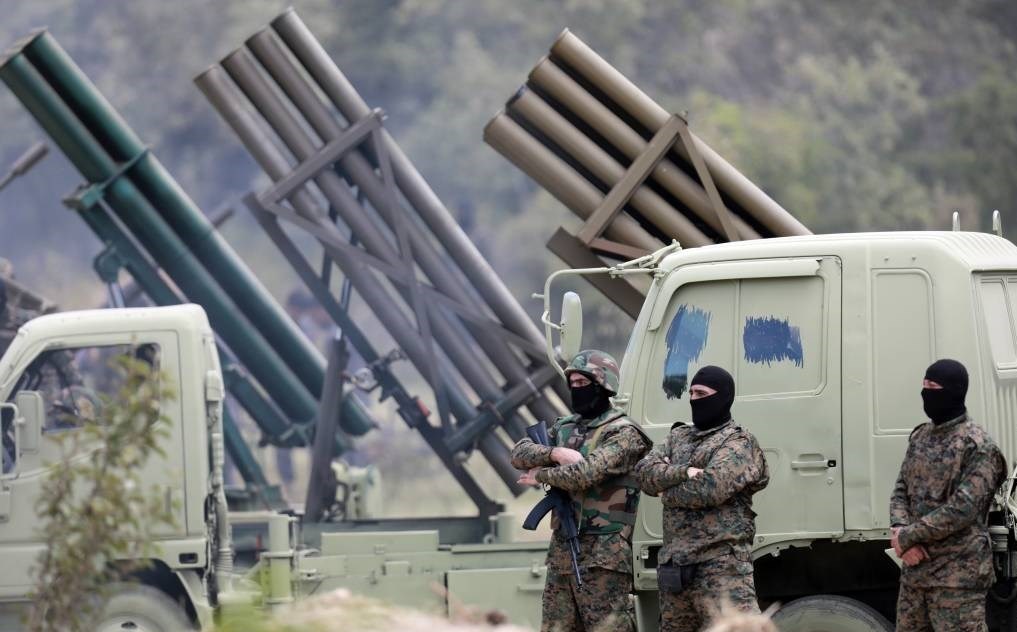
On 30 May, Hezbollah claimed a series of actions along the border. Rockets were launched at the Israeli city of Kiryat Shmona and areas west of Safed in northern Israel, as well as at additional northern and northeastern border zones. The Israel Defense Forces said their air defenses intercepted both of the reported rockets in at least one of the barrages, but did not immediately comment on drone interceptions. Separately, Hezbollah released video footage showing FPV (first-person view) drone strikes on two Israeli Merkava tanks in the town of Rchaf in southern Lebanon, an Israeli Namer armored personnel carrier in Taybeh, and a Humvee near Manara in northern Israel. The group also published footage of the launch of what it identified as “Paveh” long-range cruise missiles aimed at IDF positions in southern Lebanon.
For civilians in Kiryat Shmona, Safed’s outskirts and border communities, each new rocket siren prolongs the sense that displacement and disruption have no clear end date. Many residents of these areas have spent months in and out of evacuation, their homes effectively turned into buffer zones between Israel and Hezbollah. Even when interceptors succeed, shrapnel and falling debris remain a risk; the psychological cost of repeated alerts, sporadic strikes and uncertainty about returns has already hollowed out local economies and family routines. On the Lebanese side, villagers in Rchaf and Taybeh live with the knowledge that Israeli armor moving through or near their towns invites drone and artillery fire, turning streets, orchards and unfinished buildings into contested military space.
Militarily, the newly released drone footage matters less for individual vehicles damaged than for what it says about Hezbollah’s evolving tactics and Israel’s defensive challenges. FPV drones are cheap, agile and designed to maneuver around static defenses like partial anti-drone nets, some of which were visible but incomplete in the Rchaf imagery. Their use against heavy platforms such as Merkava tanks and Namer APCs shows Hezbollah’s intent to bypass traditional anti-armor systems and strike vulnerable angles and exposed sections. The status of one of the strikes remains unclear, but the message to Israeli commanders is unmistakable: even hardened assets are not immune in close terrain where low-cost drones can stalk, loiter and dive.
The declared firing of “Paveh” long-range cruise missiles at IDF positions in southern Lebanon adds another layer. If Hezbollah is comfortable publicizing such launches, it signals confidence in its capacity to threaten fixed installations and logistics points at distance, beyond the immediate fence line. For Israel, that complicates defensive planning, forcing attention not just on intercepting unguided rockets at the border but protecting bases, depots and command posts further afield.
If this pattern persists, Israel faces a choice between absorbing attritional hits on vehicles and emptying out more of the border area with deeper evacuations and stronger active defenses, or escalating air and artillery campaigns inside Lebanon to suppress launch teams and drone operators. Hezbollah, for its part, is calibrating firepower to show solidarity with Gaza and maintain pressure on Israel’s north without triggering a full-scale war — a balance that could easily tip if casualties spike or a miscalculation hits a dense civilian target.
For both sides, the northern front has become a laboratory for the future of land warfare: tanks under drone threat, border towns under intermittent rocket fire, and long-range cruise missiles entering a fight that once centered on Katyusha salvos. Civilians on both sides of the Blue Line pay the price of that experimentation.
Key Takeaways
- Hezbollah launched rockets at Kiryat Shmona, areas west of Safed and other northern Israeli border zones; the IDF reported intercepting at least two rockets.
- The group released footage of FPV drone strikes against two Israeli Merkava tanks in Rchaf, a Namer APC in Taybeh and a Humvee near Manara.
- Hezbollah also publicized the launch of “Paveh” long-range cruise missiles toward IDF positions in southern Lebanon.
- The combination of rockets, drones and missiles is testing Israel’s northern defenses and leaving border civilians in prolonged limbo.
Outlook & Way Forward
If Hezbollah continues to integrate FPV drones with conventional rocket fire and cruise missiles, Israel will need to adapt with more layered, short-range air defenses, improved electronic warfare and tactical changes to how armor is deployed near the border. That will come with financial and operational costs, and may prompt Israel to accelerate procurement of anti-drone systems and to reconfigure border fortifications that were not designed for swarms of small, explosive UAVs.
Diplomatic efforts to de-escalate the northern front will be strained as each new strike and counterstrike hardens domestic expectations on both sides. As long as Gaza remains a central battlefield, Hezbollah is likely to keep the pressure on in the north at a level it judges sustainable, and Israeli leaders will juggle deterrence signaling against the risk of miscalculation that could drag both countries into a much wider conflict.
Sources
- OSINT