Hezbollah’s Drone and Rocket Barrage Tests Israel’s Northern Defences and Puts Border Towns Back in the Crosshairs
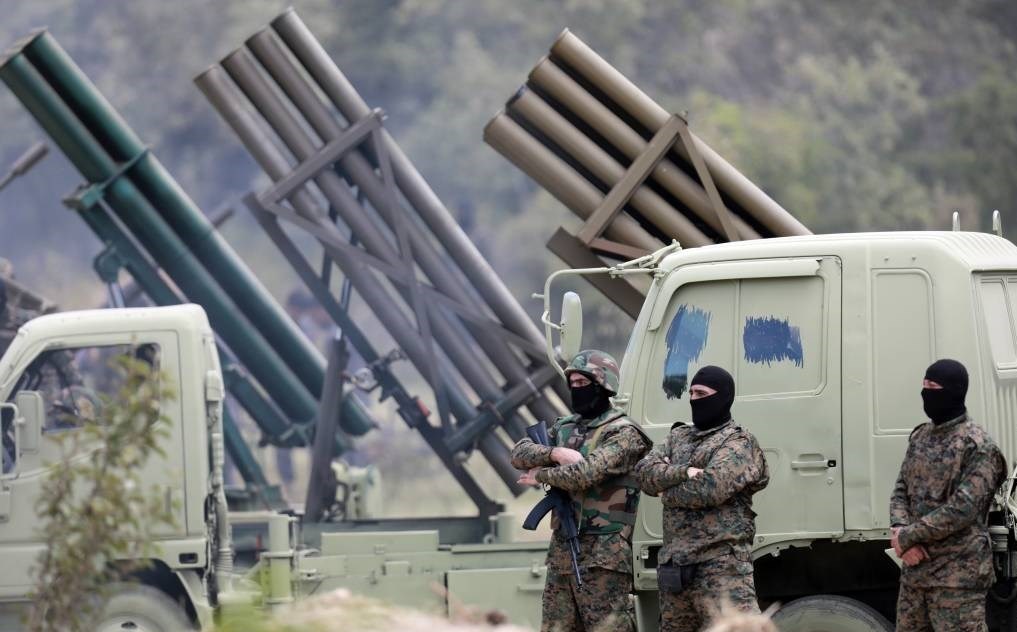
Hezbollah has released footage of FPV drones striking Israeli tanks, an APC and a Humvee in southern Lebanon, while rockets and drones targeted Kiryat Shmona, Safed and border communities in northern Israel. As anti-drone nets prove porous and long-range “Paveh” missiles enter the picture, civilians and commanders on both sides face a more volatile northern front.
Israel’s northern frontier is sliding further from a low-grade containment fight toward a contest of precision and nerves. Hezbollah’s latest barrage of rockets and drones, paired with newly released footage of FPV drone strikes on Israeli armour and vehicles, underscores how quickly the Israeli-Lebanese border can swing from routine exchanges to a battlefield where both towns and tanks are in equal danger.
On May 30, Hezbollah claimed and documented a series of attacks across the northern front. The group released videos showing FPV drones hitting two Israeli Merkava tanks in the town of Rchaf in southern Lebanon; the footage suggests the first strike connected, while the second’s impact is unclear. Anti-drone nets are visible in the imagery, but appear incomplete, and Hezbollah-operated drones were able to maneuver through gaps to reach their targets. Separate footage shows FPV drones striking an Israeli Namer armoured personnel carrier in Taybeh, southern Lebanon, and a Humvee near the town of Manara on the Israeli side of the border. In parallel, Hezbollah said it launched “Paveh” long-range cruise missiles at Israel Defense Forces (IDF) positions in southern Lebanon. Rockets and drones were fired at the Israeli city of Kiryat Shmona and areas west of Safed; the IDF stated it intercepted two rockets but did not clarify whether all incoming drones were downed.
For civilians in northern Israel and southern Lebanon, the renewed intensity means another day where daily routines are interrupted by sirens, strikes, and uncertainty. Residents of Kiryat Shmona and towns near Safed live with the knowledge that even intercepted rockets still send shrapnel and panic through neighborhoods; those in border-adjacent villages face the added risk of drone strikes that can arrive with less warning. On the Lebanese side, communities like Rchaf and Taybeh watch their streets and houses become backdrops—or collateral—for operations targeting Israeli armour. Families in both countries weigh the prospect of prolonged displacement or school closures against a political impasse that shows little sign of resolution.
Militarily, Hezbollah’s use of FPV drones against frontline Israeli armour is a direct challenge to the IDF’s storied ground dominance on this front. Merkava tanks and Namer APCs are designed with heavy protection; consistent hits from small, inexpensive drones erode both hardware and psychological advantages. The visible imperfections in Israel’s anti-drone nets signal a technological and doctrinal race that is far from settled. The reported use of “Paveh” long-range cruise missiles further complicates the IDF’s defensive calculus, potentially saturating or probing air defences arranged primarily against rockets and shorter-range threats.
Strategically, these attacks increase pressure on Israeli leadership to decide whether to keep the northern theatre as a managed secondary front or to expand operations into a wider campaign against Hezbollah. For Hezbollah and its backers, demonstrating the ability to hit tanks, APCs, and northern Israeli cities in one coordinated pulse serves both deterrent and political functions. It shows Lebanese constituencies, and external patrons, that the group can still impose costs on Israel despite Israeli airstrikes and international pressure.
If this tempo holds or accelerates, the risk of a miscalculation leading to broader war rises sharply. A mass-casualty incident in Kiryat Shmona or Safed, or a direct strike that destroys multiple Israeli vehicles with significant loss of life, could push Israeli decision-makers toward a larger ground or air operation inside Lebanon. Conversely, a successful IDF strike that kills senior Hezbollah commanders or destroys a high-profile capability—such as a cruise missile battery—could trigger a retaliatory volley deeper into Israel.
For now, both sides seem to be testing each other’s red lines and defences incrementally. But the expanding mix of weapons—FPV drones, long-range missiles, and sustained rocket fire—leaves less margin for error around civilian centers. International mediators face a narrowing window to secure localized understandings or technical deconfliction measures before the region risks sliding into a conflict that neither side may be able to fully control once it starts.
Key Takeaways
- Hezbollah released footage of FPV drone strikes on two Israeli Merkava tanks in Rchaf, a Namer APC in Taybeh, and a Humvee near Manara.
- Visible anti-drone nets around Israeli armour appeared incomplete and were bypassed by drones in at least one documented strike.
- Hezbollah also launched rockets and drones at Kiryat Shmona and areas west of Safed; the IDF said it intercepted two rockets but did not detail drone interceptions.
- The group claimed launches of “Paveh” long-range cruise missiles at IDF positions in southern Lebanon, adding another layer of risk to the northern front.
Outlook & Way Forward
In the near term, expect the IDF to accelerate fielding and refining counter-drone defences around armoured formations and critical border positions, from thicker physical barriers to electronic warfare systems. Hezbollah will likely continue to publicize successful FPV strikes to reinforce a narrative of parity and to pressure Israel’s political leadership by keeping the northern front visibly active.
Diplomatic efforts will remain focused on preventing a slide into full-scale war, but their leverage is limited as long as both sides see tactical advantage in continued skirmishing. The most realistic off-ramp in the short run is a tacit return to lower-intensity fire, but any such equilibrium will be fragile so long as precision drones and cruise missiles sit within range of border towns and cities on both sides of the line.
Sources
- OSINT