Hezbollah’s Drone and Rocket Barrage Puts Northern Israel Back in the Crosshairs
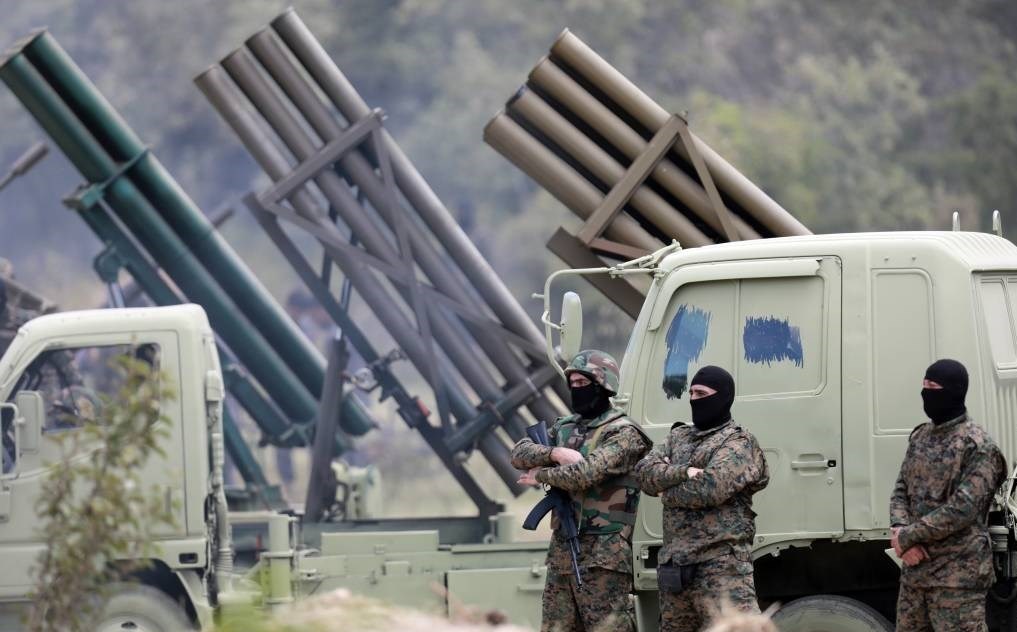
Hezbollah unleashed FPV drones, rockets and what it called long-range missiles against northern Israel and IDF positions in southern Lebanon, releasing footage of strikes on Merkava tanks and armored vehicles. For residents of Kiryat Shmona and border towns, and for Israeli commanders facing drones slipping through incomplete defenses, the northern front is getting harder to treat as a sideshow.
The latest wave of Hezbollah attacks has turned northern Israel and southern Lebanon into a live lab for modern land warfare, where cheap explosive drones stalk main battle tanks and border cities absorb the spillover. For civilians on both sides of the frontier, the front line now stretches through ordinary streets and farms within range of rockets, FPV drones and longer-range missiles.
On 30 May, Hezbollah and Israeli sources described a flurry of cross-border attacks. Hezbollah said it struck the northern Israeli city of Kiryat Shmona and areas west of Safed with rockets, and also targeted border zones in northern and northeastern Israel using both rockets and drones. The Israel Defense Forces stated they intercepted two rockets, but did not clarify whether any of the attacking drones were destroyed. In southern Lebanon, Hezbollah released video purportedly showing FPV drone strikes on two Israeli Merkava tanks in the town of Rchaf, and a separate FPV strike on a Namer armored personnel carrier in Taybeh. Another clip showed an FPV drone hitting an Israeli Humvee near Manara in northern Israel. The group also published footage of what it said were “Paveh” long-range cruise missiles being launched toward IDF positions in southern Lebanon. Casualty and damage details remain limited and claims cannot be independently verified, but the pattern points to a broadening and more technologically sophisticated engagement.
The human stakes are immediate. Residents of Kiryat Shmona — many of whom have already endured evacuations and intermittent rocket fire — again found themselves under threat, with warning sirens and the distinct crack of interceptors becoming part of daily soundscapes. On the Lebanese side, communities in Rchaf and Taybeh are living alongside high-value military targets: Israeli armor and Hezbollah launch crews operating perilously close to civilian homes. Each FPV drone that dives on a tank does so in airspace that also covers villages, schools and fields, and every Israeli counterstrike risks adding to the civilian toll.
For the IDF, Hezbollah’s growing use of FPV drones and what it presents as cruise missiles is a direct challenge to traditional armored doctrine and static defensive measures. Footage from Rchaf showing incomplete anti-drone nets around Israeli positions, and drones apparently maneuvering through them, points to a race between low-cost innovation and expensive countermeasures. Merkava tanks and Namer APCs, long seen as symbols of Israeli battlefield superiority, are now being hunted by agile, camera-guided explosives that cost a fraction of their value. For Hezbollah, each published hit serves as both battlefield tool and propaganda, aiming to signal to Israel and regional audiences that its arsenal can penetrate layered defenses.
Strategically, the attacks raise the cost of any wider Israeli operation in Lebanon. If even limited engagements expose armor and rear-area vehicles near Manara to drone strikes, a larger ground push would require extensive air defense and electronic warfare support, tying up assets Israel might prefer to keep focused elsewhere. The claimed use of “Paveh” long-range missiles, if substantiated, indicates Hezbollah is willing to showcase more of its strategic inventory, testing Israeli red lines without crossing into full-scale war.
If the tempo of these attacks holds, several pressure points will sharpen. Israeli political and military leaders will come under pressure from northern communities to restore a sense of safety, either through intensified strikes on Hezbollah assets or diplomatic arrangements that push launchers back from the border. Hezbollah’s leadership must balance its desire to project resistance with the risk that a miscalculated strike — for example, a mass-casualty hit in an Israeli city — could trigger a large-scale Israeli response.
Key Takeaways
- Hezbollah launched rockets and drones at Kiryat Shmona, areas west of Safed and other northern Israeli border zones on 30 May; Israel says it intercepted two rockets.
- The group released footage claiming FPV drone strikes on two Israeli Merkava tanks in Rchaf and on a Namer APC in Taybeh, as well as an Israeli Humvee near Manara.
- Hezbollah also published video of launches of what it called “Paveh” long-range cruise missiles toward IDF positions in southern Lebanon.
- Visual evidence of drones maneuvering through incomplete anti-drone nets exposes vulnerabilities in Israeli defenses around armored units.
- Civilians in northern Israel and southern Lebanon are living alongside increasingly sophisticated weapons, with growing risk of miscalculation and escalation.
Outlook & Way Forward
Unless constrained by outside diplomacy or domestic calculation, Hezbollah appears intent on steadily raising the technological and psychological pressure on Israel’s northern front, integrating FPV drones and longer-range missiles into its playbook. Israel will likely respond with more aggressive targeting of Hezbollah drone operators, storage sites and missile infrastructure, alongside investments in short-range air defense and electronic warfare tailored to the FPV threat.
The risk is that a single successful strike causing heavy Israeli civilian or military casualties, or an Israeli response that kills large numbers of Lebanese civilians, could snap the current calibrated confrontation into a broader campaign. Regional actors — from the U.S. and France to Iran — will quietly try to keep the conflict below that threshold, but as more drones and rockets trade fire over populated areas, the margin for error will shrink. For border communities, the lived reality is already one of intermittent displacement and daily uncertainty, long before any formal declaration of a wider war.
Sources
- OSINT