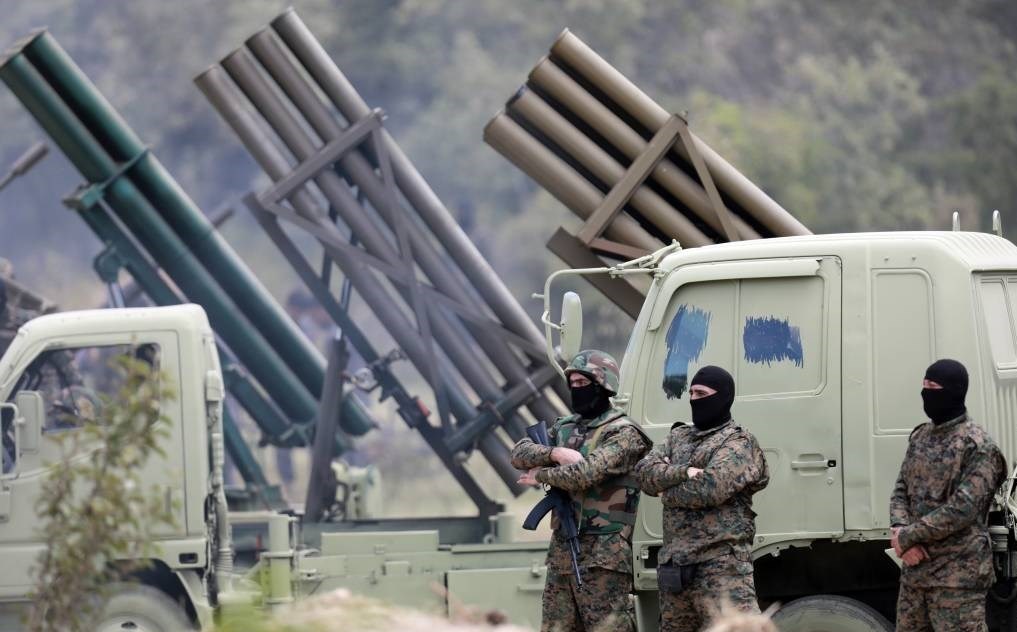
Hezbollah’s Drone and Rocket Barrage on Northern Israel Raises Escalation Risk on Second Front
Hezbollah unleashed rockets, drones and long‑range cruise missiles against northern Israel and IDF positions in southern Lebanon, while publishing footage of FPV strikes on Israeli tanks and armor. For Israeli border communities and Lebanese villages alike, the exchange is turning the frontier into an active second front with few visible constraints on the types of weapons in play.
Northern Israel and southern Lebanon are slipping deeper into a pattern of daily combat that looks less like border skirmishing and more like a constrained war, as Hezbollah combines rocket barrages, attack drones and long‑range cruise missiles against Israeli targets. For civilians on both sides of the frontier, the sense is growing that what was once background noise to the Gaza conflict is becoming a conflict of its own.
On 30 May, Hezbollah claimed responsibility for a series of attacks against northern Israel, including rocket strikes on the city of Kiryat Shmona and areas west of Safed. The group also said it fired rockets and employed drones against border areas of northern and northeastern Israel. The Israel Defense Forces stated that air defenses intercepted two rockets but did not specify the fate of the drones. Separately, Hezbollah released video showing first‑person‑view (FPV) drone attacks on two Israeli Merkava tanks in the southern Lebanese town of Rchaf, an Israeli Namer armored personnel carrier in Taybeh, and a Humvee near Manara in northern Israel. Another clip showed the launch of what Hezbollah described as “Paveh” long‑range cruise missiles toward IDF positions in southern Lebanon. Israeli authorities have not independently confirmed all the claimed hits, and battlefield footage has not been fully verified, but the pattern of claimed strikes is consistent with recent weeks of intensified exchanges.
For residents of Kiryat Shmona and nearby communities, each siren and impact deepens the strain. Families that have already endured months of displacement or on‑and‑off evacuations face renewed uncertainty over whether they can safely return or keep businesses open. In Lebanese border towns like Rchaf and Taybeh, the presence of Israeli armor and Hezbollah positions amid civilian homes means that every FPV drone strike risks shrapnel and secondary explosions in residential streets. Farmers, shopkeepers and schoolchildren live under the sound of drones and the fear that a miscalculation could bring a larger airstrike in response. The frontier has become a place where military experimentation with anti‑tank nets and drone tactics plays out literally over people’s roofs.
Strategically, Hezbollah’s use of FPV drones against Israeli armor and the unveiling of cruise missile launches mark a steady climb in sophistication and signal value. The ineffective or incomplete anti‑drone nets visible in released footage suggest that Israel’s ground forces are still adapting to this threat, and that Hezbollah is probing those defenses with some success. The reference to “Paveh” cruise missiles — which resemble Iranian systems in range and capabilities — sends a message that any large‑scale Israeli ground action in Lebanon could be met not only with massed rockets but with more precise stand‑off weapons.
For Israel, the dual challenge is to contain Hezbollah without getting pulled into the all‑out northern war that its leadership has publicly warned about, while still reassuring evacuated northern communities that they will not live indefinitely in limbo. For Hezbollah and its backers in Tehran, keeping a controlled level of fire on the border serves as leverage over Israel’s operations elsewhere and as a live laboratory for their drone and missile arsenal. But every additional system introduced — from FPVs to cruise missiles — increases the chance that a mis‑hit or mass‑casualty incident could override political calculations.
If current trends continue, the risk is that the “rules of the game” governing Israel–Hezbollah clashes since 2006 will erode beyond repair. Cross‑border rocket fire into major Israeli towns, coupled with demonstrated Hezbollah attacks on armor and fortified positions, could drive Israeli decision‑makers toward larger, pre‑emptive operations in Lebanon. Hezbollah, for its part, might seek to scale its attacks to maintain credibility with its own constituency and with allies in the so‑called resistance axis, especially if it perceives Israel as vulnerable or distracted.
International actors with influence over both sides — including the United States, France and regional mediators — have a narrowing window to lock in understandings that limit weapon types, target sets or geographic scope of attacks. Without such constraints, the northern theater could pivot from a pressure point to a full‑fledged second front in a wider regional confrontation.
Key Takeaways
- Hezbollah fired rockets and used drones against northern Israel, including Kiryat Shmona and areas west of Safed, on 30 May.
- The group released footage claiming FPV drone strikes on Israeli Merkava tanks, a Namer APC and a Humvee, as well as launches of “Paveh” cruise missiles toward IDF positions.
- Israeli defenses reported intercepting at least two rockets, but did not detail outcomes against drones.
- Border communities in both northern Israel and southern Lebanon are increasingly exposed as armor and advanced munitions operate near civilian areas.
- The mix of rockets, drones and cruise missiles raises the risk that local clashes could escalate into a broader Israel–Hezbollah war.
Outlook & Way Forward
In the near term, Israel is likely to accelerate the deployment and refinement of anti‑drone measures around its northern units, while expanding intelligence and strike efforts against Hezbollah’s launch teams and drone operators. Hezbollah can be expected to continue publicizing successful hits to maintain a narrative of deterrence, while calibrating the range and impact of its attacks to avoid crossing whatever thresholds it believes would trigger a large Israeli ground or air campaign.
Over the longer term, absent a negotiated framework that rolls back forces from the border and sets informal red lines on weapon use, northern Israel and southern Lebanon risk settling into a chronic low‑grade war. That trajectory would keep civilians under intermittent fire, divert Israeli and Lebanese resources into permanent militarization of the frontier, and leave any regional crisis — from Gaza to Iran — with an ever‑present option of pulling the northern front into a wider conflict.
Sources
- OSINT