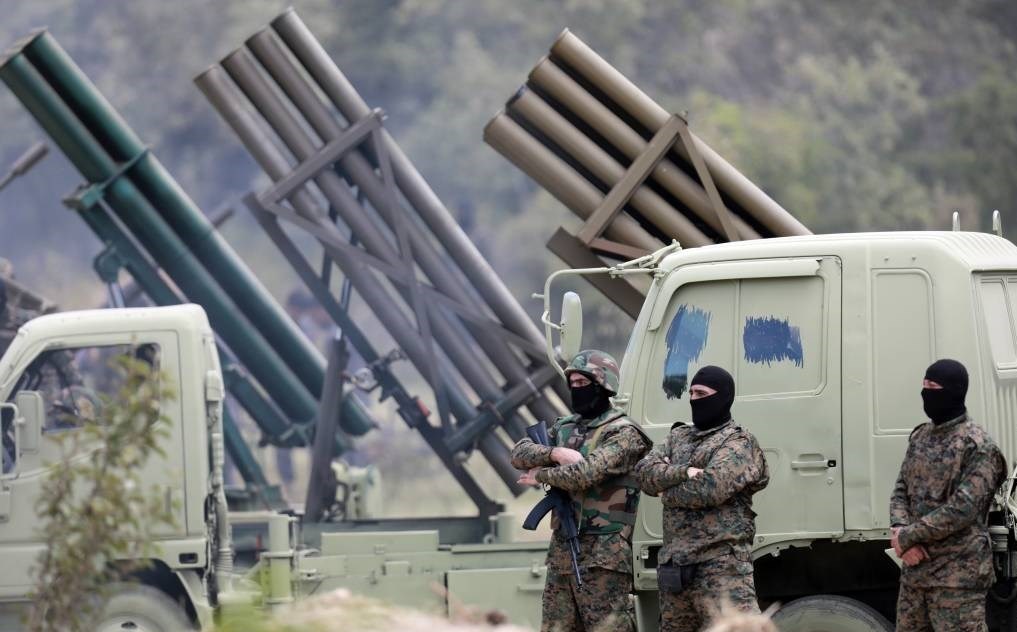
Hezbollah launches Sayyad-2 drones at Israeli positions in Marjaayoun
Around 03:04 UTC on 23 May 2026, Hezbollah released footage of two Sayyad-2 kamikaze drones launched toward Israeli Defense Forces positions near Aadaysit Marjaayoun in southern Lebanon. The operation highlights expanding use of longer-range loitering munitions against Israeli border deployments.
Key Takeaways
- Hezbollah publicized video on 23 May 2026 of two Sayyad-2 kamikaze drones launched toward IDF positions near Aadaysit Marjaayoun in southern Lebanon.
- The use of named loitering munition systems indicates growing sophistication beyond ad hoc FPV drones.
- Targeting of positions around Marjaayoun suggests Hezbollah is probing a broader set of Israeli deployments along the frontier.
- Increased loitering munition activity could pressure Israel to expand counter-drone defenses and alter border posture.
On 23 May 2026, at approximately 03:04 UTC, Hezbollah released footage showing the launch of two Sayyad-2 kamikaze drones aimed at Israeli Defense Forces (IDF) positions in the vicinity of Aadaysit Marjaayoun, a town in southern Lebanon overlooking parts of northern Israel. The video appears to capture ground crews preparing and launching the loitering munitions, which then proceed toward the border area under remote control.
Marjaayoun and its surroundings occupy a strategic elevation near the Israeli frontier, historically serving as a vantage point and staging area for both Lebanese and Israeli military operations. The reported targeting of IDF positions from this sector suggests Hezbollah is leveraging its geographic familiarity and line-of-sight advantages to test Israeli defenses with more capable unmanned systems.
The key actors in this development are Hezbollah’s drone and missile units and Israeli border forces equipped with air defense and surveillance assets. Unlike smaller commercial-based FPV drones, the Sayyad-2 designation suggests a purpose-built loitering munition with potentially greater range, payload, and endurance. Such systems can be pre-programmed or manually guided to search for and strike targets of opportunity, including radars, command posts, and high-value vehicles.
This event is significant for several reasons. First, it points to continued maturation of Hezbollah’s drone capabilities, moving further into the realm of semi-industrial or standardized loitering munitions rather than purely improvised platforms. Second, the deployment of these systems expands the engagement envelope beyond immediate border zones, enabling Hezbollah to threaten a wider array of fixed and mobile Israeli assets without exposing operators to direct fire.
Operationally, the use of named systems like the Sayyad-2 complicates Israel’s defense planning, as each new platform type may require specific countermeasures or adjustments to detection algorithms. Loitering munitions can be launched in waves and used to saturate defenses, probe radar coverage, or act as decoys for other attack modes. Their psychological impact is also non-trivial, as troops operating within nominally secured areas must contend with the possibility of sudden top-attack strikes from overhead.
Regionally, the increased deployment of loitering munitions from Lebanon is part of a broader proliferation of similar systems across the Middle East. Non-state actors gaining access to relatively sophisticated drones chips away at the traditional monopoly of state militaries on precision strike capabilities. This evolution may encourage other groups to seek comparable systems and embolden them to pursue more ambitious operations against fortified or hardened targets.
Internationally, these developments feed into ongoing debates over the regulation and control of unmanned weaponry. Each new incident demonstrating effective non-state use of loitering munitions reinforces calls for tighter export controls, more robust counter-UAS integration, and doctrinal changes to protect forces and infrastructure.
Outlook & Way Forward
In the short term, Israel is likely to respond to the Sayyad-2 launches by reinforcing air defense coverage around critical positions near Marjaayoun and other exposed sectors. This may involve repositioning existing systems, deploying additional radar and electro-optical sensors, and integrating more aggressive electronic warfare measures to disrupt drone communications and navigation.
Hezbollah is expected to continue experimenting with loitering munitions, testing range, survivability, and effectiveness against different types of Israeli targets. Successful employment will likely be showcased through carefully curated media releases, serving both operational and propaganda objectives. Over time, the group may seek to coordinate loitering munitions with rocket fire, anti-tank weapons, and traditional artillery to create multi-vector attack packages.
Strategically, the proliferation of such systems raises the threshold of complexity for any negotiated de-escalation along the Lebanon-Israel border. Even if large-scale ground operations are avoided, a persistent campaign of drone and loitering munition attacks—met with Israeli air and artillery strikes—could lock the frontier into a prolonged low-intensity but technologically advanced confrontation. Observers should watch for signs of increased production or transfer of standardized drone platforms to Hezbollah, as well as shifts in Israeli doctrine and procurement aimed at building an integrated, layered defense specifically tailored to the loitering munition threat.
Sources
- OSINT