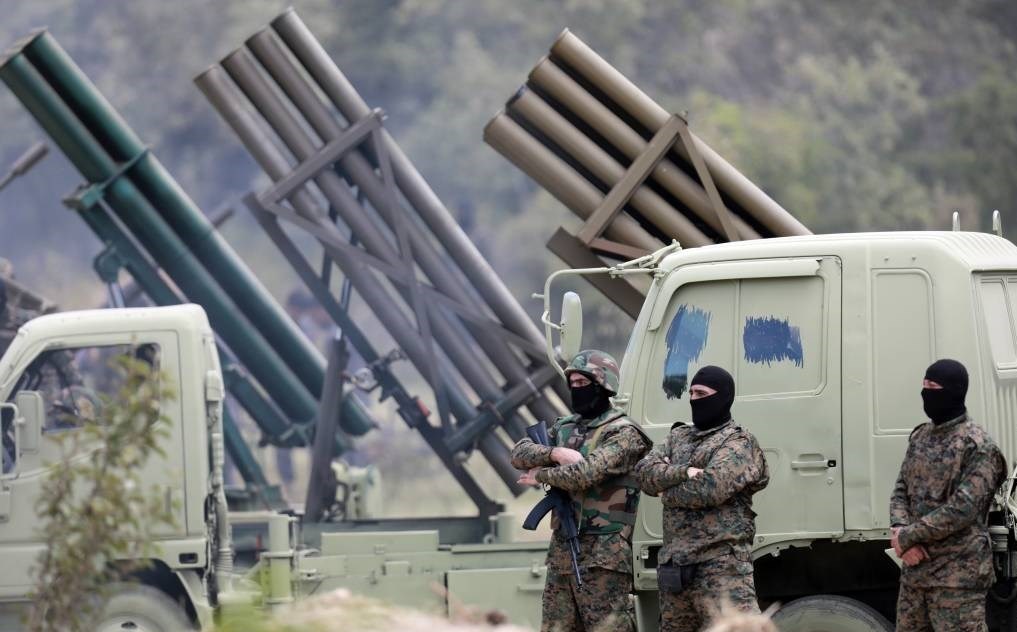
Hezbollah Anti‑Tank Missile Hits IDF Position In Taybeh Area
On the morning of 13 May, Hezbollah forces in southern Lebanon struck an Israeli military position in or near Taybeh with a guided anti‑tank missile, likely a Kornet‑E/Dehlavieh. The attack, reported around 08:02 UTC, targeted a building where Israeli soldiers were located.
Key Takeaways
- Around 08:02 UTC on 13 May, Hezbollah fired an anti‑tank guided missile (ATGM) at a building in the Taybeh area where Israeli soldiers were reportedly positioned.
- The weapon used was likely a 9M133‑1 Kornet‑E or its Iranian variant, the Dehlavieh, indicating continued use of advanced ATGMs against fixed and semi‑fixed military targets.
- The strike comes amid ongoing cross‑border exchanges between Hezbollah and Israeli forces along the Lebanon‑Israel frontier.
- The incident underscores persistent escalation risks on Israel’s northern front, with potential to broaden beyond limited tit‑for‑tat attacks.
On 13 May 2026, at approximately 08:01–08:02 UTC, Hezbollah units in southern Lebanon conducted a targeted strike against an Israeli military position in or near Taybeh, close to the Lebanon–Israel border. According to initial reporting, the group employed a guided anti‑tank missile to hit a building where soldiers of the Israel Defense Forces (IDF) were believed to be stationed.
The munition used was described as a 9M133‑1 “Kornet‑E” or its Iranian‑produced analogue, the Dehlavieh. Both are modern, long‑range anti‑tank guided missiles capable of defeating advanced armour and fortifications. Visual evidence associated with the incident suggests the missile was fired from Lebanese territory toward an Israeli‑controlled structure, though detailed casualty figures had not been confirmed at the time of reporting.
This attack follows a pattern of Hezbollah using ATGMs not only against armoured vehicles but also against observation posts, small outposts and buildings believed to house IDF personnel along the border region.
Background & context
The Lebanon–Israel border has seen sustained low‑to‑medium intensity clashes since the escalation of regional tensions linked to the Gaza conflict and wider confrontation involving Iran‑aligned groups. Hezbollah has regularly launched rockets and anti‑tank missiles into northern Israel, while the IDF has responded with artillery, airstrikes and targeted killings of Hezbollah commanders and infrastructure.
Taybeh and surrounding areas have been recurrent flashpoints, given their proximity to the border and presence of both Hezbollah infrastructure and Israeli surveillance and defensive positions across the line. Anti‑tank missile engagements have become a preferred tool for Hezbollah to inflict casualties and demonstrate deterrent capability without crossing into full‑scale war.
Key players involved
The primary actors are Hezbollah’s military wing, which maintains a significant inventory of anti‑tank guided missiles, and the Israel Defense Forces units deployed along the northern frontier.
Hezbollah’s choice of the Kornet‑E/Dehlavieh reflects its access to advanced Russian‑designed or Iranian‑produced guided munitions. Such systems have been supplied over years through Iranian channels and are a central component of Hezbollah’s anti‑armour and anti‑fortification doctrine.
On the Israeli side, the units in the Taybeh sector are part of the broader northern command, tasked with border defence, early warning and rapid reaction against infiltrations and missile attacks.
Why it matters
This incident is significant for several reasons:
- Operational impact: Use of a high‑end ATGM against a manned position can cause significant casualties and degrade local defensive infrastructure, even if the target is a static building rather than a tank.
- Tactical signalling: By employing such weapons against IDF positions, Hezbollah demonstrates it retains precision strike capacity along the border and can threaten hardened points as well as vehicles.
- Escalation potential: Fatalities or serious injuries among IDF personnel could trigger an escalated Israeli response, including deeper strikes into Lebanese territory or targeted actions against Hezbollah leadership.
The incident also occurs against a backdrop of rocket alerts in northern Israel earlier in the morning, indicating a multi‑vector harassment strategy by Hezbollah and aligned groups.
Regional/global implications
For Israel and Lebanon, persistent cross‑border exchanges sustain the risk of miscalculation. A single incident causing unusually high casualties on either side could overcome current informal rules of engagement and push both parties toward a broader confrontation.
Regionally, the attack feeds into the wider confrontation between Iran and the United States and their respective partners. Hezbollah’s actions are closely watched as indicators of how far Tehran is willing to risk escalation on Israel’s northern front. The use of Iranian‑related weaponry, such as Dehlavieh missiles, underscores the group’s role in Iran’s regional deterrence architecture.
Internationally, continued instability along the Lebanon–Israel border complicates diplomatic efforts to contain escalation across multiple fronts in the Middle East. It also increases pressure on UN peacekeeping forces operating in southern Lebanon and on European states with contingents deployed there.
Outlook & Way Forward
In the immediate term, the IDF is likely to respond with localized strikes on suspected launch sites, observation posts or logistical nodes associated with the ATGM team that conducted the attack. Israeli forces may also adjust posture in the Taybeh sector, reinforcing positions and increasing reliance on hardened shelters and active protection systems.
Hezbollah, for its part, may seek to frame the strike as a calibrated response within an ongoing tit‑for‑tat pattern, aiming to avoid provoking a major escalation while maintaining deterrence. However, if the attack has caused multiple Israeli fatalities, political pressure in Israel for a more forceful response will rise.
Over the coming weeks, analysts should watch for changes in the frequency and intensity of ATGM use by Hezbollah, Israeli targeting patterns against Hezbollah infrastructure, and any direct or indirect messaging from Tehran about acceptable escalation thresholds. A sustained uptick in precision strikes or attacks closer to major civilian centres would be a warning sign that the conflict is moving beyond controlled skirmishing toward a broader confrontation on Israel’s northern border.
Sources
- OSINT