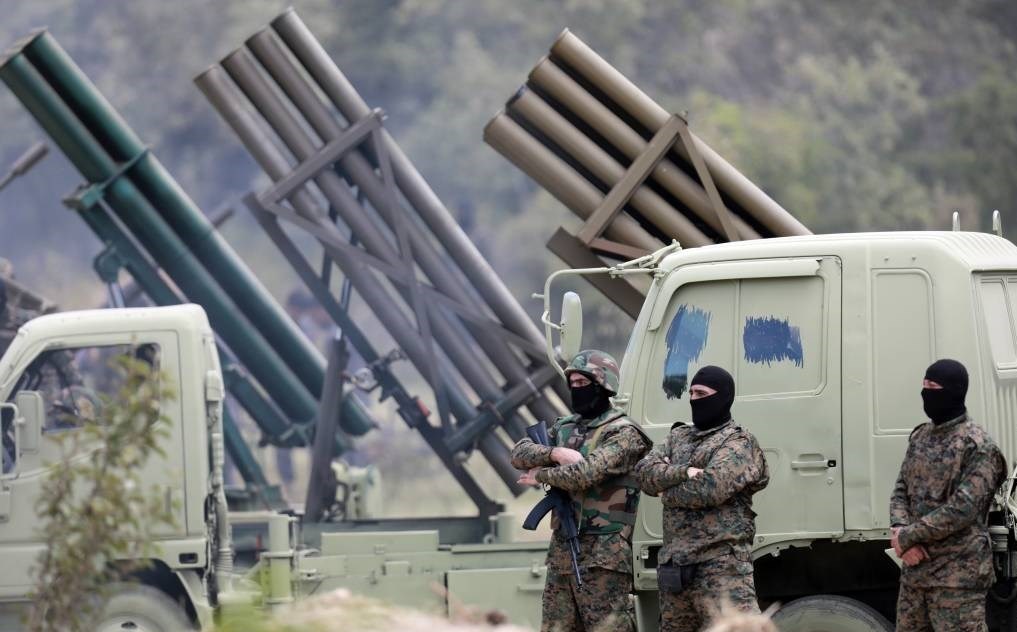
Hezbollah FPV Drones Strike Near Iron Dome Unit In South Lebanon
Around 00:03 UTC on 11 May 2026, Hezbollah launched first-person-view (FPV) drones targeting an Iron Dome air-defense system and four Israeli personnel in southern Lebanon. The incident reflects an intensifying drone war along the Israel–Lebanon frontier.
Key Takeaways
- Hezbollah deployed FPV attack drones against an Iron Dome system and nearby Israeli personnel in southern Lebanon around 00:03 UTC on 11 May 2026.
- The attack underscores Hezbollah’s focus on degrading Israeli air-defense assets.
- The use of precision FPV drones highlights evolving tactics and growing lethality along the border.
- The incident increases the risk of further escalation between Israel and Hezbollah.
At approximately 00:03 UTC on 11 May 2026, Hezbollah launched first-person-view (FPV) drones targeting an Israeli Iron Dome air-defense system and four Israeli personnel in southern Lebanon. The attack continues a pattern of reciprocal strikes across the Israel–Lebanon border, where Hezbollah and the Israel Defense Forces (IDF) have been engaged in sustained low-intensity conflict.
FPV drones, guided by operators using real-time video feeds, offer high precision against point targets, including radar units, launchers, and personnel in the open. Hezbollah’s decision to direct such drones at an Iron Dome battery is tactically significant: the system is central to Israel’s layered air-defense architecture, and its degradation would expose northern Israel to increased rocket and missile vulnerability.
Hezbollah has been steadily expanding its drone arsenal, ranging from small commercial platforms adapted for bombing to more sophisticated systems supplied or supported by Iran. The integration of FPV kamikaze drones into its repertoire mirrors developments seen in other theaters, including Ukraine and Syria, and reflects a broader global diffusion of low-cost precision strike capabilities to non-state actors.
Key players in this incident are Hezbollah’s specialized drone and rocket units, the IDF’s air-defense forces, and political leadership in both Beirut and Jerusalem who calibrate escalation thresholds. On the ground, Iron Dome crews and associated radars are now increasingly hunted assets, requiring enhanced concealment, dispersion, and hardening.
Strategically, attacks on air-defense infrastructure are designed to erode Israel’s qualitative military edge and to signal that Hezbollah can impose real costs in any broader conflict. Successful strikes, even if limited, may compel Israel to allocate more resources to passive defense and asset protection, potentially stretching already burdened manpower and financial resources.
The incident also feeds into a larger narrative of multi-front pressure on Israel, alongside tensions with Hamas-linked factions, Iranian-backed militias in Syria, and direct Iranian threats. For Hezbollah, demonstrating the ability to penetrate Israeli defenses is a critical component of deterrence messaging to both Israel and its domestic Lebanese audience.
Regionally, continued tit-for-tat strikes raise the risk of miscalculation. Civilian communities in both northern Israel and southern Lebanon remain vulnerable to rocket exchanges and retaliatory airstrikes. International actors, including the United States, France, and UN peacekeepers in southern Lebanon, will be concerned that targeted attacks on high-value military assets can quickly spiral into a broader confrontation.
Outlook & Way Forward
In the near term, Israel is likely to respond with targeted air or artillery strikes against Hezbollah positions, launch sites, and suspected drone depots in southern Lebanon. The IDF will also review the siting and protection of Iron Dome batteries, potentially relocating systems, increasing camouflage, and integrating additional short-range air-defense layers specifically tailored to low-signature drones.
Hezbollah, for its part, is likely to frame the attack as a demonstration of its capacity to challenge Israeli technological supremacy. If the group assesses that Israel’s response remains calibrated and localized, it may be incentivized to conduct further precision drone operations against additional military assets, such as command posts, observation towers, or logistical hubs.
Longer term, the growing drone duel along the border underscores the need for updated de-escalation mechanisms and clearer red lines. Absent diplomatic progress, a continued cycle of precision strikes and reprisals heightens the probability of an incident causing mass casualties or the destruction of critical infrastructure, which could pressure leaders on both sides into more expansive military action. Analysts should watch for changes in the density and sophistication of air-defense deployments in northern Israel, shifts in Hezbollah’s public messaging about its drone capability, and any unusually large or coordinated attack packages that might herald a transition from low-intensity confrontation to a broader conflict.
Sources
- OSINT