Hezbollah Targets Iron Dome With New FPV Drone Strike Footage
On May 10, around 21:33 UTC, Hezbollah released video showing two fiber‑optic FPV drone strikes against an Israeli Iron Dome battery and its crew in northern Israel. The unprecedented footage highlights the group’s growing use of precision drones against critical air-defense assets.
Key Takeaways
- Around 21:33 UTC on May 10, Hezbollah released footage of two FPV drone strikes on an Israeli Iron Dome battery and its crew in northern Israel.
- The release is the first time Hezbollah has publicly showcased fiber‑optic FPV drones targeting a core Israeli air‑defense system.
- The attacks form part of a broader Hezbollah campaign that same evening involving mortars and rockets against Israeli positions.
- Successful targeting of Iron Dome units could degrade Israel’s short‑range air‑defense coverage along the northern front.
- The development underscores the democratization of precision-strike capabilities among non‑state actors.
Hezbollah’s publication on May 10 of video purporting to show two FPV (first‑person‑view) drone strikes against an Israeli Iron Dome battery marks a notable evolution in the group’s tactics and messaging. The footage, released at approximately 21:33 UTC, appears to capture direct hits on both the launcher area and its crew in northern Israel, signaling an effort to challenge one of Israel’s most prized defensive assets.
The drones are described as fiber‑optic FPV systems, indicating they likely relied on tethered or hardened data links to mitigate Israeli electronic warfare and jamming. Such configurations allow operators to maintain control in heavily contested electromagnetic environments, where standard radio‑frequency links are easily disrupted. Using FPV platforms against a mobile missile-defense unit requires not only technical capacity but also precise targeting intelligence and effective reconnaissance.
Hezbollah’s messaging suggests the group deliberately chose to publicize this particular attack to demonstrate vulnerability in Israel’s layered air defenses. Until now, Iron Dome batteries have been primarily threatened by massed rocket fire and, to a lesser extent, anti-radiation or ballistic threats. The apparent successful use of small, maneuverable drones introduces a more surgical risk, potentially forcing Israel to reconfigure deployment patterns and protective measures around air-defense units.
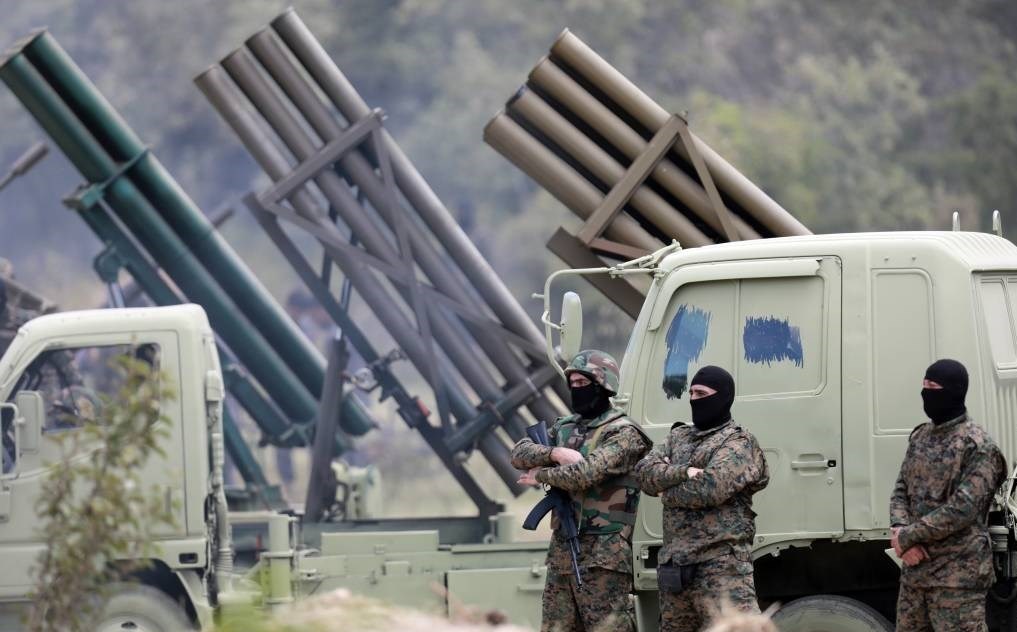
The footage release coincided with reports, around 21:02 UTC, that Hezbollah conducted multiple strikes against Israeli Defense Forces (IDF) sites in the broader Israel–Lebanon border area. The group reportedly employed 120mm HM‑16 mortars with rocket‑assisted high‑explosive rounds, rare North Korean‑made 122mm R‑122 Grad rockets, and 120mm M48 mortar bombs, illustrating the diversity of its artillery arsenal.
Key players in this escalation include Hezbollah’s drone and artillery units, the IDF’s Northern Command, and Israel’s air-defense directorate. For Hezbollah, targeting Iron Dome units serves both operational and psychological purposes: degrading Israeli interception capacity along the border while signaling to domestic and regional audiences that it can strike what Israel portrays as an almost impenetrable shield.
For Israel, the attack poses a tactical and strategic challenge. Tactically, the IDF must now consider Iron Dome batteries as high‑value, high‑vulnerability assets requiring additional close‑in defense, hardening, dispersion, and deception. Strategically, any perception of reduced interception rates could influence public confidence, political decision-making on escalation, and the calculus of other adversaries contemplating rocket or drone salvos.
The broader significance lies in the ongoing diffusion of precision-strike technologies. FPV drones have already transformed battlefield dynamics in Ukraine and other theaters; Hezbollah’s demonstrated ability to employ them effectively against sophisticated systems suggests non‑state actors aligned with Iran are integrating lessons from multiple conflicts. The use of fiber‑optic control lines indicates adaptation against electronic warfare that many state militaries still struggle to counter consistently.
Regionally, this development could embolden other Iranian‑aligned groups to expand their own drone capabilities. It may also accelerate Israeli investment in counter‑FPV measures, such as directed‑energy weapons, smart fragmentation systems, improved detection algorithms, and automated close‑in air defense.
Outlook & Way Forward
In the near term, Israel is likely to intensify physical security and camouflage around Iron Dome sites, introduce greater mobility and dispersion, and deploy additional short‑range counter‑drone systems to protect batteries. Expect a surge in IDF strikes on suspected Hezbollah drone workshops, launch sites, and operators, as Israel seeks to suppress this emerging threat before it scales.
Hezbollah, for its part, will likely view the publicity around the attack as a success and invest further in FPV fleets, operator training, and hardened communications. Future operations may involve coordinated drone‑and‑rocket attacks designed to saturate defenses, destroy radars, and force Iron Dome units to relocate southward, opening up more permissive airspace for rockets and low‑end UAVs closer to the border.
Over the medium term, the proliferation of combat‑proven FPV tactics to other fronts—including Gaza, Syria, and potentially West Bank cells—could significantly complicate Israel’s defensive architecture. Analysts should monitor indicators such as changes in Iron Dome deployment density along the northern front, reported interception rates, the frequency of Hezbollah drone releases, and Israeli procurement or testing of new counter‑UAS systems. If not rapidly checked, this trend could erode Israel’s qualitative edge in short‑range air defense and reshape the cost‑benefit calculus of rocket-based deterrence across the Levant.
Sources
- OSINT