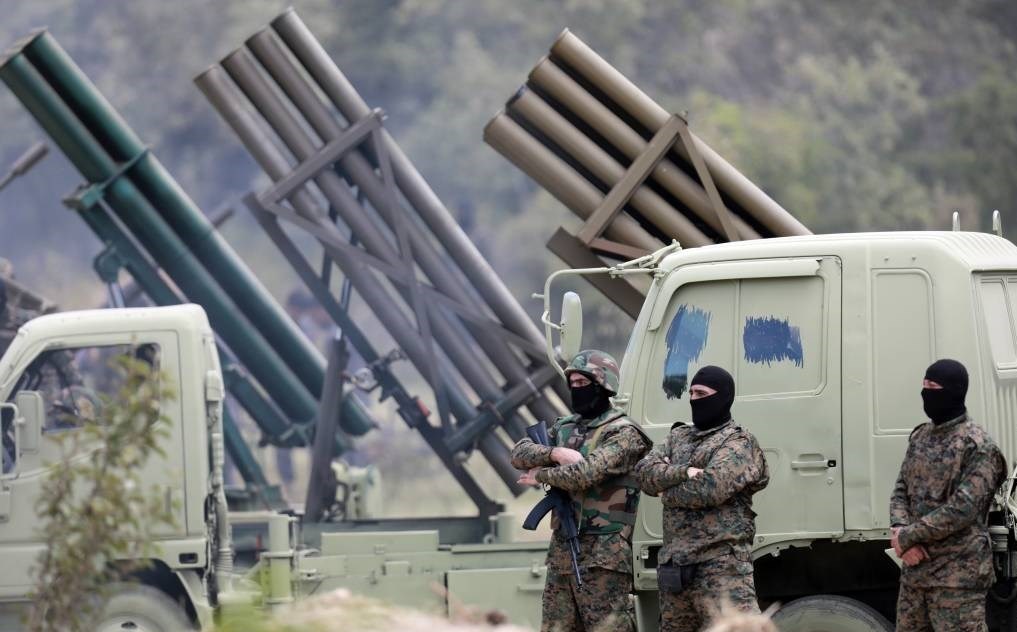
Hezbollah Launches Coordinated Mortar and Rocket Barrage at IDF Sites
At approximately 21:02 UTC on May 10, Hezbollah conducted multiple strikes on Israeli military positions from southern Lebanon, employing an unusually diverse mix of mortars and rockets. The attacks underscore the group’s sustained engagement along the Israel–Lebanon frontier.
Key Takeaways
- Around 21:02 UTC on May 10, Hezbollah launched several coordinated strikes on Israeli Army positions from southern Lebanon.
- The group employed 120mm HM‑16 mortars with rocket‑assisted HE rounds, 122mm North Korean‑made R‑122 Grad rockets, and 120mm M48 mortar bombs.
- The use of rare North Korean rockets highlights the diversity and external sourcing of Hezbollah’s arsenal.
- The attacks coincided with Hezbollah’s release of drone‑strike footage on an Iron Dome battery, suggesting a multi‑domain pressure campaign.
- The sustained exchanges risk further entangling Lebanon in the wider confrontation involving Iran, Israel, and the United States.
Hezbollah mounted a series of coordinated indirect‑fire attacks against Israeli military positions on May 10, signaling the group’s intent to maintain pressure along the northern front amid escalating regional tensions. At approximately 21:02 UTC, the organization targeted Israel Defense Forces (IDF) sites using a mix of mortars and rockets, launched from multiple locations in southern Lebanon.
The reported weapons mix is noteworthy. Hezbollah employed 120mm HM‑16 mortars firing rocket‑assisted high‑explosive rounds, extending effective range and lethality compared to conventional mortar bombs. The group also fired 122mm R‑122 Grad rockets, identified as North Korean‑manufactured, as well as 120mm M48 mortar bombs. This combination demonstrates both volume‑of‑fire capability and an ability to tailor munitions to different target sets and ranges.
The presence of R‑122 rockets of North Korean origin underlines the longstanding, if often opaque, networks supplying Hezbollah with weaponry. While Iran remains the group’s principal patron, North Korean systems have periodically surfaced in Hezbollah’s inventory, suggesting either direct transfers, third‑party brokering, or older stockpiles still in service. Their use now indicates confidence in their reliability and combat utility.
These strikes did not occur in isolation. Roughly half an hour later, at 21:33 UTC, Hezbollah released footage of FPV drone attacks on an Israeli Iron Dome battery in northern Israel. Together, the mortar, rocket, and drone operations amount to a combined‑arms harassment campaign, aimed at stretching Israel’s defensive resources, testing response times, and probing for weaknesses.
Key players include Hezbollah’s rocket and artillery units, the IDF’s Northern Command, and the Lebanese state, which continues to have limited practical control over Hezbollah’s military activities in the south. For Hezbollah, sustained low‑ to medium‑intensity attacks allow it to claim active resistance in support of Iran and other allied fronts without necessarily triggering a full‑scale war that could devastate Lebanon.
From Israel’s vantage point, the continuing exchanges pose a strategic dilemma. A restrained response risks normalizing a new level of Hezbollah pressure, while a large‑scale campaign risks widening the ongoing conflict at a moment when Israel is already stretched on other fronts and reliant on contentious U.S. support. The exposure of Israeli border communities and military outposts to periodic bombardment also has longer‑term implications for civilian resilience and internal political debates.
The use of varied munitions and cross‑domain tactics reflects broader trends in contemporary warfare. Non‑state actors like Hezbollah now field arsenals that include precision and area‑fire systems sourced from multiple states, integrated with drones and advanced communications. This makes them more flexible and less predictable, complicating defensive planning.
Regionally, this pattern of calibrated escalation keeps Lebanon in the crosshairs of any broader confrontation involving Iran, Israel, and the United States. A misjudged strike causing mass casualties on either side could rapidly change political calculations and public tolerance for “managed” conflict. The presence of North Korean‑origin rockets further draws attention to global proliferation routes that could be targeted by sanctions or interdiction efforts.
Outlook & Way Forward
Short term, the IDF is likely to respond with precision air or artillery strikes on suspected Hezbollah firing positions, command nodes, and logistical infrastructure in southern Lebanon. However, both sides have incentives to limit casualties and damage to avoid crossing the threshold into a full‑scale war. Expect continued tit‑for‑tat exchanges involving limited rocket and drone attacks paired with Israeli counter‑battery fire and targeted strikes.
Over the medium term, the sustainability of this pattern will depend on external political dynamics, particularly developments in U.S.–Iran negotiations and the trajectory of parallel conflicts. If diplomatic channels remain blocked and Iran perceives benefit in sustained low‑intensity pressure on Israel, Hezbollah can be expected to maintain or gradually increase the tempo and sophistication of attacks.
Analysts should track indicators such as changes in the rate and caliber of rocket fire, Israeli evacuations or fortification efforts in northern communities, Lebanese government appeals to international actors, and evidence of expanded Hezbollah stockpiles or new weapons types. A marked shift—such as sustained use of larger rockets at deeper ranges or Israeli preemptive strikes deeper into Lebanon—would signal movement from a contained border conflict to a more serious northern front, with significant humanitarian and geopolitical consequences.
Sources
- OSINT