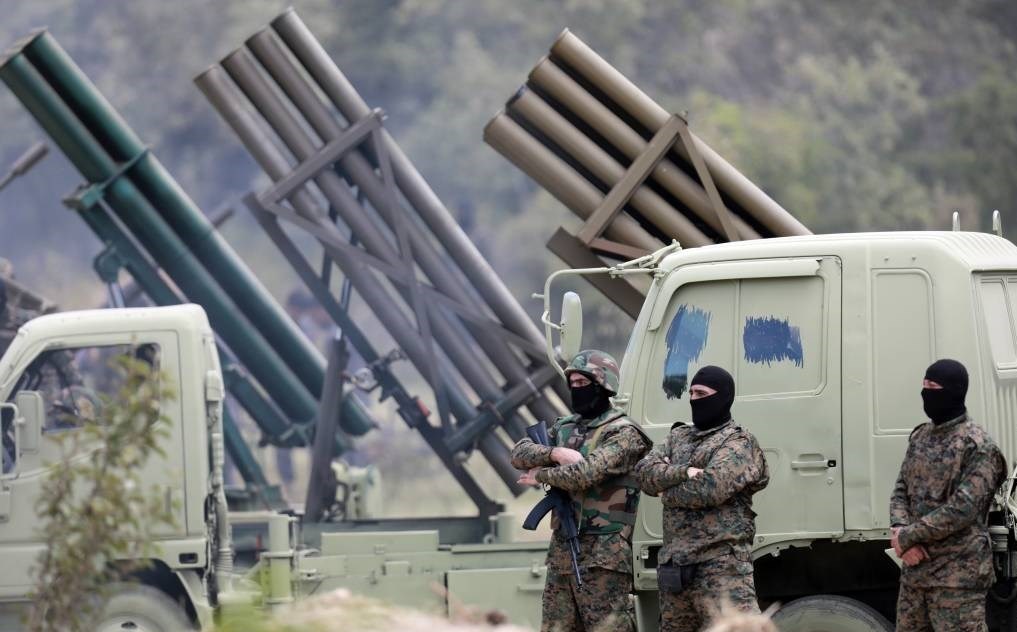
Hezbollah Uses Iranian Mortars in New Strike on Israeli Positions
At approximately 20:01 UTC on 7 May, Hezbollah fighters carried out mortar attacks on Israeli military positions near Aynata in southern Lebanon. Observers identified Iranian-made 120mm HM‑16 mortars firing long-range high-explosive rounds.
Key Takeaways
- Around 20:01 UTC on 7 May, Hezbollah conducted mortar strikes on Israeli Defense Forces positions near Aynata, along the Lebanon–Israel border.
- The attack reportedly used Iranian-produced 120mm HM‑16 mortars and long-range high-explosive ammunition, underscoring Tehran’s material support.
- The incident forms part of sustained cross-border exchanges amid a broader multi-front confrontation involving Iran, Israel, Lebanon, and the United States.
- The use of identifiable Iranian systems strengthens perceptions of a tightly integrated Iran–Hezbollah military relationship.
- Continued attritional fire on the northern front complicates Israeli strategic planning and heightens escalation risks.
At roughly 20:01 UTC on 7 May 2026, Hezbollah units in southern Lebanon launched mortar fire against Israeli Army positions in the vicinity of Aynata, a recurrent flashpoint along the Lebanese–Israeli frontier. Visual documentation circulated immediately afterward indicates that the attackers employed Iranian-manufactured 120mm HM‑16 mortars, firing long-range high-explosive (HE‑LR) bombs produced by Iran’s Defense Industries Organization (DIO).
The engagement adds another episode to months of near-daily tit-for-tat exchanges along the Blue Line, as Hezbollah and Israeli forces trade artillery, rocket, drone, and precision-guided strikes in parallel with wider regional confrontations involving Iran and U.S. forces.
Background & Context
Since the wider regional crisis intensified, the Lebanon–Israel border has become a steady but managed front of conflict. Hezbollah has calibrated its attacks to maintain pressure on Israel without triggering an all-out war that could devastate Lebanese infrastructure and stretch Israeli forces.
Mortar and rocket strikes such as the Aynata attack serve multiple purposes: demonstrating Hezbollah’s operational readiness, testing Israeli air defense and counter-battery responses, and reinforcing the perception that any large-scale attack on Iran or other components of the so-called "Axis of Resistance" would elicit a northern front response.
The identification of the HM‑16 system and DIO-produced HE‑LR rounds is particularly notable. Iran has long supplied Hezbollah with small arms, rockets, and more advanced missiles, but the explicit showcasing of specific Iranian systems serves a signaling function—highlighting Tehran’s role as armorer and technology provider to frontline anti-Israel actors.
Key Players Involved
Hezbollah’s field formations in southern Lebanon executed the attack, likely from pre-surveyed firing positions intended to enable rapid shoot-and-scoot tactics to minimize vulnerability to Israeli counter-battery strikes. The selection of Aynata-area targets suggests an intent to hit known Israeli positions while staying within a familiar engagement geography.
On the Israeli side, the Israel Defense Forces maintain a layered defense posture along the northern border, combining fixed fortifications, mobile infantry and armor units, artillery, and extensive ISR assets. The IDF has repeatedly struck back at Hezbollah firing points, command sites, and infrastructure deeper inside Lebanon.
Iran, although not directly operating on this specific front, is implicated as the supplier of the weapons employed. The HM‑16 mortar and DIO HE‑LR munitions visually tie the Aynata strike to Tehran’s defense-industrial base and export networks.
The United States, while not operationally involved in this particular exchange, is a critical backdrop actor. As Hezbollah and Israel exchange fire, Washington is simultaneously confronting Iran in the Gulf and supporting Israel diplomatically and militarily.
Why It Matters
The Aynata attack is significant less for its immediate tactical impact and more for its evidentiary and signaling value. The visible use of Iranian systems:
- Reinforces assessments that Hezbollah’s arsenal is not only quantitatively robust but qualitatively upgraded.
- Signals to Israel and the U.S. that any confrontation with Iran will likely activate a technologically capable proxy front on Israel’s northern border.
- Helps Iran demonstrate the reach and effectiveness of its arms exports at a time when its own territory and maritime interests are under attack.
For Israel, each such strike contributes to a pattern of attritional pressure. Even if casualties or damage are limited, the IDF must expend resources on constant readiness, air defense, and retaliatory operations, eroding bandwidth for other theaters.
Regional and Global Implications
Regionally, Hezbollah’s sustained engagement on the northern border constrains Israel’s strategic freedom of action. Large-scale operations elsewhere—against Iran directly or against other Iranian partners—must account for the risk of a surge in northern attacks, including potential use of more precise or long-range systems than mortars.
For Lebanon, continued cross-border fire carries domestic political and economic risks. Israeli retaliation, including airstrikes on infrastructure or deeper Hezbollah assets, risks further damage to an already fragile Lebanese economy and critical services.
Globally, the visible deployment of Iranian ordnance in active conflict zones will factor into broader debates on sanctions, arms proliferation, and regional arms races. It complicates diplomatic efforts to separate negotiating tracks for Iran’s nuclear program, regional behavior, and missile development, as these domains are increasingly interlinked on the ground.
Outlook & Way Forward
In the near term, observers should expect calibrated Israeli retaliation, likely in the form of airstrikes or artillery against suspected Hezbollah firing positions or logistical sites in southern Lebanon. The intensity and geographic depth of Israel’s response will indicate whether the Aynata strike is treated as routine friction or part of an escalatory pattern.
Looking ahead, the key strategic question is whether Hezbollah will increase the sophistication or range of its attacks—introducing guided munitions or targeting higher-value military and infrastructure assets—or continue a lower-level pattern designed to avoid full-scale war. Indicators of a shift would include increased movement of heavy systems in southern Lebanon, expanded Israeli evacuations in the north, or more explicit rhetorical linkage of border attacks to events in the Gulf and Iran.
For policymakers and analysts, integrating the northern border dynamics into a holistic view of the Iran-associated conflict network is essential. Decisions made in Washington, Tel Aviv, or Tehran about operations in the Strait of Hormuz or Syria will almost inevitably reverberate along the Lebanon–Israel frontier, where each mortar round fired from systems like the HM‑16 serves as both a tactical action and a strategic message.
Sources
- OSINT