Iran Claims Strike on US Carrier; Air Defenses Active Over Tehran
Severity: FLASH
Detected: 2026-05-07T21:31:52.486Z
Summary
Between 20:27 and 21:01 UTC, Iranian sources reported heavy air defense activity with multiple explosions over western Tehran, while Iranian state TV claimed that Iran has struck a U.S. Navy force including an aircraft carrier in the Strait of Hormuz, forcing an American retreat. These reports, alongside ongoing exchanges of fire in Hormuz and earlier U.S. strikes on Qeshm and Bandar Abbas ports, signal a possible new phase of the U.S.–Iran escalation with direct risk to naval assets and Iranian territory.
Details
- What happened and confirmed details:
From approximately 20:00 to 21:05 UTC on 2026-05-07, several interconnected developments were reported in the U.S.–Iran confrontation around the Strait of Hormuz and inside Iran:
- At 20:06 UTC (Report 5), Tasnim News, via Kurdish-front relays, stated that explosions heard in Sirik County in southern Iran were the result of IRGC Navy warning operations, instructing ships not to cross the Strait of Hormuz without authorization. This indicates an aggressive enforcement posture in the eastern Hormuz approaches.
- At 20:19 UTC (Report 1) and 20:18 UTC (Report 11), multiple sources reported exchanges of fire between Iranian and U.S. forces in the Strait of Hormuz following a U.S. attack on an Iranian-flagged container ship, with missile launches reported. This is consistent with the earlier alerts on U.S.–Iran clashes and U.S. strikes on Qeshm Port and Bandar Abbas (Report 4 at 20:39 UTC).
- At 20:27 UTC (Report 9) and again at 21:01 UTC (Report 3), local and regional channels reported air defense activity over western Tehran with at least four distinct explosions heard. No confirmed attribution (missiles, drones, or false alarms) is available yet, but the pattern suggests that Tehran’s integrated air defense system is actively engaging perceived aerial threats.
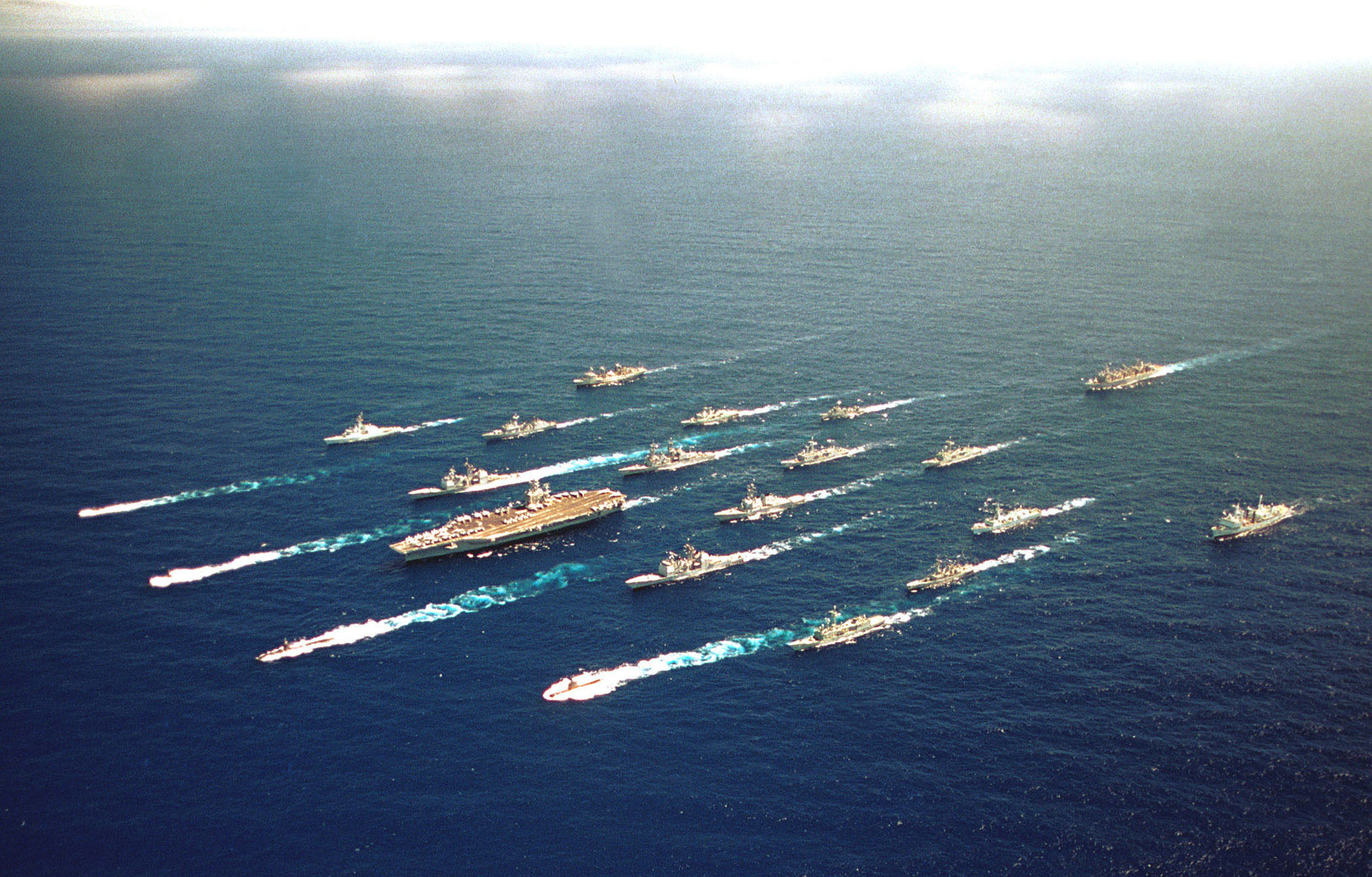
- At 21:01 UTC (Report 10), Iranian state TV claimed that Iran has struck a U.S. Navy force and an aircraft carrier, alleging that American forces are retreating. This is a unilateral claim from a partisan source and remains uncorroborated by U.S. or independent reporting at this time.
- Who is involved and chain of command:
The key actors are:
- Islamic Republic of Iran: IRGC Navy forces operating in and around Sirik and the Strait of Hormuz; IRGC Aerospace and Iranian Air Defense units likely responsible for engagements over western Tehran. Strategic decisions would be sanctioned at the Supreme National Security Council level, ultimately under the Supreme Leader, with operational direction via IRGC high command.
- United States: U.S. Navy assets in or near the Strait of Hormuz, likely including at least one carrier strike group and supporting surface combatants, and U.S. Central Command (CENTCOM) overseeing operations. The Fox News-cited senior U.S. official earlier framed the U.S. strikes on Qeshm and Bandar Abbas as limited, not a ‘restart of the war,’ suggesting Washington is still attempting to manage escalation, even as the situation deteriorates.
- Immediate military/security implications:
The key new dimension is the reported activation of air defenses over Tehran and Iran’s public claim to have hit a U.S. carrier group. Even if exaggerated, such claims can commit both sides politically and militarily.
- If any U.S. naval asset was hit, the U.S. will face intense pressure to respond forcefully, potentially expanding targets to Iranian mainland infrastructure, command-and-control, or further ports.
- Tehran’s visible air defense activity indicates either real inbound threats (missiles/drones) or a high-alert environment with a low threshold for engagements. Both increase the risk of miscalculation, including accidental shoot-downs of civilian or neutral aircraft.
- IRGC warning fire near Sirik and emphasis on authorization to cross Hormuz underscores a de facto Iranian attempt at tighter control or partial closure, raising the risk for commercial shipping.
- Market and economic impact:
The Strait of Hormuz is the transit route for roughly a fifth of global oil flows and significant LNG exports. The combination of:
- reported missile exchanges in the strait,
- U.S. kinetic strikes on Qeshm Port and Bandar Abbas, and
- Iranian claims of striking U.S. naval forces, creates a high-impact risk premium scenario.
Expect:
- Crude oil: Upward spikes and intraday volatility as traders price in potential shipping disruptions, higher war risk insurance premiums, and the possibility of an effective partial closure of Hormuz. Brent and WTI are likely to gap higher in the next trading session if risk escalates or is confirmed.
- Shipping and insurance: Sharp increase in war risk premiums for tankers transiting Hormuz, with some operators considering rerouting or delaying sailings. Tanker equities and defense-related maritime security firms could gain; broader shipping may see mixed impacts.
- Gold and safe havens: Classic flight to safety into gold, the U.S. dollar (unless directly questioned by broader U.S. involvement), and possibly the Swiss franc and yen. Risk-off sentiment could pressure global equities, especially energy-importing EMs.
- Regional currencies: Pressure on Gulf and regional EM FX; Iran’s rial remains structurally weak and vulnerable to further sanctions or conflict escalation.
- Likely next 24–48 hour developments:
- Confirmation/denial phase: U.S. authorities and independent OSINT will move quickly to confirm or refute Iranian claims of a hit on a U.S. carrier or escort vessels. Imagery, AIS gaps, and satellite tracking will be key. Clarity on whether Tehran’s air defenses engaged real incoming threats or false positives will shape perceptions of escalation.
- Operational tempo: Both sides may continue limited strikes and counter-strikes around Hormuz and Iranian coastal facilities. The U.S. might increase force protection measures, air patrols, and defensive posturing of its carrier group.
- Diplomatic signaling: Expect urgent consultations among Gulf states, G7 members, and energy agencies, with calls for de-escalation. However, domestic political dynamics in both Tehran and Washington may constrain rapid de-escalation.
- Market reaction: Energy and broader risk assets will trade headline-to-headline; confirmation of damage to U.S. naval assets or visible strikes on Tehran-area infrastructure would push the situation toward a higher-tier crisis with more sustained commodity and FX impacts.
This remains an evolving, high-risk confrontation. The combination of Hormuz engagement, strikes on Iranian ports, air defense activity over Tehran, and public claims of strikes on a U.S. carrier group collectively mark a potentially war-changing inflection point that warrants top-level policy and market attention.
MARKET IMPACT ASSESSMENT: Escalation risk around Hormuz remains acute, with added uncertainty from claimed attacks on a U.S. carrier group and visible air defense activity over Tehran. Expect renewed upside pressure and volatility in crude benchmarks, refined products, shipping rates, gold, and defense stocks, with potential risk-off flows hitting global equities and EM FX. Any confirmation of damage to U.S. naval assets or sustained strikes on Iranian territory would trigger additional oil spikes and safe-haven moves.
Sources
- OSINT