U.S. Oil Safety Net Thins as Strategic Reserve Hits Lowest Level Since 1983
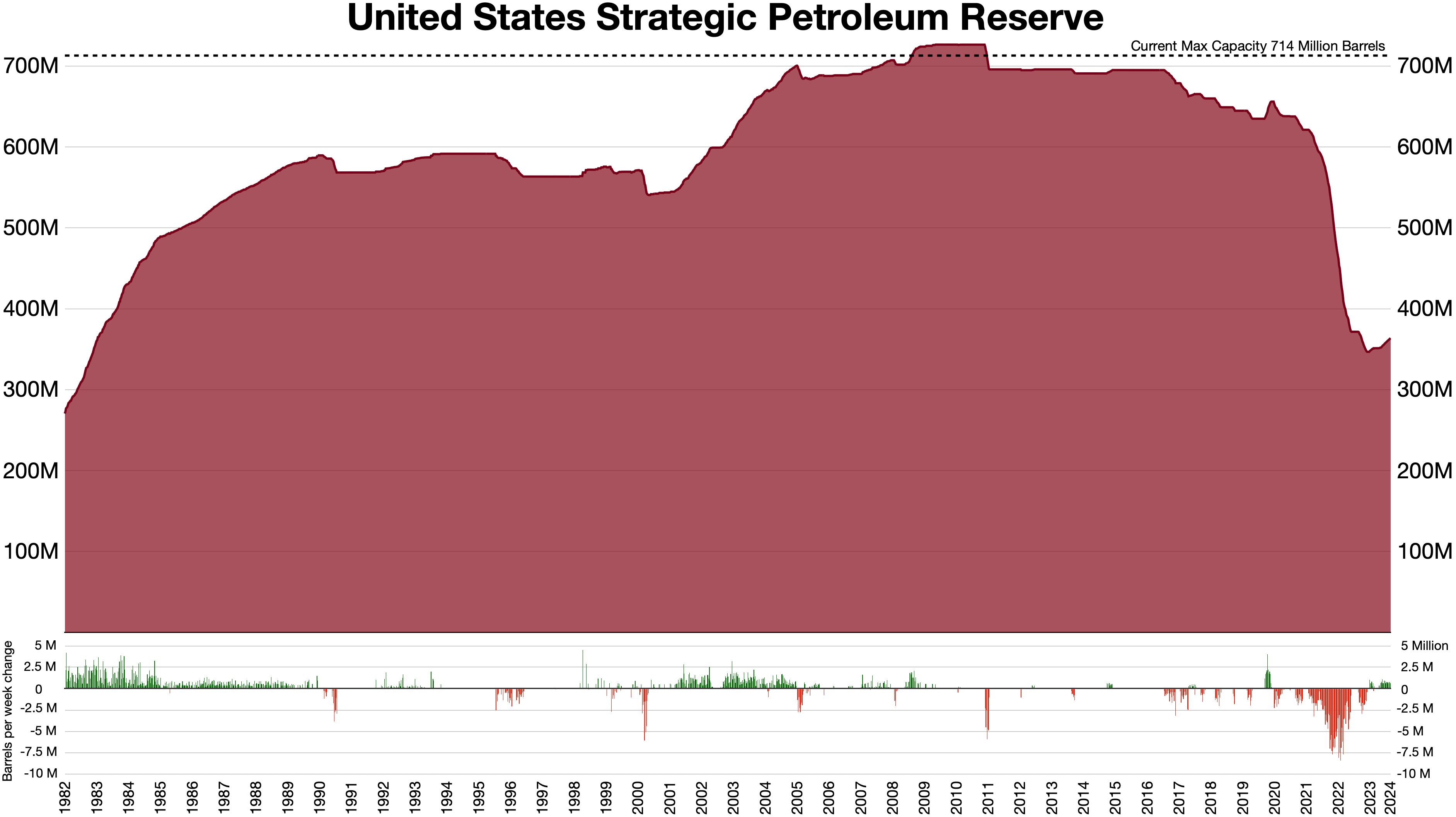
U.S. government crude stockpiles in the Strategic Petroleum Reserve have dropped by 5.1 million barrels to 311.4 million, their lowest level in more than four decades. With Gulf shipping risk rising and Washington leaning on sanctions and blockades, the thinning emergency cushion makes any major energy shock harder to absorb.
America’s emergency oil safety net is at its thinnest in more than 40 years, just as the global energy system faces mounting geopolitical risks from the Gulf to Eastern Europe.
New data released on 20 July show the U.S. Strategic Petroleum Reserve (SPR) fell by 5.1 million barrels to 311.4 million barrels, the lowest level since 1983. The SPR, stored in underground salt caverns along the Gulf Coast, is designed to give Washington the ability to weather sudden supply shocks, whether from war, sanctions or natural disasters. Crossing back into early‑1980s territory in absolute volume is a symbolic and practical reminder that the margin for error is narrowing.
For U.S. consumers, the SPR is invisible until it is needed. But refiners, traders and allied governments watch its level closely as a gauge of how much flexibility Washington has to respond to crises without triggering fresh market turmoil. One of the lessons of past supply shocks—whether the 1990–91 Gulf War, hurricanes in the Gulf of Mexico, or more recent drawdowns linked to Russia’s invasion of Ukraine—is that the size and timing of SPR releases can shape not just U.S. pump prices but global sentiment.
Today’s drawdown comes against a fraught backdrop. In the Middle East, Iran has exchanged missile strikes with U.S. forces and launched short‑range missiles toward Bahrain, while the U.S. military has restarted a blockade on Iranian ports that has already redirected multiple commercial vessels. Yemen’s Houthi movement has declared a maritime embargo on Saudi Arabia and is threatening Saudi‑linked ships in the Red Sea and Gulf of Aden. Off Oman, two oil tankers operated by Greek firm Dynacom were struck by projectiles, forcing one crew to evacuate.
Each of these episodes adds friction to the flow of crude and refined products through some of the world’s most important sea lanes. Oil prices briefly erased gains after Iran signaled that talks with the United States could be pursued if they served national interests, underscoring how quickly diplomatic hints and military actions now jostle trader expectations. In such an environment, a smaller SPR means Washington has less ability to send a reassuring signal by announcing large emergency releases if a true supply break occurs.
The risk is not just a catastrophic closure of the Strait of Hormuz or a sustained regional war, but a series of overlapping disruptions—a damaged export terminal, a spate of tanker attacks, a refinery fire—that together tighten the market. With inventories lower, any additional shock can translate more quickly into price spikes that feed through to inflation and domestic political pressure in the United States.
For allies who count on U.S. leadership in coordinating emergency responses through mechanisms like the International Energy Agency, a thinner U.S. reserve raises questions about burden‑sharing. If Washington has less oil to contribute in a crisis, others may need to lean more on their own strategic stocks or accept greater price volatility.
The key variables to watch now are whether the U.S. government accelerates efforts to refill the SPR at current price levels, how Congress responds to a reserve at 1980s levels, and whether any new Gulf disruption forces the administration to choose between saving barrels for a worst‑case scenario and using them to relieve domestic pressure. Strategic stockpiles rarely dominate headlines, but when they are low, every geopolitical tremor in the oil world matters more.
Sources
- OSINT