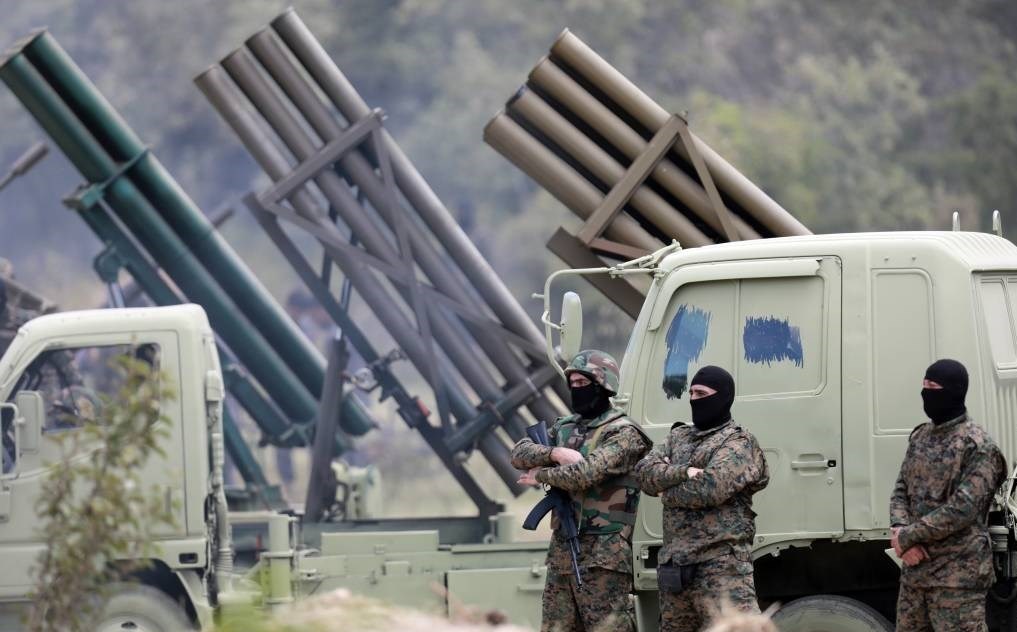
IDF raids Hezbollah sites; Ukrainian drones hit Moscow high‑rise
Severity: WARNING
Detected: 2026-05-04T07:31:40.117Z
Summary
Around 07:10–07:14 UTC, the Israeli army announced it has begun raids against Hezbollah infrastructure in several areas of southern Lebanon, signaling a possible step-up in the northern front. Separately, Ukrainian drones struck Moscow and the Moscow region overnight, hitting the Dom na Mosfilmovskaya high‑rise and forcing brief airport closures. Both developments point to widening operational reach in their respective conflicts and may add to geopolitical risk premia on top of the ongoing Hormuz crisis.
Details
Between 07:10 and 07:14 UTC on 4 May 2026, the Israeli army stated it has begun carrying out raids targeting Hezbollah infrastructure at multiple locations in southern Lebanon. While details on the exact nature and depth of these raids are limited, the language suggests more than routine border skirmishes: it implies deliberate Israeli operations against defined Hezbollah military infrastructure rather than exclusively responsive fire to incoming rockets.
This move comes in the context of persistent but previously contained exchanges along the Israel–Lebanon border. The IDF, under the authority of the Israeli government and its northern command leadership, appears to be probing or degrading Hezbollah capabilities, potentially pre-empting future rocket or missile launches. Hezbollah, backed by Iran and integrated into Lebanon’s political structure, is likely to respond if these raids cause significant damage or casualties among its cadre, raising the risk of a broader escalation beyond tit-for-tat fire.
In parallel, during the overnight period prior to 06:48–07:01 UTC, Ukrainian forces conducted a drone attack on Moscow and its surrounding region. Reports indicate drones hit the high‑rise ‘Dom na Mosfilmovskaya’ complex and at least one residential building; Moscow Mayor Sergey Sobyanin confirmed the incident. Local accounts mention drones flying at very low altitudes, and major Moscow‑area airports were reportedly closed for several hours as a precaution. Available information so far notes material damage but no mass casualties.
Militarily, these Ukrainian strikes underscore Kyiv’s continued ability to penetrate Russian air defenses and reach high-value symbolic and economic targets in the capital region. This can impose operational costs on Russia through air defense reallocations, impose psychological pressure on the population and elite, and incrementally undermine the perception of Moscow as a safe rear area.
Market-wise, the IDF–Hezbollah dynamic increases the tail risk of a northern Israeli front expanding into a larger Israel–Lebanon confrontation, with potential to involve Iran more directly. That scenario would be additive to the already heightened regional tensions driven by the Hormuz blockade standoff and US ‘Project Freedom’ deployments, supporting a higher geopolitical risk premium in Brent and WTI, and potentially in LNG and eastern Mediterranean gas assets. Gold and other safe‑haven assets may find additional support on the accumulation of conflict flashpoints, while regional equities in Israel and Lebanon could see pressure if raids escalate.
The renewed Ukrainian drone reach into Moscow will not, by itself, shift the broader military balance but reinforces expectations of a protracted, attritional conflict, supportive of global defense and drone‑technology names and structurally negative for Russian investment risk. Over the next 24–48 hours, key watch points will be (1) Hezbollah’s response scale and whether Israel expands raids to deeper or more strategic targets; (2) any Russian retaliatory salvos framed explicitly as a response to strikes on Moscow; and (3) interactions between these escalations and already-tense Persian Gulf developments, which together will drive the overall geopolitical risk narrative in markets.
MARKET IMPACT ASSESSMENT: Hezbollah-targeted raids in southern Lebanon marginally increase the probability of a wider Israel–Hezbollah confrontation, which could elevate Middle East risk premia, modestly supporting oil and gold. The demonstrated Ukrainian ability to reach Moscow again reinforces perceptions of a protracted, high-intensity conflict, supportive of safe-haven flows and defense equities. No immediate systemic financial shock is evident, but combined with the Hormuz blockade standoff, geopolitical risk is skewed higher.
Sources
- OSINT