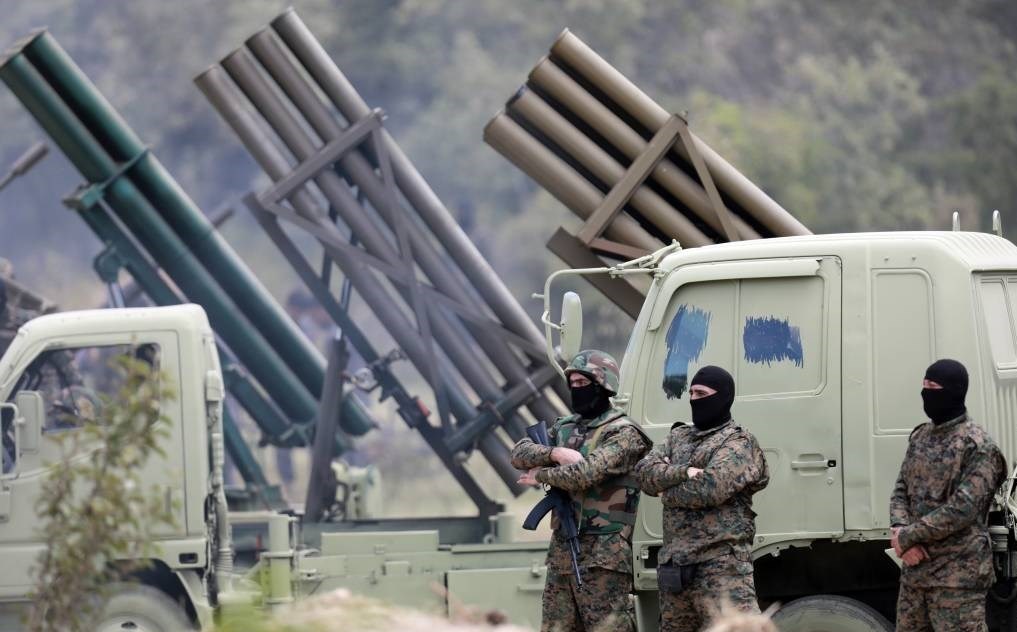
Israel expands air raids on Hezbollah targets in southern Lebanon
Israeli fighter jets conducted multiple strikes on villages in southern Lebanon during the morning of 4 May 2026, after earlier raids killed four people in Yuhmor Ash‑Shuqif, according to Lebanese authorities. The Israeli army says it is targeting Hezbollah infrastructure across several areas.
Key Takeaways
- Around 07:10–08:01 UTC on 4 May 2026, the Israeli army reported new raids on Hezbollah infrastructure in southern Lebanon.
- Strikes hit villages including Braachit, Zoter Ash‑Sharqiya, Zoter Al‑Gharbiya, Debaal, Qana, Klayleh, Touline and Shahour.
- An earlier Israeli strike on Yuhmor Ash‑Shuqif killed four people, according to Lebanon’s Health Ministry.
- The operations mark a further expansion and normalization of cross‑border military activity along the Israel–Lebanon frontier.
- Civilian risk and infrastructure damage in southern Lebanon are likely to increase as the tempo of air operations rises.
On 4 May 2026, the Israeli military intensified its air campaign against Hezbollah‑linked targets in southern Lebanon, carrying out multiple strikes across a cluster of villages in the region. The Israeli army announced around 07:10–07:22 UTC that it had begun a series of raids on Hezbollah infrastructure at unspecified locations, followed by more detailed reporting at 08:01 UTC listing hits in Braachit, Zoter Ash‑Sharqiya, Zoter Al‑Gharbiya, Debaal, Qana, Klayleh, Touline and Shahour.
These raids came on the heels of an earlier strike on the locality of Yuhmor Ash‑Shuqif, where the Lebanese Ministry of Health reported four fatalities. While the identities of the victims were not immediately clarified, prior patterns suggest a mix of militant and civilian casualties is possible, given Hezbollah’s deep entrenchment in residential zones and Israel’s willingness to strike in built‑up areas.
The renewed air activity reflects a steady escalation along the Israel–Lebanon border since the outbreak of the current phase of the Israel–Hamas conflict. Hezbollah has engaged in recurrent rocket, missile, and drone attacks into northern Israel, while Israel has responded with artillery bombardments and precision airstrikes aimed at degrading Hezbollah’s frontline units, observation posts, and weapons storage sites. The inclusion of multiple villages across a wider area indicates an effort by Israel to disrupt command‑and‑control and logistics nodes beyond immediate launch sites.
Key actors include the Israel Defense Forces (IDF), which maintains that it is acting in self‑defense against Hezbollah aggression, and Hezbollah, which frames its cross‑border attacks as solidarity operations with Palestinian factions. Lebanese state institutions, including the Health Ministry and local municipalities, are left managing the humanitarian and governance fallout amid limited capacity and political paralysis in Beirut.
This latest wave matters because it suggests that episodic exchanges have hardened into a low‑intensity but persistent front. The breadth of the raids—from Qana, a symbolically charged site due to past civilian casualties, to smaller villages such as Touline and Shahour—raises the likelihood of displacement and infrastructure damage across southern Lebanon. As more communities are drawn into the conflict zone, pressure will mount on the Lebanese government and international actors to seek de‑escalation, while hardliners on both sides may see continued strikes as setting favorable conditions for any larger confrontation.
Regionally, the expanded air campaign complicates the broader security environment in the Levant. Hezbollah’s close ties to Iran, and the simultaneous crisis unfolding around the Strait of Hormuz, increase the risk of linkage between fronts—either through coordinated messaging or more direct military support. Israel’s leadership, including influential former officials, has recently emphasized the need to confront Iran and its proxies more forcefully, which may encourage a more aggressive approach against Hezbollah positions.
Outlook & Way Forward
In the near term, further Israeli airstrikes in southern Lebanon are highly likely, particularly if Hezbollah continues or increases its rocket and drone launches into Israeli territory. The village targets identified on 4 May suggest Israel is systematically mapping and striking a network of sites it associates with Hezbollah’s military infrastructure. Analysts should watch for shifts toward deeper‑inland targets or high‑profile leadership strikes, which would represent a step‑change in escalation.
For Hezbollah, the calculus is to maintain pressure on Israel without crossing a threshold that would trigger a full‑scale war reminiscent of 2006. Its response to the 4 May strikes—whether through retaliatory barrages, showcasing new weapons, or calibrated restraint—will indicate how it balances solidarity with other fronts against the risk of devastating conflict at home. Lebanese civilians will remain highly vulnerable, with potential for increased internal displacement and strain on already fragile services.[
Diplomatic efforts are likely to focus on shoring up existing de‑confliction understandings and preventing miscalculations from spiraling. The United Nations Interim Force in Lebanon (UNIFIL) and key foreign stakeholders such as France and the United States will monitor developments closely, but their leverage is limited. Over the coming weeks, indicators of strategic intent will include any changes to civilian evacuation guidance on both sides of the border, mobilization of reserves, and public rhetoric by senior Israeli and Hezbollah leaders signalling either preparation for a broader confrontation or an interest in freezing the conflict at its current, dangerous but contained, level.
Sources
- OSINT