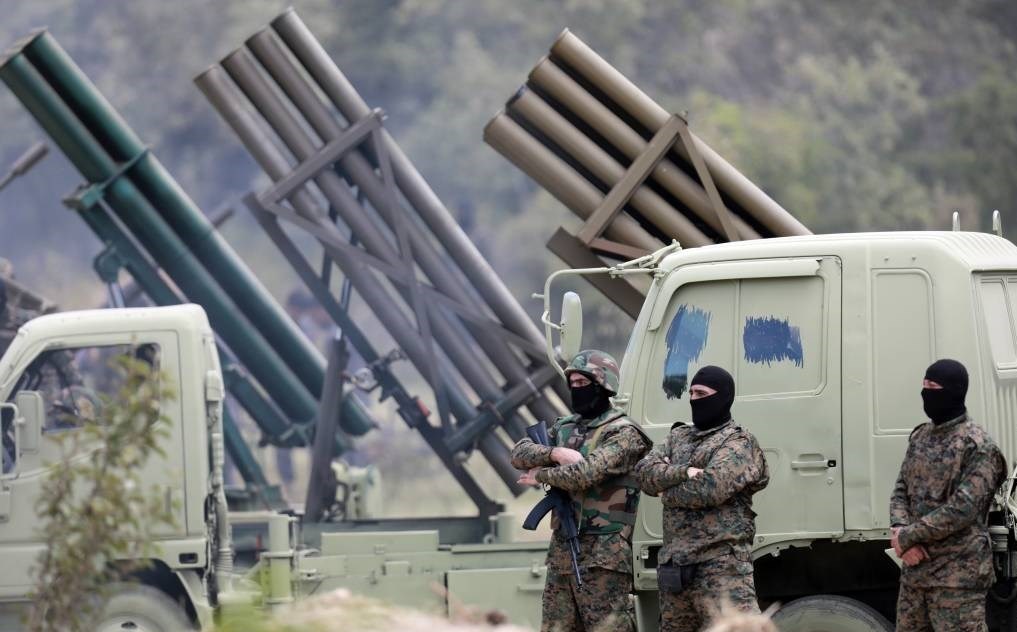
Hezbollah Threatens Civil War Over Israel-Lebanon Deal as Beirut Protests Hit Streets
Severity: WARNING
Detected: 2026-06-26T22:21:37.042Z
Summary
Hezbollah has warned it will confront any Lebanese state move to implement a US-brokered agreement with Israel, explicitly raising the prospect of civil war, as supporters block major roads in Beirut on Friday night. The challenge puts Lebanon’s internal stability and a potentially war-ending deal on Israel’s northern front at risk, with direct implications for US diplomacy, Israeli force posture, and investor risk appetite toward the Eastern Mediterranean.
Details
Hezbollah’s leadership is openly threatening to confront the Lebanese state if it proceeds with implementing a US-brokered agreement with Israel, warning of the risk of civil war, while supporters are already on the streets of Beirut tonight blocking key routes. At approximately 21:23–22:03 UTC on 26 June, Hezbollah-aligned channels and regional outlets reported that the group rejects the ‘surrender’ framework and will oppose any attempt by official institutions in Beirut to enact it.
Confirmed details from multiple open sources indicate that, around 22:03 UTC, Hezbollah supporters massed in the capital, blocking the Salim Salam road and access routes to Beirut–Rafic Hariri International Airport. Demonstrators waved Hezbollah and Iranian flags, lit fires, and moved in large motorcycle convoys while denouncing the agreement and demanding Israel’s unconditional withdrawal from southern Lebanon. Earlier, at 21:23–21:45 UTC, a report citing Hezbollah’s own statements said the organization would confront any state implementation effort and raised the specter of internal conflict.
The human stakes are acute. Lebanon is already in deep economic collapse, with a hollowed-out state, fragmented security services, and a heavily armed non-state actor—Hezbollah—functioning as a parallel power. A confrontation between Hezbollah and factions of the Lebanese Armed Forces or rival militias around Beirut or in mixed sectarian areas would rapidly put civilians, critical infrastructure, and the main airport at risk. Any significant disruption to airport access—already being challenged by tonight’s roadblocks—would affect humanitarian flows, remittances, tourism revenues, and the ability of expatriates to move in and out of the country.
Strategically, Hezbollah’s stance directly endangers what Washington has framed as a path to de-escalation on Israel’s northern front. If Beirut cannot implement an agreement, Israel’s government will face a choice between accepting continued Hezbollah presence within threatening range of its border communities or resuming intensive cross-border fires and covert operations. Either trajectory undercuts the prospects for stabilizing northern Israel and southern Lebanon, complicates IDF force allocation, and may influence Israel’s calculus in other theaters, including Gaza and Syria.
Market exposure at this stage is indirect but real. Investors in Lebanese Eurobonds, regional banks, airlines, and Eastern Mediterranean infrastructure will be watching for signs that the framework is unraveling. Persistent protests, clashes, or attacks on state institutions would further degrade Lebanon’s already minimal investment case and could add to regional risk premia, particularly for Israeli assets and regional insurers. A slide toward renewed cross-border conflict with Hezbollah would raise tail risks for Eastern Med gas projects and regional airspace safety, with knock-on effects for energy equities and insurance pricing.
Over the next 24–48 hours, key indicators to watch include: whether the Lebanese cabinet and armed forces signal intent to proceed with implementation despite Hezbollah’s warning; any move by Hezbollah to physically obstruct state officials or security forces; escalation from roadblocks to armed clashes in mixed neighborhoods; and Israeli political and military reactions if the deal appears non-viable. US diplomatic engagement—public or leaked—will be a critical signal of whether Washington sees the framework as salvageable or is preparing for a renewed confrontation along the Israel-Lebanon frontier.
MARKET IMPACT ASSESSMENT: Near-term focus is geopolitical risk rather than immediate price action, but traders should watch for: (1) Israeli risk premia and regional CDS widening if the framework unravels; (2) modest safe-haven support for gold and US Treasuries if protests escalate into clashes; (3) any sign that a failed deal pushes Israel-Hezbollah back toward cross-border escalation, which would reprice Eastern Med energy and regional airlines and could weigh on EM FX with high Middle East exposure.
Sources
- OSINT