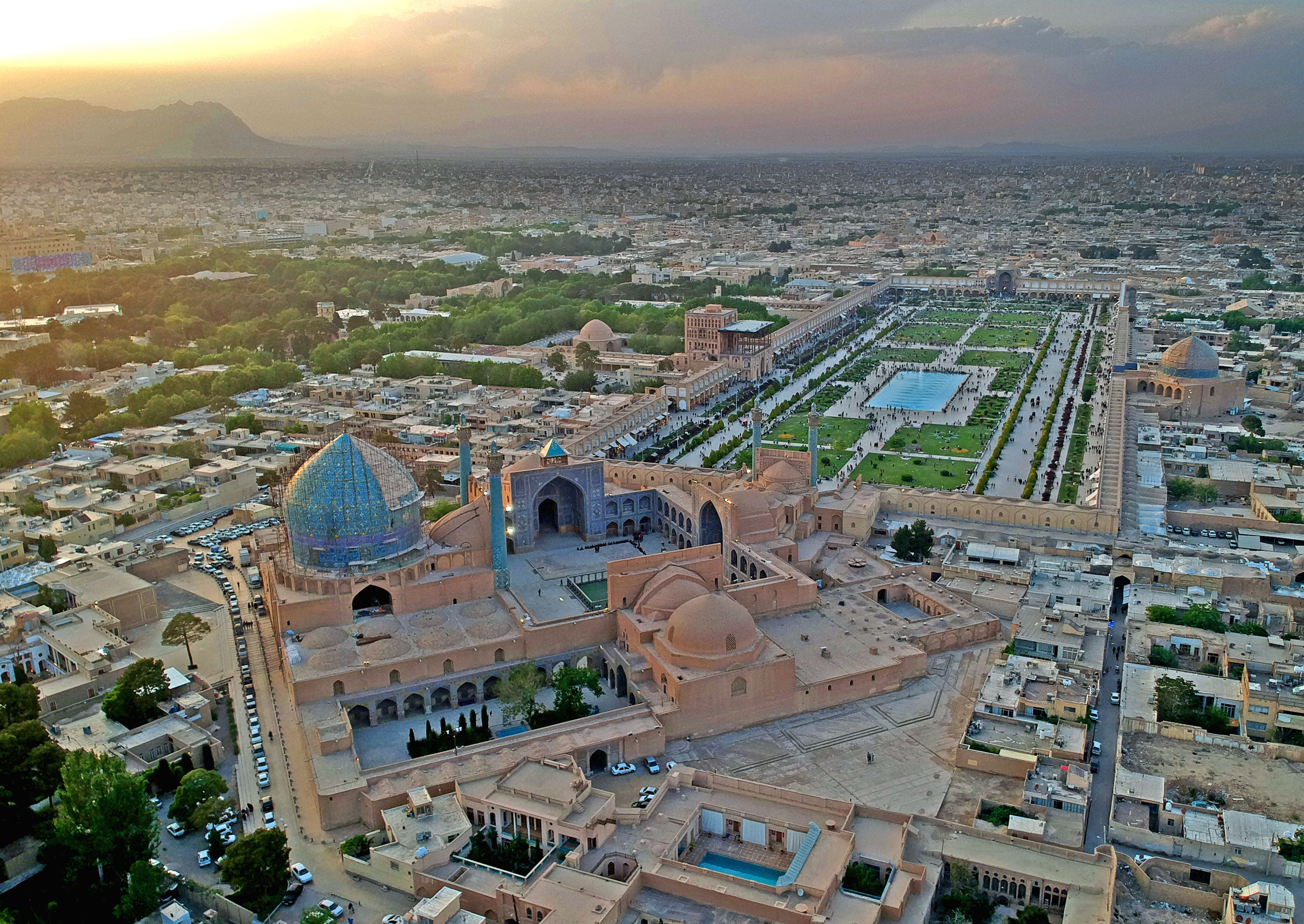
Iran Nuclear Site Near Isfahan Stays Buried, Keeping Enriched Uranium Debate Underground
New high-resolution satellite images show the entrances to a key underground nuclear facility near Isfahan still completely covered with earth, amid suspicions it holds enriched uranium. The images feed a growing intelligence and diplomatic debate over how deeply Iran is burying its program — and how that constrains any future strike or deal.
Well out of sight but never far from mind, a nuclear facility in the hills near Isfahan is again drawing scrutiny. Fresh commercial satellite images taken in recent days show that the main tunnel entrances at the site, widely suspected by Western governments and independent analysts of housing sensitive nuclear work, remain fully covered by earth. The persistent burial comes as regional tensions with Iran climb and global powers prepare for another round of talks on Tehran’s nuclear program later this month.
The new imagery, provided by a private satellite firm, depicts what appear to be the primary access points to an underground complex still sealed under extensive layers of soil and rock reinforcement. Earlier open-source analysis had flagged the site as a likely location for storing or working with enriched uranium, based on its design, location near known nuclear infrastructure, and patterns of construction. A clarification from image analysts on 2 July noted that multiple videos and images circulating relate to several Iranian sites, but confirmed that the main Isfahan‑area tunnels remain completely buried.
For ordinary Iranians, the facility is invisible — a distant installation carved under mountains — but the choices it embodies shape their country’s economy and security. Every meter of reinforced earth poured over nuclear tunnels makes sanctions relief harder to secure and military confrontation harder to avoid. Regional populations in Israel and the Gulf live with similar abstractions turned into concrete fears: that an unseen complex could one day shorten the time between political crisis and nuclear brinkmanship.
Operationally, the extensive burial is a practical challenge for any state contemplating military options. Deep underground tunnels shield centrifuges and stored material from most conventional airstrikes, forcing planners to consider repeated attacks, specialized bunker‑busting munitions, or cyber and covert operations aimed at disrupting systems rather than destroying structures outright. The more Iran buries, the more any talk of a “surgical strike” becomes a misnomer, with all the escalation risk that implies.
Strategically, the Isfahan site is part of a broader pattern: Iran spreading its nuclear footprint across multiple hardened and underground locations to complicate monitoring and targeting. For Israel, which has long reserved the right to act unilaterally, the combination of depth, redundancy, and dispersed facilities raises the threshold for action. For the United States and European powers, it narrows the room for diplomatic maneuver, since verification and breakout‑time calculations must account for what cannot be easily seen or destroyed.
This renewed focus on a buried facility comes as the United States and Iran are slated to begin a new round of talks on 18 July. Any negotiating table they sit at will be haunted by the image of sealed tunnels near Isfahan: a reminder that the nuclear program has not just advanced technically, it has been dug deeper physically. Verification regimes and limits that might have sufficed for surface or lightly buried sites now look outdated when confronted with multi‑layered mountain complexes.
A simple sentence captures the bind: the more Iran moves its nuclear work underground, the more the world’s options move toward overground confrontation or uneasy acceptance. There is no easy technical fix for the political question of how much clandestine capacity the region — and particularly Israel — is prepared to live alongside.
The indicators to watch next include any fresh disclosures from the International Atomic Energy Agency regarding access or monitoring at suspect sites, new commercial imagery showing construction or changes in tunnel patterns, and the tone of Israeli and U.S. statements as the July talks approach. A public dispute over IAEA inspections, or hints of new Israeli contingency planning, would suggest that what is buried outside Isfahan is increasingly driving decisions in capitals far beyond it.
Sources
- OSINT