Israeli Strikes and Hezbollah Funerals Deepen Lebanon Front Risk Under Strained Ceasefire
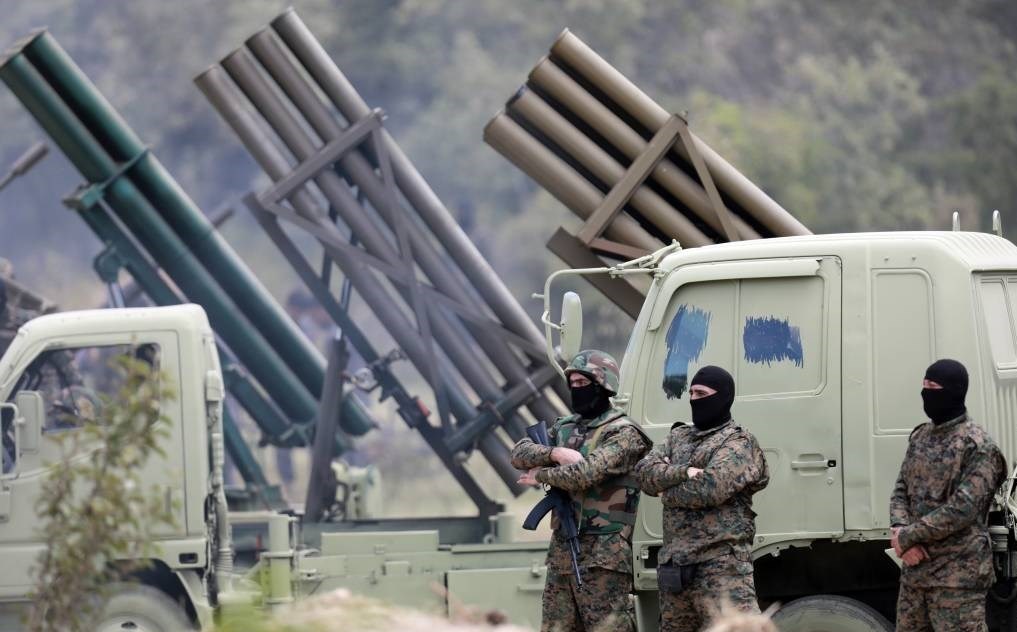
Israel says it has destroyed Hezbollah tunnels, command centers and rocket launchers in southern Lebanon, while Lebanese sources report mass funerals for dozens of Hezbollah fighters and new artillery strikes. As Qatar’s foreign minister warns of more than 100 deaths in Lebanon in three days despite a ceasefire, the northern front is starting to look less like a pressure valve and more like a second war.
The fighting along Israel’s northern border is tightening into a dangerous pattern: large Israeli strikes, heavy Hezbollah casualties, and mounting Lebanese civilian deaths despite a nominal ceasefire that regional mediators insist should be holding.
On 29 June, the Israel Defense Forces said its troops had dismantled an underground Hezbollah complex in the area of Majdal Zoun in southern Lebanon, describing a network of tunnels and "hundreds" of weapons and multiple launch shafts pointed toward Israeli territory. Israel characterized the operation as a major blow to Hezbollah’s capacity to fire from the border area. Lebanese sources reported that the IDF used a massive explosion to collapse the complex, with the blast felt across nearby villages.
Israeli officials also said they informed Washington and the U.S. envoy to Lebanon in advance of the Majdal Zoun operation, a signal that Israel views the strikes as significant enough to require coordination with its main security partner. In a separate statement, the Israeli military said its air force had hit three Hezbollah command centers in the Nabatieh and Mayfadoun areas of southern Lebanon and destroyed a rocket launcher, framing those attacks as a response to continued Hezbollah fire on Israeli forces within Israel’s designated security zone.
On the ground in Lebanon, the human toll is stark. Footage circulated on local channels showed what was described as "yellow celebration" — Hezbollah’s color — at large funerals in the villages of Yater and Ad‑Duwair, where dozens of fighters were reportedly buried in each location. The images reflect both the scale of Hezbollah’s losses in recent days and the way its support base is being asked to absorb sustained casualties while the movement positions itself as part of a wider confrontation with Israel.
Border communities in southern Lebanon are increasingly caught between Hezbollah’s military calculations and Israel’s determination to prevent rocket fire and cross‑border raids. Lebanese sources reported additional IDF artillery fire toward the villages of Taybeh, Deir Siryan and Tabbat, as well as controlled demolitions in Yohmor al‑Shaqif and Deir Siryan earlier in the day. Such operations compound displacement, damage homes and infrastructure, and deepen a sense among residents that the ceasefire is, at best, partial.
Regional diplomats are beginning to say so out loud. Qatar’s foreign minister, Sheikh Mohammed bin Abdulrahman Al Thani, said it was "unacceptable" that around 100 people in Lebanon had been killed over three days under what is supposed to be a ceasefire, and urged that the agreement be respected and disputes handled diplomatically. His remarks highlight how countries working to contain the Gaza war are watching the Lebanese front with increasing anxiety, aware that a runaway escalation there could draw in Syria and Iran more directly.
For Israel’s leadership, the operations in Majdal Zoun, Nabatieh and beyond are framed as pre‑emptive measures to degrade Hezbollah’s capacity before it can mass forces for a larger assault. For Hezbollah, the funerals and public messaging present its dead as martyrs in a broader, long‑term struggle, signaling a willingness to absorb losses and continue cross‑border engagements.
The risk is that this steady exchange locks both sides into a ladder of escalation that is harder to climb down from than it was to step onto. A single miscalculated strike on a crowded Lebanese town or an Israeli community, or a successful Hezbollah attack that causes mass casualties inside Israel, could snap the current pattern into a much wider war.
Key signs to watch include any expansion of Israeli strikes deeper into Lebanon’s interior, changes in Hezbollah’s rate and range of rocket launches, and whether U.S., Qatari or other mediators can extract concrete confidence‑building steps from either side. A formal acknowledgment from the parties that the current ceasefire framework is no longer functioning — or, conversely, a verifiable lull in fire — will reveal whether the border is drifting toward limited containment or another open front.
Sources
- OSINT