Israel’s cross-border strikes in Syria and Lebanon deepen multi-front pressure on Hezbollah and Iran
Israeli forces say they killed armed militants in southern Syria and hit Hezbollah fighters and a rocket launcher near Nabatieh in southern Lebanon, as operations intensify along Israel’s northern perimeter. The strikes show how the boundary between ‘security zones’ and sovereign territory is blurring, keeping civilians and regional powers on edge.
Israel is expanding its use of force just beyond its northern borders, with fresh strikes in both southern Syria and southern Lebanon that it says are aimed at armed militants and Hezbollah units threatening Israeli troops. The operations add another layer of volatility to frontiers where the line between buffer zones and neighboring states’ territory is increasingly hard to separate.
The Israel Defense Forces said that on Saturday, soldiers from the Etzioni Brigade, under Division 210, “eliminated several armed terrorists in the security zone in southern Syria.” The military statement framed the actions as part of an ongoing effort to operate in what it calls a security zone and to remove threats to Israeli civilians and IDF forces. Syrian sources, cited in separate reporting, noted movement of Israeli forces in the Daraa area and the Yarmouk Basin in southern Syria, but did not provide detailed casualty counts or independent confirmation of the Israeli account.
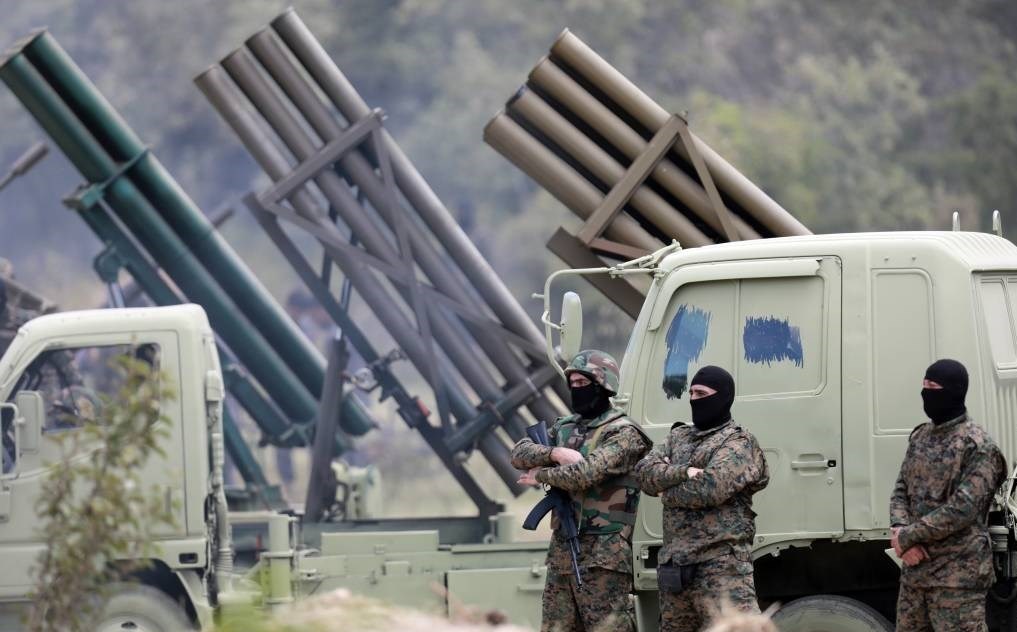
Around the same timeframe, the IDF reported that it had identified several Hezbollah militants armed with rocket‑propelled grenades near the city of Nabatieh in southern Lebanon, close to an area where Israeli troops are operating inside what Israel refers to as a security zone in southern Lebanon. Israeli forces said they struck and killed the militants and destroyed a nearby rocket launcher, describing the group and the launcher as an immediate threat to its soldiers.
For civilians in southern Syria’s Daraa region and Lebanon’s Nabatieh area, these actions mean that familiar landscapes of farmland, villages, and small towns are operating under the shadow of cross‑border artillery, airstrikes, and raids. Residents can find themselves caught between armed groups maneuvering for tactical advantage and a regional military power willing to use precision firepower just over the line — or, in Syria’s case, sometimes across it — to preempt perceived threats.
Operationally, the strikes in both theaters reinforce Israel’s message that it will not tolerate what it sees as hostile entrenchment by Iran‑aligned forces along its borders. In Syria, that has long meant hitting targets linked to Hezbollah and the Revolutionary Guard to disrupt supply routes and buildup near the Golan Heights. In Lebanon, where Hezbollah is deeply embedded in the political and social fabric, targeting armed cells and launchers near Nabatieh underscores that the group’s assets are exposed even some distance from the immediate border.
The cross‑border activity also puts pressure on Damascus and Beirut, whose sovereignty is being tested in different ways. The Syrian government has limited capacity to constrain Iranian‑backed militias or to deter Israeli overflights, leaving it reliant on sporadic air defense responses and diplomatic protest. The Lebanese state, meanwhile, must navigate between asserting control and avoiding a broader confrontation that its fragile economy and institutions are ill‑equipped to absorb.
Strategically, Israel is signaling that it sees the northern front as a single, connected problem set: Hezbollah and other Iran‑linked actors moving men and weapons through southern Syria and southern Lebanon to threaten Israeli territory. In that view, the “security zone” concept becomes a justification for action wherever those networks appear within a certain radius, regardless of formal borders. For Hezbollah and its backers in Tehran, the challenge is to maintain deterrence and operational freedom without provoking a full‑scale war that could devastate Lebanese infrastructure and jeopardize hard‑won influence in Syria.
The reality for people on both sides of the frontier is that buffer zones do not buffer explosions; they only shift where they land. Action in a defined “security zone” still sends shrapnel, fear, and displacement across recognized borders.
Key signposts to watch now include whether Hezbollah responds with rocket or drone launches deeper into Israel; whether Syrian state media or allied militias acknowledge and react to the reported ground movements in Daraa and the Yarmouk Basin; and how far Israeli commanders are prepared to push the concept of a security zone inside neighboring states. Any miscalculated strike that causes mass casualties or hits emblematic civilian infrastructure could quickly turn these calibrated operations into a wider confrontation.
Sources
- OSINT