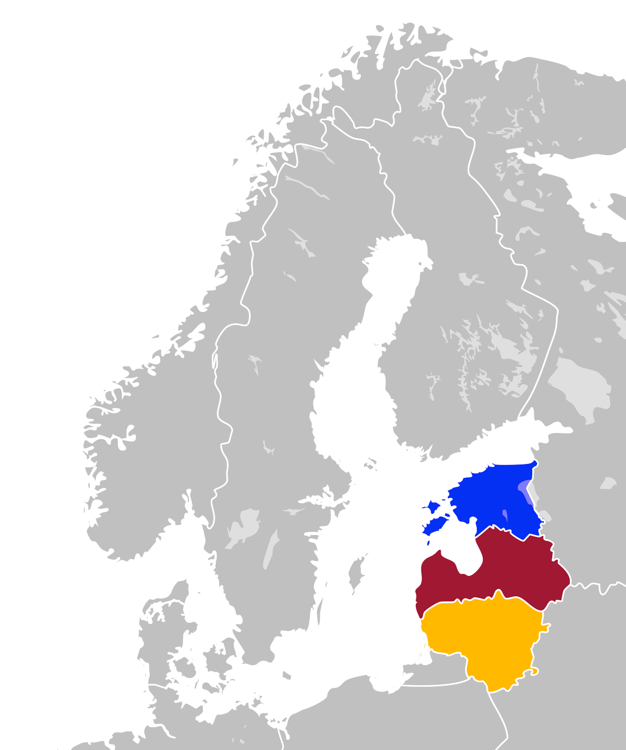
Russia Seen Preparing ‘Provocation’ in Baltics or Poland, Raising NATO Miscalculation Risk
Western sources say Russia is preparing a potential ‘provocation’ in the Baltic states or Poland, hinting at an operation designed to unsettle NATO’s eastern flank without triggering open war. Any misstep in this gray zone would put local civilians, border guards and alliance credibility on the line—and test how far Moscow is willing to push.
Quiet warnings circulating in European capitals suggest that Russia may be preparing to probe NATO’s eastern frontier in a way that stops short of open conflict but pushes miscalculation risk sharply higher. According to individuals briefed on recent assessments, Moscow is believed to be planning a possible “provocation” in one of the Baltic states or Poland—language that points to a staged or deniable incident aimed at unsettling the alliance’s front‑line members.
The details of what kind of action is under discussion have not been made public. In intelligence and military circles, the term “provocation” typically covers a wide spectrum: from border incursions by uniformed or unmarked personnel, through sabotage and cyber operations targeting critical infrastructure, to orchestrated migrant surges or information campaigns designed to spark unrest. What unites these scenarios is their ability to create confusion over attribution and intent, complicating a clear NATO response.
For residents of Lithuania, Latvia, Estonia and eastern Poland, such warnings cut close to home. Border communities are already accustomed to military exercises, overflights and periodic reports of airspace violations. A more deliberate operation—whether a staged clash at a crossing point or a sudden disruption of power or communications—would put local civilians, police and border guards in the front line of any initial confrontation, long before allied reinforcements can move.
From a military standpoint, a Russian move in this gray zone would test NATO’s political will as much as its forces. The alliance has deployed multinational battlegroups to the Baltics and Poland precisely to deter conventional aggression, betting that the presence of multiple flags would raise the cost of any attack. A limited or ambiguous incident sits below that threshold, forcing leaders to decide what level of response is proportionate and credible without giving Moscow the pretext to escalate.
Strategically, the reported planning sits against a backdrop of higher tension on multiple fronts: heavy fighting in Ukraine, Russian criticism of NATO expansion, and stepped‑up Baltic and Nordic defense measures after Finland and Sweden joined the alliance. A provocation against a member state’s territory—even one calibrated to avoid casualties—would be an explicit challenge to the idea that NATO can draw a bright line around its borders.
For Russia, such a move could serve several purposes. Domestically, it would feed a narrative of encirclement and confrontation with the West. Internationally, it could be used to test alliance cohesion, probe response times, or seek leverage ahead of negotiations on unrelated issues such as sanctions or arms control. But it would also be a gamble: misreading NATO’s red lines risks triggering stronger counter‑measures, additional deployments or new sanctions that deepen Russia’s strategic isolation.
The underlying reality is that in the Baltics and Poland, peace and crisis are now separated less by geography than by intent. A well‑timed cyberattack, a violent clash at a border fence or a mysterious explosion at a rail hub could have outsized political effects because of where it occurs.
Western officials will be watching for pre‑incident indicators: unusual movements of Russian security forces near borders, spikes in Kremlin‑linked disinformation targeting specific regions, unexplained “accidents” affecting transport or energy infrastructure and any sudden use of migrants as pressure tools along EU frontiers. How quickly NATO can agree on a common attribution and a measured, united response will determine whether any Russian test fizzles or fuels a more dangerous cycle.
Sources
- OSINT