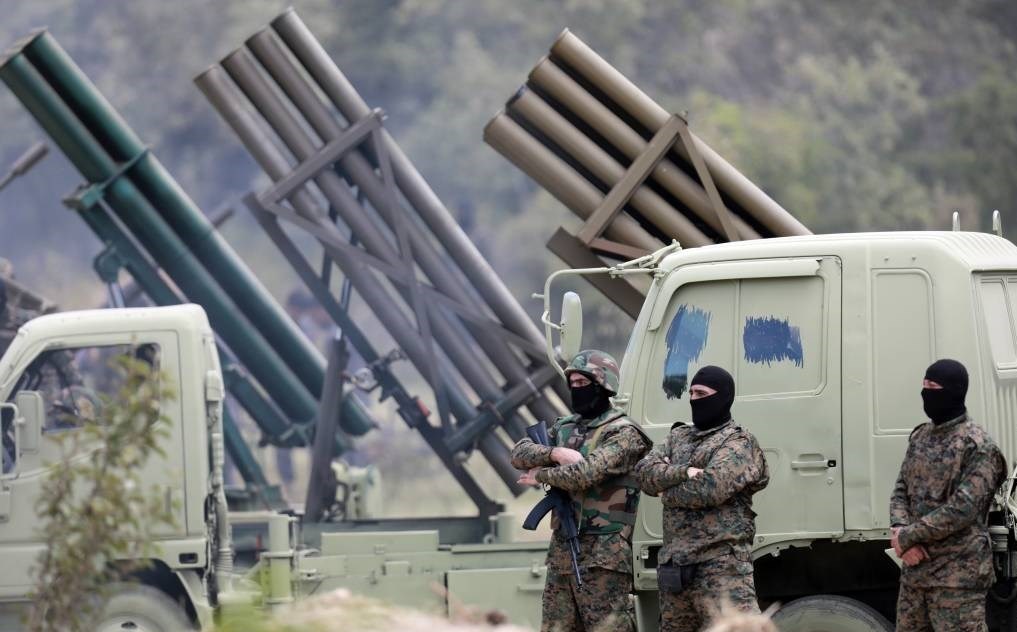
Hezbollah Fighters Killed as Israeli Strikes and Airspace Violations Deepen Lebanon Border Pressure
Israel says its forces killed six Hezbollah combatants in southern Lebanon and continued jet overflights of Lebanese airspace, as cross-border clashes grind toward a more entrenched low‑intensity war. For villagers along the frontier, homes are being demolished or burned while the sky fills with foreign aircraft. This piece explores how a slow‑burn confrontation is hardening into a new security reality for Beirut, Jerusalem and their allies.
The conflict simmering along the Lebanon‑Israel border claimed more lives on Thursday, as Israeli forces reported killing six Hezbollah fighters and Lebanese channels described homes being demolished and set ablaze in a southern village. With Israeli jets also reported violating southern Lebanese airspace, the frontier is turning into a zone where civilians live under the constant threat of airstrikes, artillery and sudden raids.
The Israel Defense Forces said units operating in the Zawtar al‑Sharqiyah area identified five Hezbollah militants who, according to the military, posed an immediate threat to its soldiers within what Israel calls a “Security Zone.” The IDF said it struck and killed the group. In a separate incident on the Ali al‑Taher ridge, Israeli forces said they identified and hit another armed Hezbollah member. Taken together, the IDF statements point to six dead fighters, though independent confirmation from Hezbollah or Lebanese authorities had not yet surfaced in the public domain.
At roughly the same time, Lebanese media outlets reported that the Israeli army had begun demolishing houses in the village of Ain Arab, near the border. Earlier in the day, those outlets had carried claims that homes in the same area were set on fire, though details about who was inside and how many structures were affected were scarce. For residents, the result is stark regardless of the exact circumstances: an erosion of any sense that property or shelter provides protection when front lines move through their communities.
Overhead, Israeli jets were reported flying in southern Lebanese airspace, adding to a pattern of overflights that Beirut regularly denounces as violations of its sovereignty. For people on the ground, each roar of engines can signal anything from routine reconnaissance to the prelude of a strike. The practical effect is to keep entire districts on edge, with daily life structured around the possibility that an unseen decision dozens of kilometers away could send missiles into a field, a house or a convoy.
Militarily, Israel’s tactics in Zawtar al‑Sharqiyah and on the Ali al‑Taher ridge reflect its effort to carve out zones of tactical dominance just across the border, targeting what it describes as Hezbollah cells preparing or directing attacks. For Hezbollah, the deaths of additional fighters are another reminder that remaining active near the frontier carries lethal risk, even as the group seeks to maintain pressure on Israel in solidarity with other fronts.
Strategically, the exchanges feed into a broader debate in both capitals—and in European cities with troops in the UNIFIL peacekeeping force—about whether the current low‑intensity conflict can be contained. French President Emmanuel Macron has underscored that France and Italy, as major contributors to UNIFIL, feel a special responsibility for Lebanon’s security. He has floated the idea of a coalition to design a “post‑UNIFIL” mechanism, in coordination with the European Union and United Nations, aimed at bolstering Lebanese sovereignty and preventing the country from once again becoming a primary battlefield.
For Lebanon’s fragile political system and battered economy, the risk is that creeping escalation locks the south into a semi‑permanent conflict zone, scaring off investment and entrenching displacement. For Israel, recurring clashes and airspace maneuvers tie up military resources along a frontier that could flare into a larger confrontation if miscalculations pile up or if events on other fronts—whether in Gaza, the West Bank or against Iran—spark a broader conflagration.
The shareable insight is uncomfortable for all sides: when houses are reduced to rubble and airspace becomes a battleground, the line between “limited” conflict and open war is drawn not in communiqués but in how many people no longer feel they can safely live where they were born.
Key indicators to watch now include whether Hezbollah publicly acknowledges the deaths and retaliates with cross‑border rocket or drone fire, how far Israel pushes demolitions and clearance operations inside Lebanese villages, and whether discussions in Paris, Rome and New York about UNIFIL’s future gain urgency. Any move to redefine or replace the peacekeeping mission would signal that outside powers no longer believe the current border regime can hold.
Sources
- OSINT