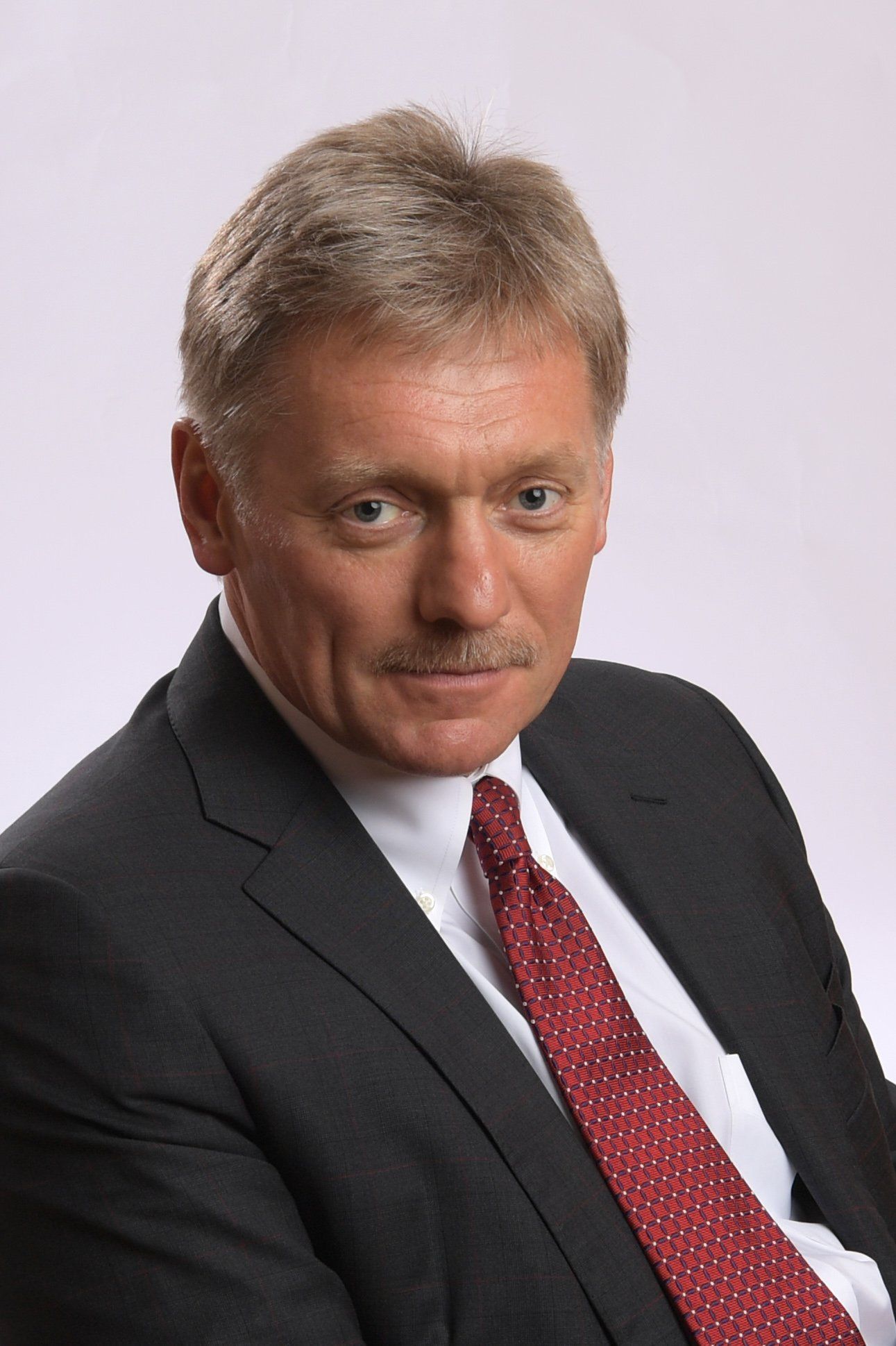
Kremlin Nuclear Warning Exposes How Fragile Moscow Thinks Global Security Has Become
Russian presidential spokesman Dmitry Peskov told an international forum that only nuclear deterrence is preventing a global war, warning that new non-nuclear weapons could one day rival nuclear arms. The comments offer a rare glimpse into how the Kremlin wants the world to read the current balance of power—and the risks it sees in advanced conventional and emerging technologies.
Russia is again using the language of nuclear brinkmanship to frame how it sees the world. Speaking at a major foreign policy forum in Moscow, Kremlin spokesman Dmitry Peskov said global security has been so badly eroded that nuclear weapons are now the only thing preventing a world war.
Addressing the Primakov Readings, an annual gathering of diplomats and experts, Peskov argued that “global security has been significantly eroded in many respects” and that, in his words, “apart from nuclear deterrence, we have nothing left in the world.” He added that technology is advancing in ways that will produce new weapons which, while not nuclear, could in the long run match nuclear arms in their destructive effect.
Peskov’s remarks are officially framed as analysis rather than a direct threat, but they serve several purposes. Internationally, they reinforce Russia’s longstanding narrative that it is a great power whose nuclear arsenal must be factored into every decision on Ukraine, sanctions and NATO posture. Domestically, they present the Kremlin as the guarantor of stability in a world it describes as increasingly hostile and unpredictable.
For civilians and policymakers far from Moscow, the message lands differently. When a nuclear‑armed state’s top spokesman says conventional checks on war have nearly vanished, insurance companies, investors and defense planners cannot ignore the signal. It feeds into calculations about the safety of doing business in contested regions, the attractiveness of long‑term investments near potential flashpoints, and the urgency of reinforcing civil defense and infrastructure resilience at home.
Strategically, Peskov’s warning about future non‑nuclear weapons is a nod toward hypersonic systems, advanced precision‑guided munitions, cyber capabilities and potentially AI‑driven warfare tools. These are all areas where Russia, the United States, China and others are racing for advantage, often outside of any binding arms control framework. If such weapons can achieve strategic effects—crippling command systems, power grids, financial networks or space infrastructure—the line between a conventional and a strategic strike becomes harder to draw.
That blurring is already visible in the Ukraine war, where high‑precision long‑range weapons and cyber operations have targeted energy and communications infrastructure hundreds of kilometers from the front. Peskov’s framing suggests Moscow wants those attacks—and Western support that enables them—to be seen through a lens where escalation ladders are short and miscalculation costs are high.
The broader context is bleak. Almost all of the Cold War‑era arms control architecture, from the INF Treaty to Open Skies and large parts of New START’s verification culture, has eroded or collapsed. At the same time, new technologies from autonomous weapons to dual‑use space systems are spreading faster than norms and guardrails can keep up. In that environment, a doctrine that leans more heavily on nuclear deterrence to compensate for weaker political or legal constraints amplifies the stakes of any crisis involving Russia and NATO.
The memorable takeaway is that when a government says nuclear weapons are the last barrier to world war, it is tacitly admitting that most other barriers—diplomacy, trust, treaties and shared rules—have failed. That should make every political and military decision in contested regions feel heavier, not lighter.
Key indicators to watch now include whether Russian officials echo or soften Peskov’s formulation in coming weeks, how NATO and major non‑aligned states respond in their own strategic messaging, and whether any new initiatives emerge to address the gap Peskov himself pointed to: the absence of rules covering powerful, non‑nuclear systems that could, in a future crisis, be just as destabilizing as the weapons they are meant to replace.
Sources
- OSINT