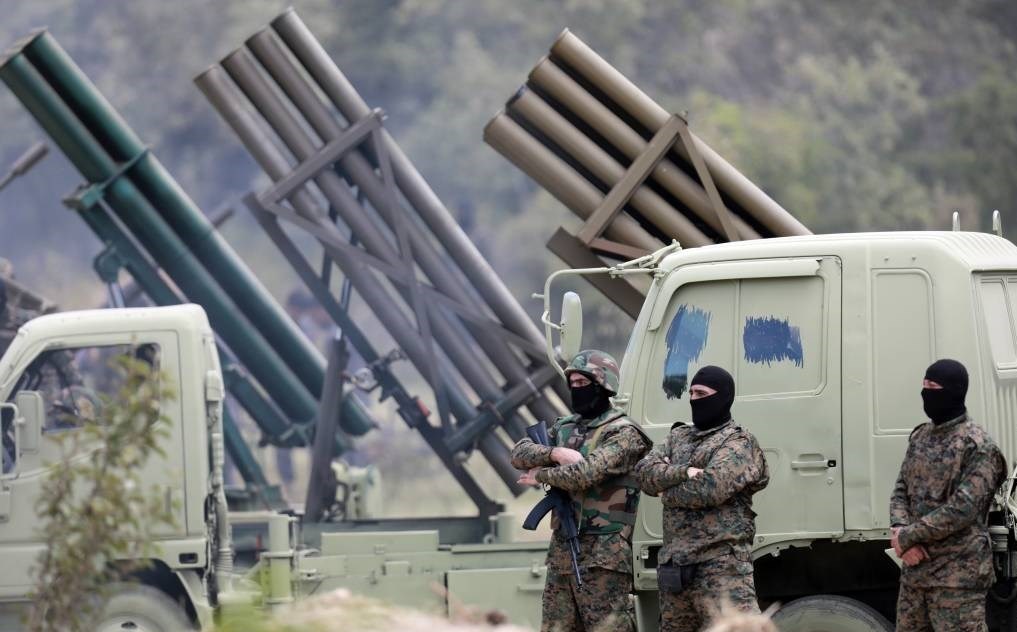
Hezbollah’s post‑ceasefire warning to Israel keeps northern front on a hair trigger
Hezbollah says it will answer any Israeli breach of the ceasefire "in kind" and insists the pre‑war status quo on the border will not return, even as Israeli media tallies more than 7,000 projectiles launched at Israel since February. The rhetoric and numbers show a northern front that is paused, not settled, leaving civilians and planners in Lebanon and Israel living beside a live fuse.
The guns may be quieter along the Israel–Lebanon border, but they are far from cold. Hezbollah’s latest warning that it will respond "in kind" to any Israeli ceasefire violation, coupled with new data on the volume of fire already exchanged this year, underlines how fragile and conditional the current lull is.
Mahmoud Qamati, deputy head of Hezbollah’s political council, said the group is on full alert with its "finger on the trigger" and will answer any Israeli breach of the ceasefire with equivalent force. He also declared that the situation that existed before the war “will not return,” signaling that Hezbollah does not intend to simply roll back to the old rules of engagement that governed the frontier for years. The statement, delivered on 23 June, is part reassurance to its base and part message to Israel and foreign mediators that the current arrangement is inherently temporary.
Israeli media are quantifying what that threat means in practice. Channel 11 reported that since the end of February, Hezbollah has launched at least 7,285 rockets and drones at Israel. That figure captures months of near‑daily exchanges across the northern border, ranging from small rocket salvoes to explosive drones targeting military positions and communities. Israel has responded with its own air and artillery strikes into southern Lebanon and, at times, deeper into the country, aiming to push Hezbollah forces back from the frontier and degrade its capabilities.
For residents on both sides of the Blue Line, the numbers are not abstract. Villages in southern Lebanon have endured repeated Israeli bombardments and displacement; northern Israeli towns have faced warnings, temporary evacuations and the constant calculation of how close is too close to live to the border. Farmers, shopkeepers and schoolchildren in the region all live with the knowledge that a miscalculation or local incident could quickly escalate into a broader confrontation.
Strategically, Qamati’s pledge that the pre‑war situation will not return suggests Hezbollah is seeking a new baseline in its deterrence posture. By launching thousands of projectiles during the Gaza war and sustaining a cross‑border campaign for months, the group has demonstrated both capability and willingness to engage in a prolonged low‑intensity conflict. Its message to Israel is that any future conflict in Gaza or elsewhere will automatically trigger a northern front, complicating Israeli planning and stretching its air and missile defences.
For Israel, the numbers reported by its own media reinforce concerns that Hezbollah’s arsenal and positioning represent a more serious and immediate threat than many of the region’s other actors. Thousands of rockets and drones in a short span can strain even advanced air defenses and force the military to station significant forces in the north, regardless of what happens in Gaza or the West Bank. The ongoing exchanges have also driven home the vulnerability of critical infrastructure, from power lines and gas facilities to military bases.
Regionally, the standoff is feeding into broader calculations for Iran, the United States and Arab states watching the border. Hezbollah is Iran’s most capable non‑state partner and a key part of Tehran’s deterrent against Israel and potential U.S. strikes. Its willingness to keep the northern front warm, even under a ceasefire, underscores that any wider regional clash would not be limited to one theatre. For Washington and European capitals trying to broker longer‑term arrangements, the group’s insistence that there is no going back to the old status quo complicates efforts to design a durable border regime.
The most important signals to watch next will be how both sides respond to inevitable small incidents along the frontier, whether Hezbollah begins repositioning fighters and equipment closer to the border, and if Israel’s leadership publicly links northern calm to progress on other fronts. The difference between a tense ceasefire and a new war in the north may come down to whether commanders in Beirut and Jerusalem can resist turning each provocation into an excuse to test the other’s red lines.
Sources
- OSINT