Hezbollah Strikes Kill Israeli Soldier and Target Rocket Unit, Deepening Border War Risk
Israel’s military says a Hezbollah strike in southern Lebanon killed a sergeant from its 36th Division and wounded several others, while a separate FPV drone attack injured five more soldiers. In response, the IDF released footage of an airstrike on a loaded Hezbollah rocket launcher and fired at a suspected drone, a cycle that keeps northern Israeli communities and southern Lebanon locked in a low‑grade war with open‑ended escalation risk.
Northern Israel and southern Lebanon absorbed another exchange of blood and fire as Hezbollah attacks killed an Israeli soldier and wounded others, and the Israel Defense Forces answered with airstrikes and interceptor launches that push the frontier closer to a full‑scale conflict.
The IDF announced that a sergeant from its 36th Division was killed in a recent Hezbollah strike in southern Lebanon, and that seven other soldiers—four reservists, one reserve officer, one non‑commissioned officer, and one officer—were moderately and lightly wounded. In a separate statement, the military said five additional soldiers were injured in a Hezbollah first‑person‑view (FPV) drone attack, with one listed as seriously wounded, two moderately hurt, and two lightly injured. The IDF later identified the fallen reservist as Master Sergeant (Res.) Alexander Filin, 29.
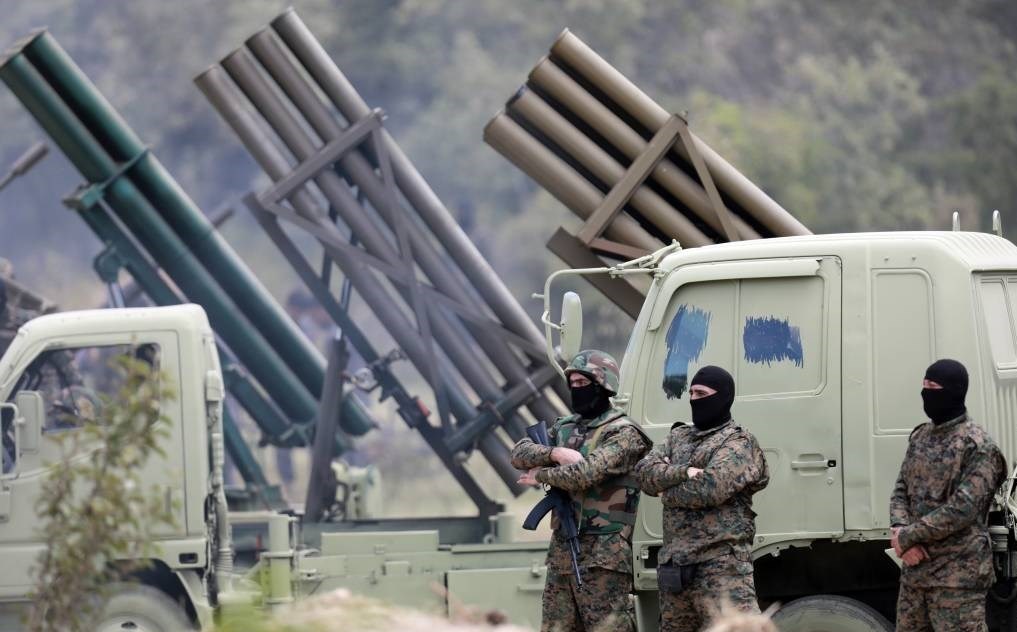
Responding to the attacks, the Israeli military released video footage of an airstrike on what it described as a loaded Hezbollah rocket launcher in southern Lebanon. According to the IDF, the launcher had been used to fire several rockets toward Israeli positions. In another incident, the IDF said it detected a Hezbollah drone over southern Lebanon near its forces and launched an interceptor missile from northern Israel to engage it. Hezbollah has not issued public statements addressing the specific Israeli claims about the launcher or drone.
For soldiers deployed along the border, the pattern of attacks—anti‑tank fire, rockets, and now more frequent FPV drones—means that routine patrols and static positions are increasingly exposed. A single strike can transform a fortified outpost into a casualty collection point. Families in northern Israeli towns and villages live with the knowledge that their relatives are operating under constant surveillance by Hezbollah’s operators and that every quiet night can be broken by an alarm or a cross‑border hit.
On the Lebanese side, communities in the south continue to bear the brunt of airstrikes and artillery responses. Each time the IDF targets what it calls rocket launchers or Hezbollah infrastructure, the risk grows that nearby homes, farms, or roads will be caught in the blast radius. Civilians move in and out of displacement depending on the tempo of fire; their lives are shaped by decisions from commanders and political leaders on both sides of the border.
Strategically, the latest exchanges show how drones are weaving themselves into the texture of this confrontation. Hezbollah’s use of FPV drones to inflict precise casualties on Israeli troops adds a new layer to its arsenal of rockets and missiles, while Israel’s deployment of interceptor missiles against suspected Hezbollah UAVs illustrates how the airspace over the border is becoming more contested and expensive to police. Each drone intercepted represents a cost in munitions and attention; each one that gets through can deliver a politically charged strike with minimal risk to its operators.
The incidents also feed directly into the broader regional picture shaped by the U.S.–Iran MoU. Hezbollah is deeply tied to Iran’s strategic calculus, and any easing or tightening of pressure on Tehran inevitably ripples across this front. If Iran feels more secure under new understandings with Washington, it may grant Hezbollah greater latitude, or conversely urge restraint to avoid jeopardizing diplomatic gains. Israel, skeptical of concessions to Tehran, may feel compelled to demonstrate its own deterrence with sharper blows against Hezbollah infrastructure.
One line captures the mounting danger: the more normalized daily casualties become on this frontier, the easier it is for both sides to slide into a war neither openly declares. Each fallen soldier and each destroyed launcher adds pressure on political leaders to either seek an arrangement or authorize a broader campaign.
What to watch next is whether casualty numbers on either side cross thresholds that trigger political decisions in Jerusalem or among Hezbollah’s leadership, and whether foreign actors—particularly the United States and France—step up mediation efforts. Increased use of heavier munitions, strikes deeper into Lebanese territory or further inside Israel, or a successful mass‑casualty attack on civilians could quickly shift this from a grinding border conflict into a larger regional showdown.
Sources
- OSINT