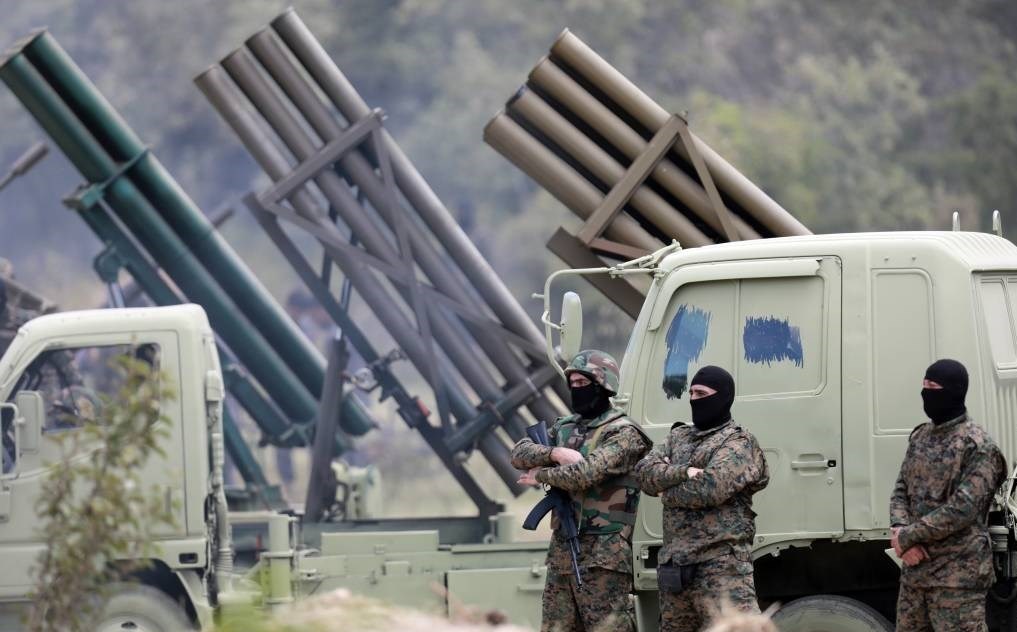
Hezbollah Drone Strike on IDF Humvee Tests Israel’s Northern Front Vulnerability
A Hezbollah first-person-view kamikaze drone struck an Israeli military Humvee near Zawtar al-Sharqiyah in southern Lebanon, underscoring how cheap, guided munitions are putting armored vehicles—and their crews—back in the crosshairs. The attack feeds fears that Israel’s northern front is becoming a live laboratory for low-cost precision warfare. Readers will see how one strike fits a broader pattern that could drag the region toward a wider fight.
A kamikaze drone attack claimed by Hezbollah against an Israeli military vehicle in southern Lebanon is a reminder that the technology gap on Israel’s northern border is narrowing, and with it the safety margin for troops operating there.
Hezbollah said it used an "Ababil" first-person-view (FPV) fiber-optic kamikaze drone to hit an Israel Defense Forces Humvee in the area of Zawtar al-Sharqiyah. Imagery shared by the group appears to show the munition diving onto the vehicle; independent verification of the exact damage and any casualties was not immediately available. The drone was described as carrying a warhead similar to an anti-tank PG‑7 pattern rocket, a type of shaped-charge commonly used against armored targets.
The choice of weapon matters. FPV drones are relatively cheap, hard to detect and can be steered in real time by an operator watching through a camera feed, allowing them to thread through gaps in terrain and defenses. By pairing that capability with anti-armor munitions, Hezbollah is signaling that military vehicles, command posts and even individual soldiers near the frontier are within reach despite Israel’s heavy investment in surveillance and air defenses.
For Israeli troops and their families, each successful strike like this one increases the sense that routine patrols and static positions carry growing risk. Armored vehicles once seen as a source of protection can become high-value targets that draw guided drones, and footage of such attacks circulates quickly on social media, amplifying the psychological impact. For residents in northern Israel and southern Lebanon, the proliferation of such weapons raises the chance that clashes near the border spill into populated areas.
Operationally, Hezbollah’s use of fiber-optic FPV platforms complicates Israeli countermeasures. Fiber-optic control links are less vulnerable to conventional electronic jamming than radio-controlled drones, making it harder for Israeli forces to disrupt incoming systems without physically destroying them. That forces commanders to think differently about concealment, mobility and hardening, and to devote more effort and resources to short-range air defense against small, fast-moving targets.
Strategically, each drone engagement tightens the link between local skirmishes and broader regional bargaining. Hezbollah has already tied its posture to Iran’s talks with Washington and to Israeli deployments in Lebanon, publicly asserting that Tehran should not finalize a nuclear deal while Israeli troops remain on Lebanese soil. Demonstrating the ability to inflict losses on the ground helps the group argue that it can raise the cost of any extended Israeli presence in the country.
The attack also feeds into a wider pattern of irregular forces using inexpensive drones to chip away at conventional militaries’ advantages, from Ukraine to Yemen. For defense planners in Israel and beyond, the question is no longer whether low-cost FPV systems matter on the battlefield, but how quickly doctrine and equipment can adapt to a world where a few hundred dollars’ worth of electronics and explosives can disable a vehicle that costs hundreds of thousands.
Signals to watch now include whether Israel announces changes to its deployment patterns or force protection measures along the Lebanese frontier, whether Hezbollah releases further footage or claims of successful anti-armor strikes, and how often similar FPV attacks are reported in the weeks ahead. A shift from occasional harassment to regular, documented hits on military hardware would mark a meaningful escalation in the northern theater.
Sources
- OSINT