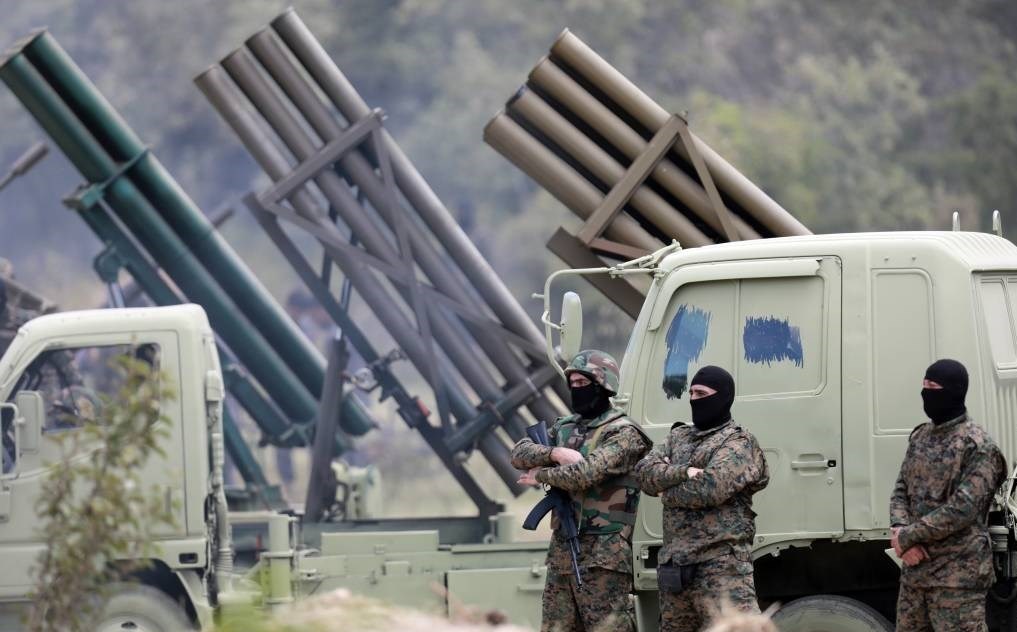
Hezbollah Drone Strike on Israeli Howitzer Deepens Cross-Border Escalation Risk
Hezbollah says it used a fiber‑optic ‘Ababil’ FPV drone to hit an Israeli self‑propelled howitzer near the Lebanese town of Adaisseh, as UN officials warn that 1.4 million people have already been displaced by Israeli attacks in Lebanon. The strike shows how precision drones are turning the border into a high-tech artillery duel with civilians caught in between. The story tracks how tactical hits on hardware are feeding a much wider confrontation shaped by the new U.S.–Iran deal.
A single exploding drone over a disputed hillside village now carries regional consequences. Hezbollah announced on 16 June that it struck an Israeli Army 155mm “Sholef” self‑propelled howitzer in the Al‑Aadaissah area with an Ababil fiber‑optic first‑person‑view drone armed with a PG‑7‑pattern anti‑tank RPG warhead. Video circulating online appears to show the drone diving into a stationary artillery piece near the Lebanese border, though casualty figures and the full extent of the damage have not been independently verified.
For Israeli gunners and Hezbollah fighters along the frontier, the strike is one more step in a contest where artillery positions, armored vehicles, and small outposts are increasingly vulnerable to cheap, precise unmanned weapons. Hezbollah’s use of a fiber‑optic guided FPV platform suggests it is investing in systems that are harder to jam and can be steered with high accuracy onto individual pieces of equipment. The target — a high‑value self‑propelled howitzer — underscores both sides’ effort to erode the other’s ability to deliver sustained fire across the border.
Civilians are already paying the price for that duel. A United Nations official said nearly 1.4 million people have been displaced inside Lebanon by ongoing Israeli attacks, with women and girls making up more than half of those forced from their homes. Local Lebanese reporting from areas between Aitaroun and Bint Jbeil describes residents’ alarm at the presence of Israeli engineering vehicles and bulldozers near their communities, stoking fears that what remains of their homes and property could be targeted or flattened in expanded operations.
On the Israeli side, the information war is as active as the shooting war. Israeli commentators have accused local Lebanese channels of misrepresenting hits on remotely operated explosive armored personnel carriers as successful attacks on manned vehicles, arguing that some footage celebrated as “resistance” victories actually shows controlled Israeli demolitions of suspicious buildings. That contest over imagery matters because both Hezbollah and Israel are trying to signal strength and deterrence to domestic audiences and external patrons, even as the real balance of power is decided by more prosaic factors like stockpiles and air-defense coverage.
Strategically, the timing of this intensifying border fight intersects with a diplomatic upheaval that does not run through Beirut. As the United States finalizes an agreement with Iran and lifts its naval blockade on Iranian ports, Tehran’s Lebanese ally is testing how far it can challenge Israel without triggering a wider war. A leading Hezbollah source told regional media that Iran had promised the U.S.–Iran deal would not be signed unless it included an Israeli withdrawal from Lebanon, a claim a senior U.S. official has effectively denied by stressing that such a withdrawal is not a condition of the agreement and that Israel retains the right to act militarily.
In parallel, reporting in Israel suggests that President Donald Trump is pressuring Prime Minister Benjamin Netanyahu to pull Israeli forces out of Lebanon by Friday, even as Washington declines to share the full contents of its memorandum with Israel. Turkish Foreign Minister Hakan Fidan has publicly warned that Israel’s regional posture is now “a problem for the entire world” and praised the fact that Trump “did not listen to Israel’s objections” over the Iran deal. That combination leaves Israel facing operational pressure from Hezbollah’s drones and rockets, diplomatic pressure from Washington and Ankara, and a deepening sense in Jerusalem that its strategic preferences are no longer aligned with its main patron’s.
For Lebanese villagers watching bulldozers on the horizon, the distinction between a drone hit on a howitzer and a clause in a memorandum signed in Switzerland is abstract. What matters is whether artillery duels give way to ground incursions and whether displaced families can safely return. For Israeli communities in the north, the question is whether the border remains a manageable front of sporadic exchanges or shifts into a sustained second war on top of Gaza.
The most useful lens on this moment is simple: every successful strike on a discrete piece of hardware makes it harder for political leaders to argue that the fighting can be contained. The next indicators to watch are the density and sophistication of Hezbollah’s drone attacks, any visible change in Israeli force posture along key Lebanese border sectors, whether Trump’s reported pressure yields a partial withdrawal, and how Iran calibrates its support as it tries to cash in on its new diplomatic opening with Washington.
Sources
- OSINT