Hezbollah Rocket Barrage and Suspected Drone Infiltration Put Israel’s North on a Shorter Fuse
Hezbollah fired Iranian and Chinese‑made rockets at multiple Israeli army positions in southern Lebanon, while Israel investigated a suspected hostile aircraft that fell inside its territory. The exchange keeps northern communities in the crosshairs and tests how much more friction the border can absorb before commanders on either side decide a limited front is no longer enough.
Families in northern Israel and southern Lebanon spent another night gauging risk not in abstract terms, but in the range and payload of rockets and drones overhead.
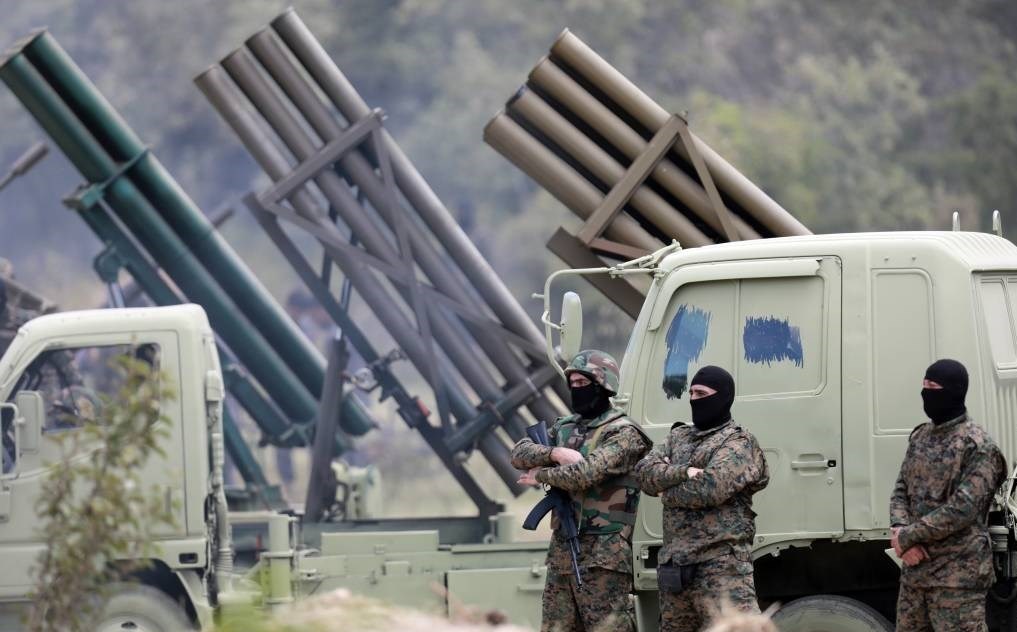
On the evening of 12 June, Hezbollah launched salvos at several Israel Defense Forces (IDF) positions near Al‑Bayada, Rashaf, and Beaufort Castle, also known as Qal'at al‑Shaqif, along the Lebanon–Israel border. The group reportedly used Iranian‑made 107mm “Fadjr‑1” and Chinese‑made 122mm “Type 81” rockets, demonstrating a mix of short‑ and medium‑range capabilities in its arsenal. Around 22:15 local time (19:15 UTC), IDF warning systems activated over Arab al‑Aramshe and Adamit after a suspected hostile aircraft – likely a drone – crossed from Lebanon and crashed on the Israeli side of the border. The IDF said there were no casualties and that the incident was under investigation, even as commentators called it a “blatant violation” that justified a response.
For residents on both sides of the Blue Line, each new barrage or drone alert means another run to shelters, another day of disrupted work and schooling, and another reminder that ceasefire lines on paper do little to shield homes built within artillery range. Farmers in border villages see their fields and access roads intermittently turned into military corridors. The psychological weight of living under the possibility that a routine night could turn into a high‑intensity exchange keeps communities in a constant, low‑grade state of mobilization that frays social and economic life.
Militarily, Hezbollah’s use of Fadjr‑1 and Type 81 rockets underlines its capacity to saturate specific IDF positions with relatively simple but reliable systems, forcing Israel to expend interceptors or accept more risk near the front. The reported drone infiltration, even without casualties or major damage, probes Israel’s air defense and electronic warfare coverage along a stretch of border where the terrain complicates radar and visual detection. For Hezbollah and its backers in Tehran, demonstrating the ability to send a suspected hostile aircraft into Israeli airspace – and to bombard multiple outposts in a coordinated strike – serves as a reminder that any wider conflict on other fronts will likely pull the north in quickly.
Strategically, the incident tightens the calibration problem for both sides. Israel’s military and political leadership must decide how to respond to a combination of rocket fire and airspace violation without triggering the kind of full‑scale campaign that could devastate Lebanese infrastructure and heavily damage northern Israeli cities. Hezbollah’s commanders face their own balance: they want to signal deterrence and solidarity with other fronts without crossing the threshold that would prompt Israel to move from counter‑battery fire and limited strikes to a broader offensive.
If this pattern of tit‑for‑tat exchanges continues, the border area will become even more heavily militarized. Both sides may deploy additional air defenses, electronic warfare assets, and reconnaissance drones, increasing the density of military hardware and the number of actors with authority to launch or retaliate. That environment is prone to miscalculation. A rocket that hits an occupied building rather than an empty field, or a drone that strikes a sensitive military installation instead of crashing in open terrain, could force leaders into escalatory decisions they might otherwise prefer to avoid.
Key Takeaways
- Hezbollah fired salvos of Iranian‑made 107mm and Chinese‑made 122mm rockets at multiple IDF positions near the Lebanon–Israel border.
- The IDF reported a suspected hostile aircraft infiltrating from Lebanon and crashing inside Israeli territory near Arab al‑Aramshe and Adamit, with no casualties.
- Civilians in northern Israel and southern Lebanon remain within range of rockets and drones, living with repeated alerts and disruption.
- The incidents test both sides’ red lines and increase the risk that a localized exchange could broaden into a wider confrontation.
Outlook & Way Forward
In the short term, observers should expect Israel to respond with counter‑battery fire, targeted strikes on launch sites, or attacks on Hezbollah infrastructure, while Hezbollah calibrates subsequent fire to avoid a rapid climb up the escalation ladder. International diplomatic efforts, particularly from France and the United States, may intensify behind the scenes to press for restraint and reinforce existing understandings along the Blue Line.
Over the longer term, the northern front’s stability will hinge on whether regional actors – including Iran and Israel – treat it as a pressure valve or a red line. As long as Hezbollah sees value in demonstrating its ability to hit IDF positions and probe Israeli air defenses, and as long as Israel insists on punishing each “blatant violation” of its sovereignty, the space for miscalculation remains wide. Without a political framework that addresses the underlying drivers of the confrontation, the border will continue to function less as a boundary and more as a fault line that can slip with little warning.
Sources
- OSINT