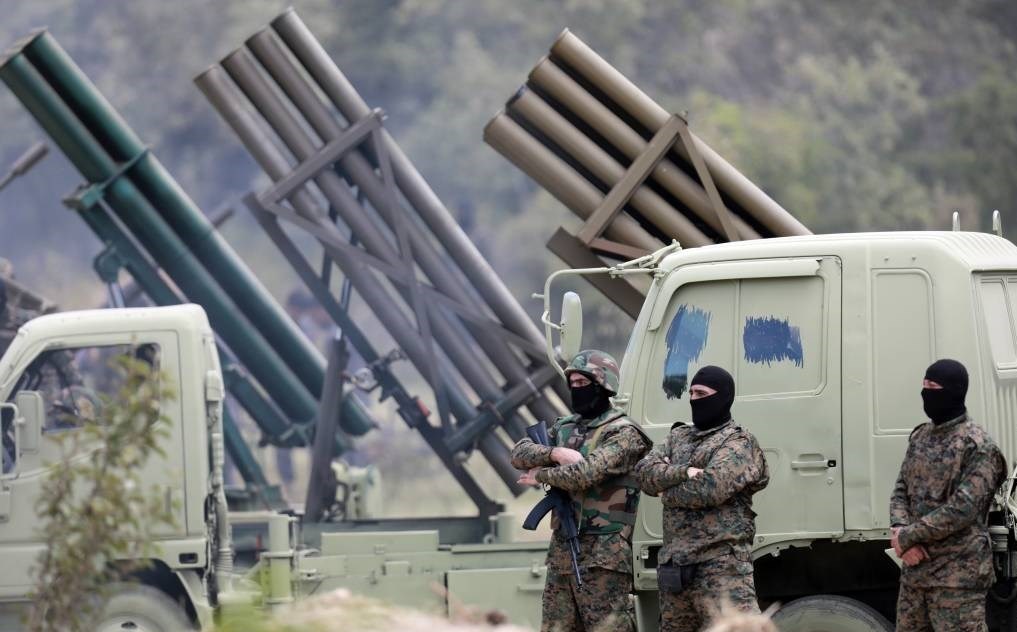
Hezbollah’s Kamikaze Drone Strike on IDF Position Near Lebanon Border Raises Escalation Risk
Hezbollah has used Sayyad‑2 kamikaze drones to strike Israel Defense Forces positions near Beaufort Castle on the Lebanon‑Israel frontier, adding another layer to a border conflict that has already displaced civilians on both sides. The attack shows how easily off‑the‑shelf loitering munitions can put isolated outposts and nearby communities back in the crosshairs of regional strategy.
The quiet of northern Israeli hills and southern Lebanese valleys was again broken by the buzz and blast of unmanned aircraft, a reminder that this border remains one miscalculation away from a wider war.
In the early hours of 12 June, Hezbollah launched Sayyad‑2 V‑tail kamikaze drones against Israel Defense Forces (IDF) positions near Beaufort Castle (Qal'at al‑Shaqif) in southern Lebanon, according to footage and accounts from the group’s media channels. The strike targeted Israeli military positions in the vicinity of the historic fortress, a prominent high ground overlooking parts of northern Israel. Israeli authorities had not issued a detailed public account by the time of reporting, and the full extent of damage or casualties remained unclear.
For residents of border towns on both sides, the technology is simple but the fear it brings is not. Farmers in northern Israel and southern Lebanon already live with the risk of rocket fire and artillery duels; kamikaze drones add a weapon that can skim over hills and tree lines, searching for a vulnerable radar, tent, or vehicle. Families who have been evacuated from Israeli border communities or displaced from southern Lebanese villages know that every such strike lowers the threshold for another round of tit‑for‑tat escalation.
Militarily, the attack underscores how loitering munitions have become a staple of irregular warfare. The Sayyad‑2 is a relatively common one‑way attack drone, not a cutting‑edge platform, but in the hands of a disciplined group like Hezbollah it can threaten fixed positions, observation posts, and logistics nodes along the frontier. Israel’s layered air defenses are optimized against rockets, missiles, and larger drones; smaller, low‑flying systems remain harder to intercept consistently, especially when used in small numbers against specific outposts.
For Israel’s security establishment, repeated kamikaze drone attacks make it costlier to maintain forward positions and observation assets close to the border. Protecting every site with high‑end interceptors is not realistic. That forces choices: pull some positions back, harden others, or accept a higher level of risk to troops. Each option carries implications for intelligence coverage across the border and for the political message Israel sends to Hezbollah and its own citizens.
For Hezbollah and its patrons, these strikes serve several purposes at once. They signal capability and resolve to domestic Lebanese audiences and to the broader “axis of resistance,” demonstrating that the group can contest Israeli positions despite Israel’s overwhelming conventional edge. They also fit a broader pattern of calibrated violence—serious enough to drain Israeli attention and resources, but kept below the level that would automatically trigger a full‑scale war like that of 2006.
The risk is that calibration can fail. A drone that hits an occupied barracks instead of an empty watchtower, or an Israeli counterstrike that causes mass casualties in a Lebanese village, could set off an escalation ladder that political leaders on both sides struggle to descend. Regional actors watching the border—Tehran, Washington, Arab Gulf states—are acutely aware that a major Hezbollah‑Israel confrontation would reverberate across oil markets, sea lanes, and domestic politics.
What to watch now is less the technical novelty of the Sayyad‑2 than the pattern that emerges. An isolated strike that Israel absorbs with limited response maintains the current low‑intensity conflict, with civilians paying the price in uncertainty and displacement. A series of increasingly bold attacks on deeper or more sensitive targets, especially if combined with rocket salvos, would suggest Hezbollah is prepared to accept higher escalation risk, possibly tied to wider negotiations or confrontations involving Iran.
Key Takeaways
- Hezbollah launched Sayyad‑2 kamikaze drones at IDF positions near Beaufort Castle on the Lebanon‑Israel border on 12 June.
- The attack highlights how loitering munitions are becoming a routine part of the toolkit in the long‑running border confrontation.
- Civilians in northern Israel and southern Lebanon remain vulnerable to misfires, miscalculations, and the displacement driven by ongoing low‑intensity conflict.
- Israel faces difficult choices between hardening border positions, pulling some assets back, or accepting higher risk to front‑line troops.
- A sustained pattern of such attacks could raise the risk of a wider regional confrontation involving Iran and other external actors.
Outlook & Way Forward
In the near term, Israel is likely to adjust its defensive posture around key observation posts and radars, perhaps deploying more short‑range air defense and electronic warfare systems capable of countering small drones. Any IDF retaliation will be calibrated to punish Hezbollah without crossing the group’s own red lines, but the margin for misjudgment is thin.
Over the longer term, the normalization of kamikaze drone use along this frontier will push both sides to invest further in unmanned systems and counter‑drone technologies. For outside powers, including the United States and European states with forces in UNIFIL, the challenge will be to deter a slide from calibrated strikes into uncontrolled escalation—at a time when regional attention is already stretched by parallel crises in the Gulf and beyond.
Sources
- OSINT