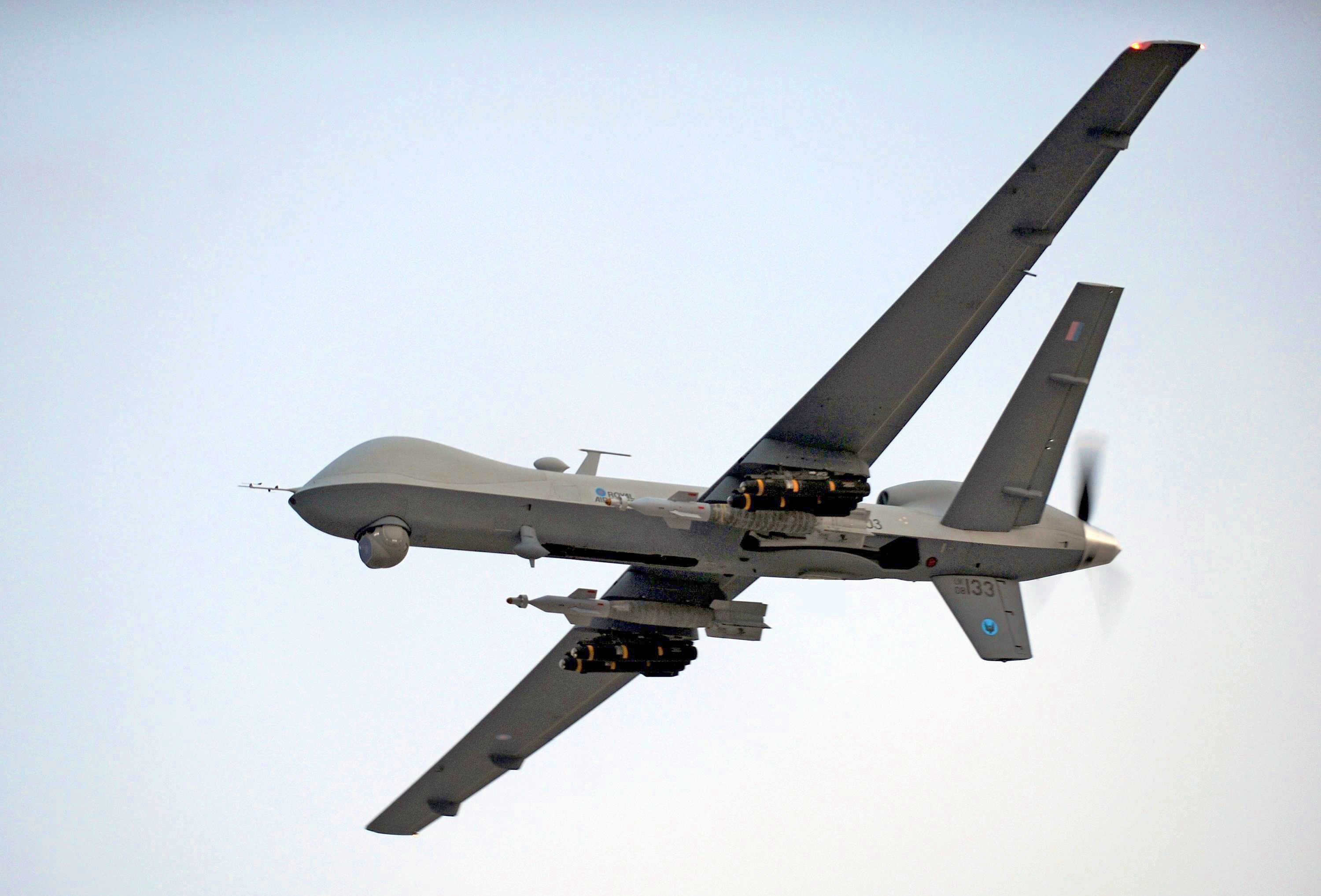
Targeted Killings of Ukrainian Soldiers Reveal How Drones Are Turning the Front Line Into a Trap
Reports of Ukrainian soldiers fatally hit in ambushes guided by Russian drones show how even small units moving through trees and brush are now under constant aerial surveillance. For infantry on both sides, and for commanders trying to protect them, the front line is becoming less a line of contact than a grid of kill zones mapped from the sky.
The deaths came in the cover of dense bushes and trees — exactly the kind of terrain that once offered soldiers a measure of safety. Now, overhead, a drone was watching.
According to frontline reports, a Ukrainian soldier from the 3rd Assault Company, part of the 1st Assault Battalion within his brigade, was fatally wounded after a burst of bullets tore through foliage that had briefly concealed him. In a separate incident, two Ukrainian soldiers were ambushed and killed in action, with a Russian drone reportedly feeding real‑time information about their unit’s movements to enemy forces. Taken together, the episodes capture how small‑unit engagements on Ukraine’s front lines are being reshaped by cheap, persistent aerial surveillance.
For the soldiers involved, the stakes could not be more personal. Infantry who once relied on terrain, camouflage, and experience to stay alive must now assume that every movement — a sprint across a tree line, a pause in a hedgerow — may be visible to an unseen operator staring at a screen kilometers away. The psychological burden is heavy: rest is scarce, and the sense of being hunted from above never fully lifts. For families back home, each new report of a son or brother killed in an ambush reinforces a grim truth about modern war: the front line is as much a digital battlespace as a physical one.
On the Russian side, drones have become force multipliers for units that might otherwise struggle to detect and fix Ukrainian positions. Operators who guide these systems wield disproportionate power over life and death, turning commercial‑grade quadcopters and more advanced platforms into tools that make ambushes more lethal and artillery more precise. But their use also exposes Russian troops to counter‑battery fire and electronic warfare, as every signal sent and video stream received can, in theory, be traced and targeted.
Strategically, the incidents highlight a shift in the character of the war. Drones are not just delivering munitions; they are re‑wiring the entire sensor‑to‑shooter chain. What used to require reconnaissance patrols and risky forward observation can now be done from relative safety, turning wooded areas, fields, and even urban ruins into mapped grids of coordinates. This compresses decision cycles: a unit spotted in cover can be engaged in seconds, whether by small‑arms fire in an ambush or by artillery called in from a distance.
For Ukraine’s command, the mounting casualties in such ambushes pose a dilemma. Aggressive assaults and reconnaissance are necessary to hold or retake ground, but each movement under drone‑watched skies carries a higher cost. Training, tactics, and equipment must adapt quickly: more sophisticated camouflage, better electronic countermeasures, and tactics designed to mislead or saturate drone operators’ attention. The same pressure applies to Russia, which faces its own vulnerability to Ukrainian drones and the growing sophistication of Kyiv’s unmanned systems.
Internationally, these frontline deaths are of interest not just for their human tragedy but for what they portend about future conflicts. Militaries far from Eastern Europe are watching Ukraine’s battlefields as a real‑time laboratory for drone‑infantry interaction, from cheap FPV (first‑person‑view) units to larger reconnaissance platforms. Defense planners must now assume that any future war, whether in Europe, Asia, or the Middle East, will see infantry under constant aerial observation, with implications for training, doctrine, and procurement.
Key Takeaways
- A Ukrainian soldier from the 3rd Assault Company was reported fatally wounded when gunfire ripped through dense cover that had concealed him.
- In a separate ambush, two Ukrainian soldiers were killed in action while a Russian drone reportedly fed information about their unit to attackers.
- The incidents illustrate how drones are turning once‑protective terrain into transparent kill zones by providing continuous overhead surveillance.
- Both Ukrainian and Russian forces are leveraging drones to guide ambushes and fires, changing tactics and increasing the lethality of small‑unit engagements.
- Militaries worldwide are studying these dynamics as they prepare for future conflicts in which infantry can expect to be watched — and targeted — from the sky.
Outlook & Way Forward
On Ukraine’s front lines, the response will necessarily focus on adaptation. Expect more emphasis on drone‑resistant movement techniques, decentralized decision‑making that allows small units to exploit brief windows of concealment, and increased investment in electronic warfare to blind or disrupt enemy drones. The contest between sensor and counter‑sensor is becoming as important as the contest between gun and armor.
For policymakers and military planners outside the region, these episodes offer a grim preview of the next generation of ground warfare. Armies will need to rethink how they protect infantry, not just with armor and fortifications but with signatures — managing the electromagnetic, visual, and infrared footprints that drones exploit. Countries that fail to align their doctrines and equipment with this reality risk sending their soldiers into future battles as visible, vulnerable targets.
Meanwhile, for the soldiers currently fighting, the technological debate is secondary to survival. Each patrol under the drone’s gaze is a bet that training, luck, and whatever countermeasures are available will be enough. The deaths in those trees and bushes are a reminder that on this front, adaptation is not an option — it is the only way to stay alive.
Sources
- OSINT