Hezbollah Rocket Barrage on Kiryat Shmona Deepens Israel’s Northern Front Vulnerability
Hezbollah fired 122mm rockets, including Iran-made Arash-1 munitions, at the northern Israeli town of Kiryat Shmona, underscoring that the Lebanon front is far from quiet. The strike puts residents back under fire and tightens the link between Israel’s confrontation with Iran and daily life in border communities.
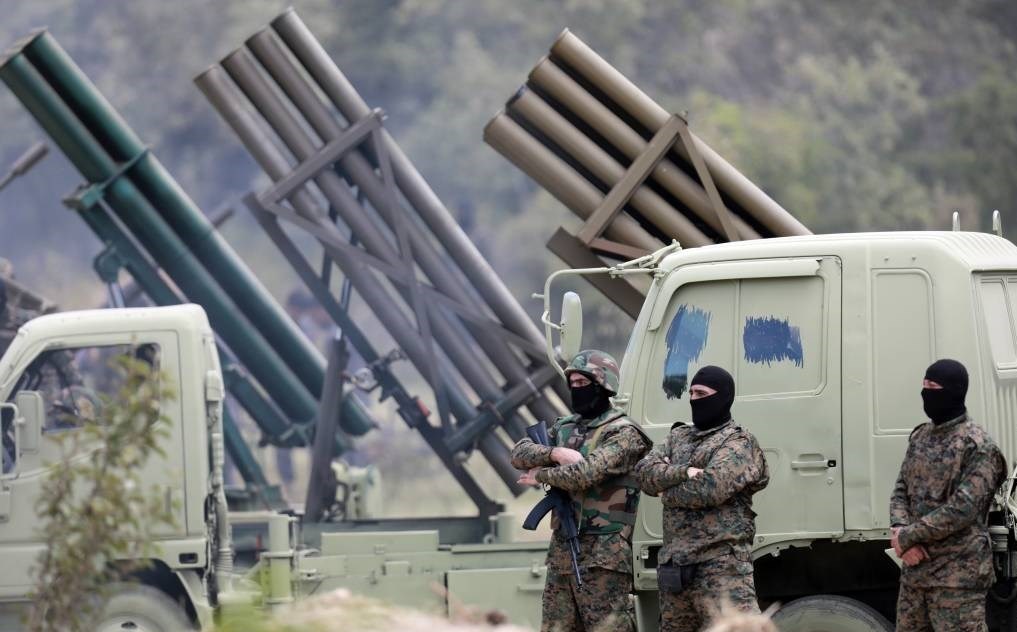
Residents of Kiryat Shmona woke up once again inside a live firing range rather than a quiet border town. Hezbollah launched artillery rockets into the northern Israeli city, using a locally assembled 122mm multiple rocket launcher that fired standard Grad munitions alongside Iran-made Arash-1 rockets, according to battlefield imagery shared on 4 June.
The attack, reported around 03:02 UTC, targeted Kiryat Shmona from positions in southern Lebanon. Visual evidence indicates the use of a 122mm launcher configured to fire 9M22U Grad rockets and the more advanced Arash-1 artillery rockets supplied by Iran. Immediate information on casualties or damage remains limited in open reporting, but the choice of weaponry and location fits a pattern of calibrated Hezbollah attacks designed to keep pressure on Israel’s northern defenses while avoiding a full-scale war—for now.
For civilians in Kiryat Shmona and surrounding communities, each salvo is another reminder that their homes and schools sit within seconds of incoming fire. Families have endured repeated evacuations, interrupted schooling, and the constant calculation of how far they are from the nearest shelter. Lebanese border villages face their own exposure, with residents living alongside or near launch sites that could draw Israeli retaliation at any time, turning agricultural land and small towns into launch pads and potential targets.
Strategically, the use of Iranian-origin Arash-1 rockets is significant. It reinforces the direct material link between Tehran and Hezbollah’s rocket arsenal, making the Lebanon front a tangible extension of Iran’s contest with Israel. For Israeli planners, the combination of standard Grads and more capable rockets complicates air-defense calculations and underscores the challenge of defending dispersed northern population centers while maintaining readiness for a broader confrontation in Gaza or against Iran itself.
The attack also tests Israeli decision-makers as they weigh deterrence against escalation. A heavy-handed response risks sliding into a wider conflict with Hezbollah—an outcome both sides have so far tried to avoid due to the likely scale of destruction in both Lebanon and northern Israel. A more limited or delayed response, however, may embolden further rocket fire and deepen perceptions in Beirut and Tehran that Israel is constrained.
For Lebanon, Hezbollah’s ongoing low-intensity campaign against Israel deepens the country’s entanglement in a war it can ill afford. Already mired in economic collapse and political paralysis, Lebanon faces the risk that any miscalculation could devastate infrastructure and drive another wave of internal displacement. Border-area farmers, traders, and small businesses are already seeing livelihoods erode as cross-border fire becomes a recurring feature rather than an exception.
What to watch next is whether the Kiryat Shmona strike marks a one-off demonstration or part of a broader uptick in rocket activity along the frontier. A sustained increase in higher-caliber or longer-range rocket use, especially those clearly linked to Iranian supply chains, would force Israel to reassess force posture and potentially redeploy assets from other theaters. It would also sharpen the debate within Israel about how much risk to accept on the northern front while focusing attention on Iran’s wider regional network.
Regionally, the attack adds another data point to a mosaic that ties together events from the Gulf to the Levant. As Iran navigates confrontations with Israel and the United States at sea and in the air, Hezbollah’s fire on Kiryat Shmona serves as a reminder that Tehran has ground-level levers it can pull along Israel’s borders, affecting both military calculus and civilian security.
Key Takeaways
- Hezbollah fired a salvo of 122mm rockets at Kiryat Shmona in northern Israel, using a multiple rocket launcher with both Soviet-designed Grads and Iran-made Arash-1 munitions.
- The strike again exposes civilians in northern Israel and southern Lebanon to cross-border fire and the risk of rapid escalation.
- Use of Iranian-origin rockets underscores Tehran’s material support for Hezbollah and tightens the link between Lebanon’s front and Iran–Israel tensions.
- Israel faces a strategic dilemma between deterring further attacks and avoiding a full-scale northern war.
- Lebanon remains at risk of being dragged deeper into confrontation despite its severe economic and political fragility.
Outlook & Way Forward
In the short run, Israel is likely to respond with targeted strikes or artillery fire against Hezbollah positions, attempting to maintain deterrence without triggering an uncontrolled spiral. The nature, scale, and messaging of that response will be watched closely in Beirut and Tehran as indicators of how much latitude Hezbollah has for future attacks.
If rocket incidents like the Kiryat Shmona strike become more frequent or deadlier, domestic pressure inside Israel for a decisive northern campaign will grow, raising the risk of a war that could devastate swaths of Lebanon and displace hundreds of thousands on both sides of the border. International actors, including the United States and European governments, may intensify efforts to shore up the UN-brokered arrangements along the Blue Line, but their leverage over Hezbollah’s strategic decisions is limited.
Over the longer term, the normalization of low-intensity exchanges on the Lebanon–Israel frontier hardens a dangerous reality: civilians on both sides are living as buffers in a confrontation that is increasingly linked not only to local grievances but to the broader regional contest between Iran and its adversaries. That makes de-escalation harder—and the cost of miscalculation higher—every time another rocket is fired.
Sources
- OSINT