Hezbollah’s Thermal Drones and Rocket Barrages Put Israel’s Northern Front Under New Pressure
Hezbollah is publishing video after video of thermal‑guided FPV drones and rocket attacks on Israeli troops and armored vehicles in southern Lebanon, even as Israel’s army chief vows there will be “no ceasefire” on the northern front. For residents on both sides of the border, Lebanon is no longer a supporting theater but a second coordinated war built around cheap, precise drones.
Israel’s northern border is increasingly resembling a separate war, as Hezbollah steps up the use of thermal‑equipped kamikaze drones and rocket fire against Israeli forces operating in southern Lebanon, while senior Israeli commanders promise unrelenting pressure on the group.
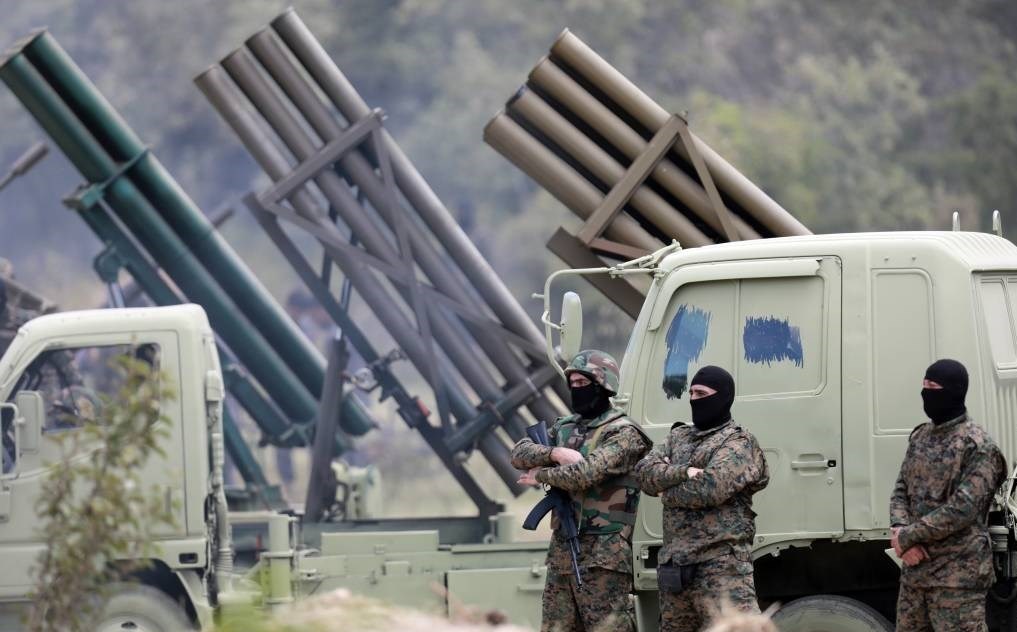
On 3 June, Hezbollah released multiple videos showing first‑person‑view (FPV) drones striking Israeli Defense Forces (IDF) soldiers and a Namer armored personnel carrier in and around the towns of Yohmor and Zawtar El Charqiyeh in southern Lebanon. The footage, recorded with thermal imaging, captures nighttime attacks that likely killed or seriously wounded several Israeli soldiers, according to assessments based on the proximity of the drone impacts. Additional releases showed rockets, kamikaze drones, and mortar shells fired at IDF positions and vehicles, including reports of rocket attacks near Beaufort Castle, an area north of the Litani River where Israel has recently expanded ground operations.
For soldiers on the ground, these are not abstract technology trends but split‑second life‑or‑death encounters. Thermal‑equipped FPV drones can hunt infantry at night and in cover, eroding traditional assumptions about when it is safe to move or regroup. An armored Namer, designed to protect its crew from heavy fire, becomes vulnerable to a low‑cost drone carrying a shaped‑charge warhead. Meanwhile, Lebanese villagers near launch areas and Israeli communities across the border are exposed to retaliatory artillery, counter‑battery fire, and the constant rumble of jets overhead.
Strategically, Hezbollah’s publicization of these attacks serves several purposes. It showcases the group’s adaptation to the drone‑saturated style of warfare honed in Ukraine and Gaza, demonstrating to domestic and regional audiences that it can inflict steady attrition on IDF forces even without a full‑scale mobilization. It also complicates Israel’s efforts to conduct limited, targeted operations in southern Lebanon. Chief of Staff Herzi Halevi said on 3 June that Israel is “taking the initiative” in Lebanon, with the navy “a partner in the campaign” and “no ceasefire” for IDF forces operating to remove threats to Israeli citizens.
That rhetoric signals Israel’s intent to maintain a high operational tempo north of the border, but Hezbollah’s growing FPV fleet means each incursion now carries higher risk. Israel’s attempts to dismantle launch cells, surveillance positions, and rocket storage sites will be met not only with traditional anti‑tank missiles and rockets, but with swarms of loitering munitions able to strike moving targets with surprising precision.
If this pattern continues, the northern theater will exert increasing drag on Israel’s military bandwidth and political calculus. Sustained casualties, especially in elite ground units and armored corps, could raise domestic pressure for either a decisive offensive to push Hezbollah back or, conversely, for a negotiated arrangement that reduces daily fire. For Hezbollah, the danger is overshooting: a mass‑casualty incident inside Israel or a successful strike on a major civilian site could trigger a larger Israeli operation, with devastating consequences for Lebanon’s already fragile infrastructure.
Key Takeaways
- Hezbollah has released multiple videos of thermal‑equipped FPV drones striking Israeli soldiers and a Namer armored vehicle in southern Lebanon, likely causing fatalities and serious injuries.
- The group is also maintaining rocket, mortar, and kamikaze drone fire on IDF positions, including near Beaufort Castle north of the Litani River.
- IDF Chief of Staff Herzi Halevi has pledged that Israeli forces in Lebanon have “no ceasefire” and will seize every opportunity to remove threats.
- The combination of cheap, precision drones and sustained rocket fire is turning the northern front into a separate, high‑intensity theater of conflict.
- Civilians in southern Lebanon and northern Israel remain at risk from both primary strikes and retaliatory fire as the tempo of operations rises.
Outlook & Way Forward
In the near term, Israel is likely to invest further in electronic warfare, counter‑drone systems, and tactical adaptations—such as tighter dispersion and camouflage—to blunt the threat from Hezbollah’s FPV drones. But no defensive system will completely eliminate the risk, meaning commanders will face hard decisions about how deeply and how often to send ground forces into southern Lebanon.
Hezbollah, buoyed by the propaganda value of its drone footage, may be tempted to widen the scope or intensity of its attacks. That path carries real escalation risk. A spectacularly successful strike that kills a large number of Israeli soldiers or hits a major civilian target could galvanize Israeli public support for a broader campaign, including large‑scale air operations and ground incursions that would devastate parts of Lebanon.
Diplomatically, outside actors—from Washington and Paris to Gulf capitals—will keep searching for a formula that can reduce fire across the Blue Line without appearing to reward either side. The longer Hezbollah’s drone war grinds on, the more it will reshape military planning far beyond the Levant, as armed forces study how a non‑state actor turned off‑the‑shelf drones into a strategic problem for one of the world’s most capable militaries.
Sources
- OSINT