Israeli Strikes Near Tyre Hospital and Hezbollah FPV Attacks Deepen Lebanon–Israel Escalation Risk
Israeli airstrikes near a major hospital in Tyre killed four and injured 127 people, including dozens of medical staff, as Hezbollah released footage of FPV drone hits on Israeli armored vehicles and intensified rocket barrages on northern Israel. Civilians on both sides of the border are being pulled deeper into a fight that is moving from sporadic exchanges toward a more organized, high‑tech confrontation.
The war on Israel’s northern front is tightening its grip on those who are supposed to stand outside it: doctors, nurses, and families on both sides of the border. A strike near a Lebanese hospital and precision drone attacks on Israeli armor are the latest signs that the conflict between Israel and Hezbollah is hardening into a more dangerous, more technologically sophisticated fight.
Lebanon’s Ministry of Health reported on 2 June that Israeli airstrikes near Jabal Amel Hospital in the southern city of Tyre on Monday killed four people and wounded 127. Among the injured were 39 hospital staff, including doctors and nurses; four victims remained in critical condition. The ministry said multiple floors, departments, and the hospital parking lot sustained significant damage and denounced the strike as an attack on medical infrastructure. Israel has not publicly detailed its targeting rationale, and independent verification of the exact strike location and any nearby military assets is still limited.
For patients and clinicians inside Jabal Amel Hospital, the strike turned a supposed place of safety into a front line. Wards had to be evacuated even as emergency rooms filled with casualties, including colleagues. Families already struggling with Lebanon’s economic collapse now face the additional fear that the very institutions meant to keep them alive can be hit without warning. In nearby neighborhoods, residents whose only involvement in the conflict is geographic proximity are bearing the brunt of a battle plan drawn far from Tyre’s crowded streets.
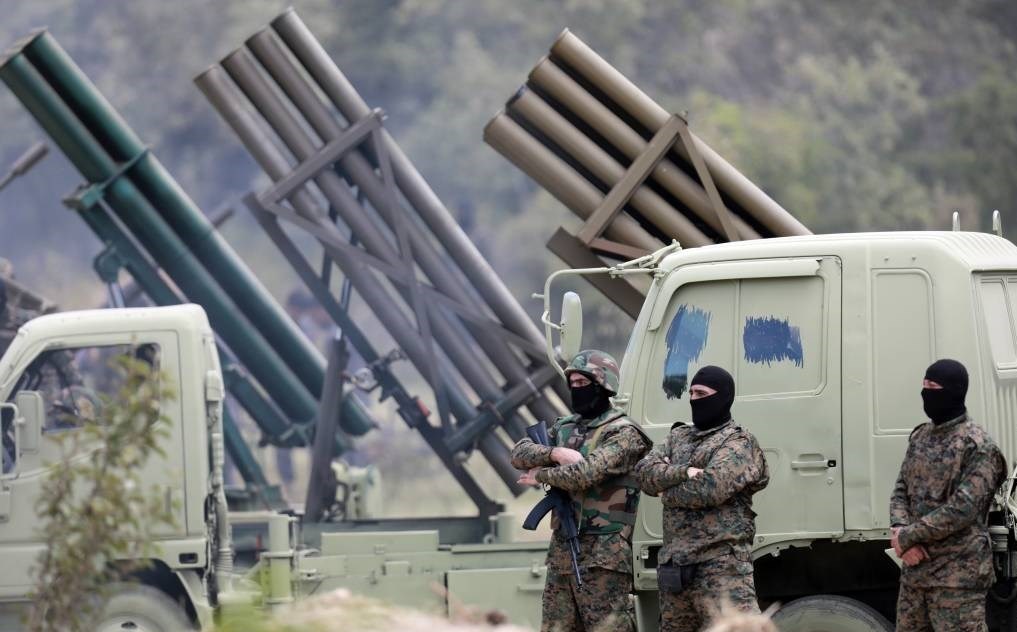
On the Israeli side of the border, civilians are under mounting pressure too. Hezbollah has released footage of first‑person‑view (FPV) kamikaze drone strikes on Israeli Defense Forces armored vehicles—a Namer armored personnel carrier and an M117 armored car—in the Lebanese village of Debel (also spelled Debl or Debel). According to technical details shared by the group, operators used fiber‑optic “Ababil” FPV drones fitted with PG‑7‑series anti‑tank warheads, allowing them to steer directly into their targets. Separately, Hezbollah published video of 122mm Grad rockets and Arash‑1 munitions being launched toward the Israeli cities of Safed, Karmiel, Nahariya and Kiryat Shmona, part of what it describes as a significant intensification of rocket attacks.
For Israeli communities in the north, this means more frequent sirens, disrupted school schedules, and a constant risk calculus about whether to shelter in place or relocate. For soldiers inside the armored vehicles shown in Hezbollah’s footage, the message is clear: platforms once believed to offer strong protection closer to the border are now exposed to relatively cheap, precision‑guided drones controlled from concealed positions.
Strategically, the duel is moving into a more volatile phase. Israel’s continued strikes across southern Lebanon, including Tyre and Nabatieh, seek to degrade Hezbollah’s launch sites, command nodes, and logistics while signaling deterrence to both Beirut and Tehran. Hezbollah’s combination of FPV drones against tactical military targets and rockets against Israeli towns is designed to inflict cost, stretch Israel’s air defenses, and prove that it can threaten both troops and civilians deep into the Galilee. The use of fiber‑optic‑guided FPVs suggests Hezbollah is adapting lessons from Ukraine and other recent conflicts, making it harder for Israel’s electronic warfare units to jam incoming threats.
The attack near Jabal Amel Hospital may have particular diplomatic repercussions. Strikes on or near medical facilities are legally and politically sensitive; they raise questions in foreign capitals that have so far backed Israel’s right to respond to Hezbollah but are wary of a broader war. Within Lebanon, images of wounded doctors and smashed hospital wards will fuel calls for stronger state action—or at least for clearer rules of engagement—to limit the cost to civilians.
What happens next hinges on whether either side believes it has more to gain from escalation than restraint. If Israeli strikes continue to damage or threaten critical civilian infrastructure, Hezbollah will come under pressure from its base and regional allies to respond with larger salvos or new capabilities, such as heavier rockets aimed deeper into Israel. Israel, for its part, may be weighing a more concentrated campaign to push Hezbollah forces away from the frontier, which could risk a rapid spiral into a full‑scale northern war.
Key Takeaways
- Israeli airstrikes near Jabal Amel Hospital in Tyre killed four people and injured 127, including 39 medical staff, according to Lebanon’s Health Ministry.
- Hezbollah has released footage of FPV drone strikes against Israeli Namer and M117 armored vehicles in Debel using fiber‑optic‑guided “Ababil” drones with anti‑tank warheads.
- The group also showcased intensified rocket fire—122mm Grads and Arash‑1 rockets—toward multiple cities in northern Israel.
- Civilians in southern Lebanon and northern Israel are facing growing danger as high‑tech tactics and cross‑border strikes expand the battlefield.
- The combination of attacks on or near medical facilities and precision strikes on armor raises the risk of a wider confrontation that will be harder for outside powers to contain.
Outlook & Way Forward
If neither side adjusts course, the most likely short‑term trajectory is a further normalization of daily, low‑to‑medium‑intensity exchanges: Israeli strikes across a wider swath of southern Lebanon, and Hezbollah rockets and drones targeting both military and civilian sites in northern Israel. That pattern may fall short of a declared war but will keep border communities in a state of constant insecurity, with each miscalculation risking a sudden spike in casualties.
Diplomatically, foreign governments with leverage in Beirut and Jerusalem will be under growing pressure to press for de‑confliction measures, particularly around clearly marked hospitals, schools, and other civilian sites. Yet as Hezbollah incorporates more advanced drone tactics and Israel responds with deeper strikes, technical arms‑control style arrangements become harder to enforce. The question for regional and international actors is no longer whether the northern front is active, but how to prevent a pattern of localized strikes around places like Tyre and Debel from hardening into the next full‑scale Israel–Hezbollah war.
Sources
- OSINT