U.S. Nuclear Expansion Talks in Europe Put Poland and the Baltics at the Front Line of Deterrence
Washington is quietly discussing the expansion of U.S. nuclear‑capable deployments to additional NATO countries, with Poland and Baltic states signaling interest in hosting dual‑capable aircraft. The talks could redraw Europe’s nuclear map, raising deterrence for allies on Russia’s border while sharpening Moscow’s threat perceptions.
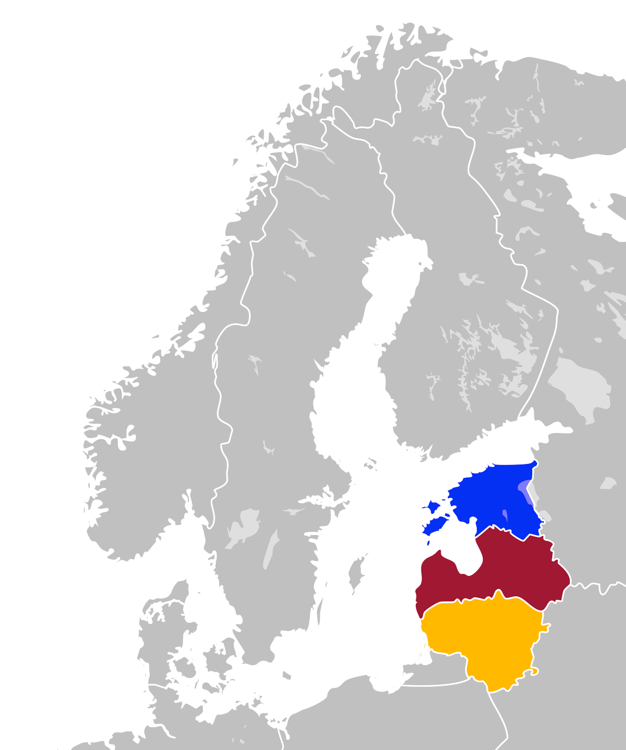
Washington’s latest conversations with European allies are not about another battalion of conventional troops, but about moving nuclear‑capable platforms closer to Russia’s borders. The United States is discussing expanded deployments of nuclear‑capable assets in Europe, with Poland and several Baltic states reportedly interested in hosting them — a shift that would harden NATO’s deterrent posture while injecting new nuclear risks into its front‑line states.
According to officials familiar with ongoing diplomatic exchanges, the talks center on deploying dual‑capable aircraft — planes able to carry both conventional and nuclear weapons — to additional NATO countries beyond the alliance’s established nuclear sharing hosts. No immediate agreement is expected, and U.S. authorities are described as cautious, but Poland and some Baltic governments have expressed clear interest in basing such assets on their soil. The discussions, reported on 2 June, follow earlier indications that Washington was reassessing how its nuclear forces are postured in Europe against a more aggressive Russia.
For populations in Poland, Lithuania, Latvia and Estonia, the implications are personal as much as strategic. Hosting dual‑capable aircraft would make local airfields and surrounding regions more prominent targets in Russian contingency planning. Residents living near bases could find themselves living beside infrastructure that figures in nuclear scenarios, not just conventional exercises. At the same time, governments in these countries argue that forward‑positioned nuclear‑capable forces are essential to convince Moscow that any attack on NATO’s eastern flank would trigger a rapid and serious alliance response.
Strategically, expanding the footprint of U.S. nuclear‑capable deployments in Europe would mark one of the most significant shifts in NATO’s deterrence architecture in decades. During the Cold War and its aftermath, nuclear sharing arrangements were confined to a limited number of Western European states. Moving such capabilities into Central and Eastern Europe would signal that NATO no longer treats the former Warsaw Pact and Baltic states as a buffer, but as an integral part of its nuclear defense geometry.
For Russia, this will be read as a direct challenge. Moscow has already warned that any increase in NATO nuclear presence near its borders would provoke countermeasures, which could include relocating its own nuclear forces, increasing readiness, or deploying additional systems to its Kaliningrad enclave and western military district. The Kremlin has also moved tactical nuclear weapons into Belarus, a step widely seen as a response to deepening NATO support for Ukraine and to Finland’s and Sweden’s accession to the alliance.
If the current talks evolve into concrete basing decisions, several pressure points will emerge. Domestically, governments in Poland and the Baltics will have to manage public debate over the risks and benefits of hosting nuclear‑capable platforms. In Western Europe, allies historically wary of nuclear escalation may push back, arguing that such deployments could lock in a more confrontational relationship with Russia for years to come. In Washington, any move will be filtered through U.S. politics and budget realities, including competition between European and Indo‑Pacific nuclear deterrence requirements.
In parallel, arms control dynamics will grow more complex. Existing frameworks dealing with strategic nuclear weapons do not cover the types of forward‑based, dual‑capable aircraft and non‑strategic nuclear weapons under discussion. Russia has suspended participation in key treaties, and the erosion of verification mechanisms reduces transparency at a time when mistrust is already high. New deployments could therefore take place in a legal and diplomatic vacuum, with fewer guardrails to prevent miscalculation.
Key Takeaways
- The United States is in talks with European allies about expanding deployments of nuclear‑capable assets to additional NATO countries.
- Poland and some Baltic states have signaled interest in hosting dual‑capable aircraft that can carry nuclear weapons.
- Such deployments would make bases and surrounding regions more prominent targets in Russian planning, increasing both deterrence and perceived risk.
- The shift would significantly reshape NATO’s nuclear posture and likely prompt Russian counter‑deployments, including in Belarus and Kaliningrad.
- The discussions unfold against the backdrop of fraying arms control regimes and heightened tensions over the war in Ukraine.
Outlook & Way Forward
In the short term, the talks are likely to remain exploratory, with U.S. officials testing allied appetite and assessing operational feasibility before any decisions. Expect internal NATO debates over burden‑sharing, host nation consent, and how to balance reassurance for eastern members with the risk of fueling an arms race.
If the alliance moves ahead, implementation would likely be phased, starting with infrastructure upgrades, joint exercises, and gradual integration of host‑nation pilots and crews into nuclear‑sharing frameworks. Moscow’s reaction will shape how far and how fast NATO proceeds; aggressive Russian counter‑deployments could strengthen the hand of those arguing for a more robust deterrent posture.
Over the longer term, the re‑nuclearization of Europe’s eastern flank would make the continent’s security order more rigid and less forgiving of missteps. For citizens in potential host countries, that means living under a clearer nuclear umbrella — and a clearer nuclear shadow.
Sources
- OSINT